
Ultra Premium Olive Oil
Olive Oil Freshness Signs You Can Taste at Home
Jul
A great extra virgin olive oil should make you want one more taste. It may smell like fresh-cut grass, green tomato, almond, artichoke, herbs, or ripe fruit, then finish with a lively peppery tickle. Learning the key olive oil freshness signs helps you protect that experience – and know when a bottle no longer deserves a place at the center of your table.
Freshness is not a luxury detail. It is what gives olive oil its vivid flavor, its natural antioxidants, and its ability to turn a simple bowl of beans, a grilled peach, or warm bread into something memorable. Olive oil is pressed fruit juice, not an indestructible pantry staple. Time, heat, light, and air gradually change it.
What Fresh Olive Oil Should Smell and Taste Like
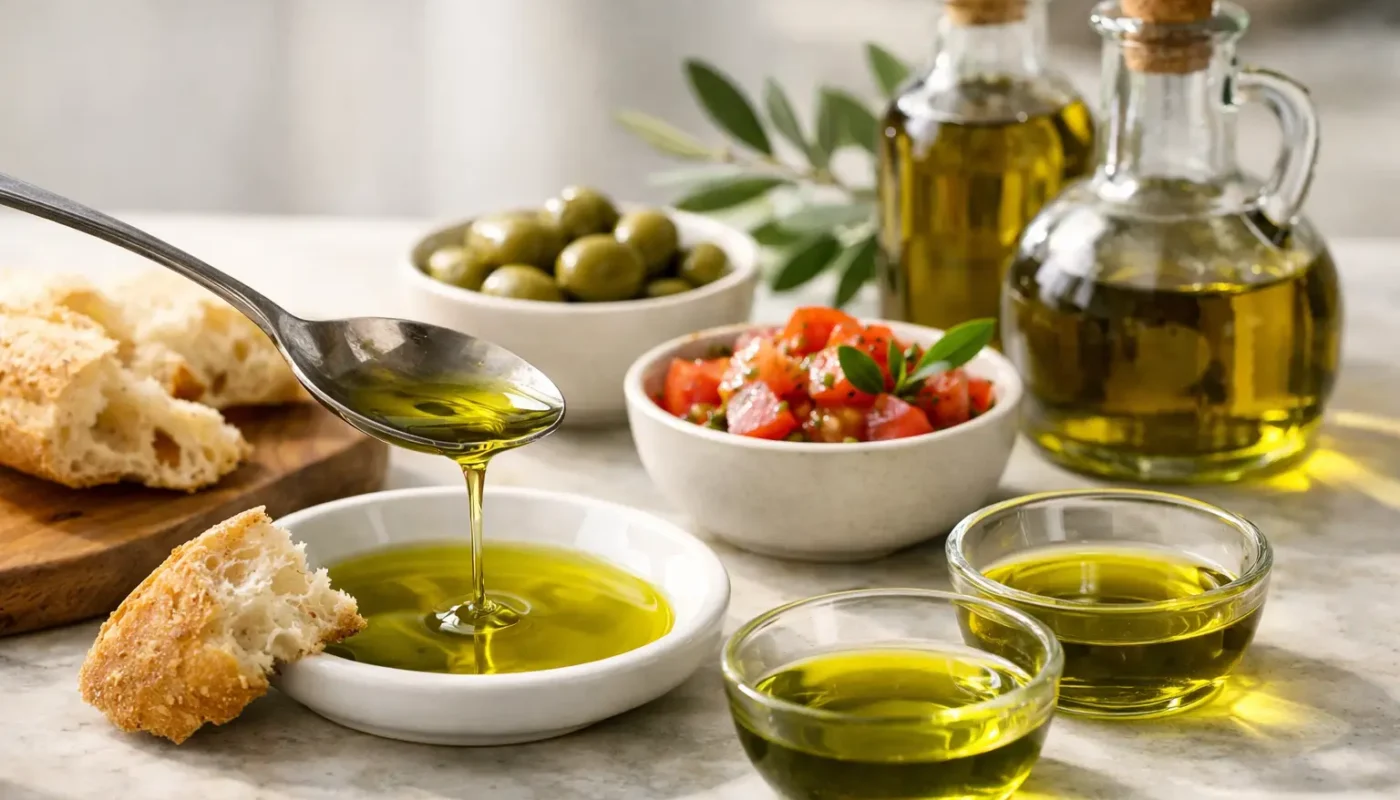
The easiest way to assess olive oil is to use your senses. Pour a small amount into a clean glass, cup it in your hands for a minute to warm it slightly, and take a few short sniffs. Then sip a small amount, let it move across your tongue, and breathe in gently through your mouth.
Fresh extra virgin olive oil often has a distinct fruitiness. That does not necessarily mean it smells like sweet fruit. Depending on the olive variety and harvest style, fruitiness can be green and vegetal, softly nutty, floral, buttery, or ripe and round. A robust oil may call to mind arugula, pepper, and green banana; a delicate one may be smoother, with notes of apple, almond, or fresh herbs.
Bitterness and pungency are also welcome signs, particularly in oils made from greener olives. Bitterness is usually felt on the tongue. Pungency is the peppery sensation in the throat that can make you cough once or twice. Those sensations come from naturally occurring phenolic compounds, and they are part of the character many olive oil lovers seek out.
Still, intensity is not the same as quality. A mild oil can be beautifully fresh, and a bold oil is not automatically better. The question is whether the flavors feel clean, balanced, and alive rather than stale or unpleasant.
Olive Oil Freshness Signs That It Has Turned
Rancidity is the most common flaw consumers encounter. It happens as oil oxidizes, and it is more likely when a bottle has spent too long in bright light, near heat, or open to air. Rancid olive oil can smell and taste surprisingly familiar in the wrong way: think old nuts, crayons, putty, wax, stale cereal, or the oily smell inside a forgotten bag of chips.
Some people describe a rancid oil as flat rather than obviously bad. It may have little aroma at all, then leave a greasy, lingering finish. If you are used to neutral grocery-store oil, this can be harder to spot at first. Compare it with a freshly opened, high-quality extra virgin olive oil and the difference becomes much clearer.
A few additional defects deserve attention:
- Musty or muddy sediment aromas can suggest olives were stored poorly before milling or that sediment remained too long in the oil.
- Winey or vinegary notes can resemble sour fruit, fermentation, or nail polish remover.
- Fusty oil may smell like overripe, fermented olives, compost, or a closed-up cellar.
- Frozen or cooked flavors can occur after damaging temperature extremes or excessive heat exposure.
Do not confuse these defects with the naturally savory flavors found in a fresh oil. A bright green olive note is not the same as mustiness. A peppery finish is not harsh chemical burn. With tasting, the distinction becomes intuitive: fresh oil feels vibrant and clean; flawed oil feels dull, sour, stale, or oddly heavy.
Dates Matter, but They Do Not Tell the Whole Story
A harvest date is one of the most helpful details on an olive oil label because it tells you when the olives were picked and pressed. In general, the closer you are to harvest, the more likely the oil is to show its full aromatic personality. Many premium extra virgin oils are especially enjoyable within 12 to 18 months of harvest when stored well, though the exact window depends on the cultivar, production style, packaging, and storage conditions.
A best-by date is useful, but it is not as revealing on its own. It may be set years after bottling and does not show whether the oil endured months under hot retail lighting or in a sunny kitchen. If you have both dates, prioritize the harvest date and then use your senses.
Seasonality can be confusing because harvests happen at different times around the world. Northern Hemisphere oils are generally harvested in the fall, while Southern Hemisphere oils are generally harvested in the spring. That is one reason a thoughtfully sourced collection can offer fresh, current-season oils at different points of the year.
What Not to Use as a Freshness Test
Color is one of the least reliable indicators of olive oil quality. Fresh oil can range from deep emerald to pale gold, depending on olive variety, ripeness, and filtration. Professional tasters use blue glasses specifically so color will not influence their judgment. A greener oil may be deliciously fresh, but green color alone proves nothing.
Cloudiness is also not a guarantee of freshness. Unfiltered oil can look cloudy because it contains tiny olive particles and moisture. It can be wonderfully flavorful when young, but those particles may shorten its shelf life. A clear, filtered oil can be equally fresh and often stays stable longer.
The refrigerator test is another persistent myth. Olive oil can thicken or become cloudy when chilled, but that reaction does not reliably identify pure, extra virgin, or fresh oil. Save the tasting glass for the real test.
How to Keep a Fresh Bottle Fresh
Once you bring home a bottle you love, storage determines how long it stays expressive. The goal is simple: protect it from light, heat, and oxygen.
Keep olive oil in a cool, dark cupboard away from the stove, oven, dishwasher, and sunny windowsill. A decorative bottle beside the range may be convenient, but it is a poor long-term home for premium EVOO. Dark glass or a quality tin offers meaningful protection, but no package can fully overcome prolonged heat.
Close the cap promptly after each use. If you use a pour spout, choose one that fits well and keep it clean; residue around the opening can become sticky and affect the experience. For larger containers, refill a smaller everyday bottle rather than exposing the full supply to air every time you cook.
Buy a size you can realistically enjoy while it is at its best. A large tin can be a smart value for a busy kitchen that cooks with olive oil daily. For a household that uses it mainly for finishing salads or dipping bread, a smaller bottle may offer more pleasure per pour. This is one of the simplest trade-offs in olive oil shopping: the best format is the one you will finish fresh.
Taste Before You Cook
The most useful habit is also the most enjoyable: taste your olive oil regularly. Try it on a spoon before making a vinaigrette. Notice whether its fruitiness is still present, whether the bitterness feels crisp, and whether the peppery finish remains clean. Tasting gives you a better sense of which oil suits roasted vegetables, seafood, pasta, soups, baking, or a board of crusty bread and balsamic vinegar.
At Weyira Olive Oil & Vinegar, we believe a bottle should invite experimentation, not sit forgotten in the cabinet. A fresh, grassy oil can sharpen a lemony salad; a ripe, mellow one can bring silkiness to mashed potatoes or a vanilla olive oil cake. When the oil tastes bright, let it be part of the dish rather than merely the cooking medium.
If a bottle smells stale, waxy, or unpleasantly sour, do not try to hide it beneath garlic, spices, or vinegar. Replace it and give your next meal the clean, lively finish it deserves. Fresh olive oil is one of the easiest upgrades in a home kitchen – and every small taste teaches you what to look for next.
