
Extra Virgin Olive Oil, Fused Extra Virgin Olive Oil, Gourmet Oil, Olive Oil, Organic Extra Virgin Olive Oil, Ultra Premium Olive Oil
Olive Oil Tasting at Home Made Simple
Jul
A good olive oil tells on itself the moment it hits the glass. Before it ever touches bread, salad greens, or a warm pan, it gives off clues – fresh-cut grass, green almond, tomato leaf, ripe apple, even a peppery catch in the throat. That is why olive oil tasting at home is one of the easiest ways to understand what you are buying and why premium extra virgin olive oil tastes nothing like the flat, tired bottle that has been sitting under fluorescent grocery store lights for months.
You do not need a tasting room, blue glass, or a certification course to get started. You just need a few oils, a little curiosity, and ten unhurried minutes. Once you learn what to notice, tasting becomes part pleasure, part pantry skill. It helps you choose better oils for finishing, cooking, pairing, and gifting. It also makes every drizzle more intentional.
Why olive oil tasting at home changes how you buy
Most people first judge olive oil by price, label language, or country of origin. Those details matter, but they only tell part of the story. Taste is where quality becomes obvious. Fresh extra virgin olive oil has life in it. It smells vivid, tastes layered, and usually carries some bitterness and pepperiness – two signs of healthy antioxidants and careful production.
That can surprise people who are used to bland oils. Bitterness is not a flaw when it is balanced. Pepperiness is not harshness when it arrives as a clean, pleasant finish. In fact, oils with character often perform better in the kitchen because they bring definition to simple food. A bright, grassy oil can wake up grilled vegetables. A softer, buttery oil can make a loaf of crusty bread feel like dinner.
Tasting also teaches an important truth: the best olive oil depends on how you plan to use it. A delicate oil may disappear in a bold stew but shine over burrata or white fish. A robust oil may be thrilling on tomatoes and beans but a little assertive for baking. The more you taste, the more naturally those pairings come.
What you need for an olive oil tasting at home
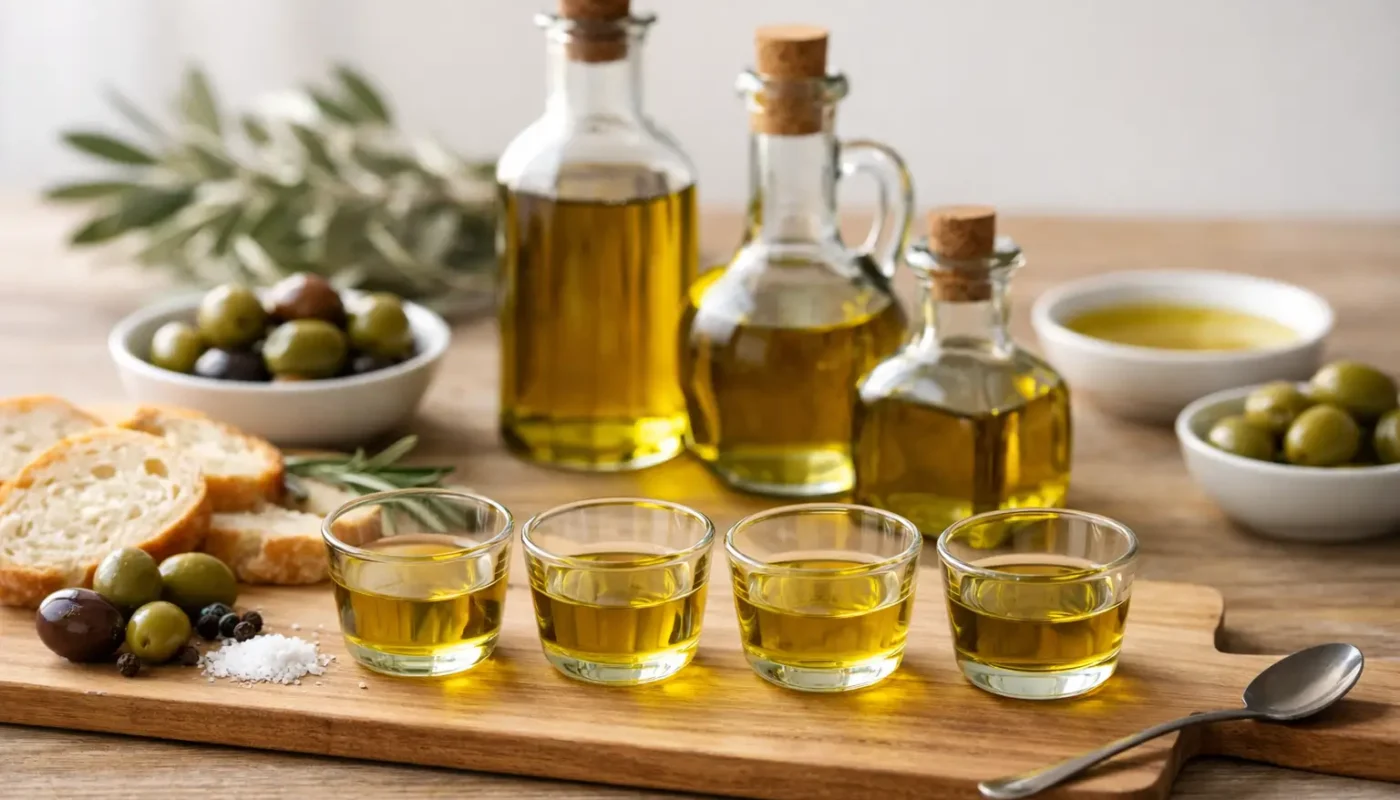
Keep it simple. Choose three to five oils if possible, ideally with different styles. You might include one mild, one medium, and one robust extra virgin olive oil. If you enjoy flavored oils, taste them after the unflavored oils so they do not dominate your palate too early.
Small glasses or cups work well, especially if they are narrow enough to hold aroma. Pour just a small amount into each. Have room-temperature water nearby and a few slices of plain apple or simple bread to reset your palate between samples. Bread is pleasant, though professionals often skip it at first because it can mute some flavors. For a home tasting, either approach is fine.
The room matters more than people think. Avoid strong candles, scented soaps, or cooking aromas while you taste. Olive oil is subtle at first, and stray smells can blur the picture.
A quick note on temperature
Cold oil hides its aroma. If your bottle has been in a cool pantry, let it sit out for a bit before tasting. The goal is not warm oil, just oil that is comfortable at room temperature. That allows the fruit notes to show themselves more clearly.
How to taste olive oil at home like a pro
Start by covering the top of the glass with your hand and gently warming it for 20 to 30 seconds. Swirl lightly. Then lift your hand and smell deeply. Do this before you taste. Aroma often tells you whether an oil is fresh, ripe, green, delicate, or intense.
Look for positive notes that feel alive and food-like. Fresh herbs, artichoke, green banana, tomato vine, almond, butter lettuce, and apple are all common. Not every oil should smell the same. Some oils lean green and peppery. Others are riper and softer, with rounder fruit notes.
Now take a small sip and let it coat your mouth. A little slurping is useful here. Pulling in a bit of air helps spread the oil across your tongue and up into your nasal passages, where flavor becomes clearer. Then swallow.
Three classic markers matter most in extra virgin olive oil: fruitiness, bitterness, and pungency. Fruitiness is the fresh olive character itself. Bitterness is often felt on the sides or back of the tongue and is common in oils made from greener olives. Pungency is that peppery sensation in the throat. A one-cough finish is not a problem. Many beautiful oils do that.
Balance is the real goal. A robust oil can still be elegant if its bitterness and pepperiness feel clean and proportionate. A mild oil can still be excellent if it tastes fresh rather than dull. Intensity and quality are not the same thing.
What fresh olive oil should taste like
Fresh extra virgin olive oil should remind you of something growing or recently picked. Even ripe styles tend to have energy to them. Depending on the olive variety and origin, you may notice green herbs, cut grass, spinach, arugula, almond, walnut skin, green tea, apple peel, or a tomato-leaf edge.
Texture matters too. Some oils feel silky and round. Others feel leaner and more vibrant. Neither is automatically better. It depends on your preference and your purpose. A lush, buttery oil may be lovely for finishing mashed potatoes or whisking into a gentle vinaigrette. A more assertive oil may be exactly what roasted vegetables or grilled steak need.
If you are tasting oils from different regions, do not expect them to line up neatly by country. Climate, harvest timing, olive variety, and milling practices shape flavor as much as geography does. That is part of the fun. A California oil can be surprisingly punchy. An Italian oil can be soft and floral. A Moroccan oil can bring wonderful green intensity.
How to spot flaws and tired oil
This is where olive oil tasting at home becomes especially useful. Once you know the signs of freshness, stale or poorly handled oil stands out fast.
Rancid oil often smells like crayons, old nuts, putty, or a forgotten pantry shelf. It tastes flat and greasy rather than lively. If an oil gives you almost no aroma and finishes with a waxy heaviness, freshness may be long gone.
Musty or moldy notes can suggest poor fruit storage before pressing. A winey or vinegary smell may point to unwanted fermentation. Sometimes people mistake these defects for boldness because they are strong, but they are not signs of premium quality.
There is also a middle ground that matters. An oil may not be obviously defective, yet still feel tired. Maybe the aroma is faint, the flavor drops off quickly, or the peppery finish is missing altogether. That oil might still be usable for everyday cooking, but it will not deliver the brightness most people hope for from extra virgin olive oil.
Make your tasting more useful in the kitchen
The best home tastings do not end with sipping from a glass. Once you have tried each oil on its own, taste them with food. Spoon one over sliced tomato with a pinch of flaky salt. Try another on warm white beans, grilled bread, roasted carrots, plain yogurt, or vanilla ice cream if you enjoy savory-sweet combinations. Flavor pairings reveal personality quickly.
This is also a smart time to compare a premium extra virgin olive oil with a standard supermarket bottle if you have one. The difference is usually eye-opening. Premium oil tends to feel cleaner, more aromatic, and more specific in flavor. Grocery-store oil often tastes anonymous by comparison.
If you keep notes, keep them practical. Instead of writing only mild or strong, write what you would actually do with the oil. Good on burrata. Great for dipping. Better for roasting than finishing. Too delicate for chili. Those notes are easier to use later.
For people who love entertaining, a small guided tasting can be a memorable starter. Pour a few oils, set out bread and simple bites, and let guests compare. It turns a pantry staple into a conversation piece, which is exactly what a well-made oil deserves.
A few mistakes worth avoiding
Do not judge olive oil by color. Beautiful green oil is not automatically higher quality, and golden oil is not automatically mild. Color can reflect olive variety and timing, but it is not a reliable quality marker.
Do not refrigerate your everyday oil just to keep it fresh longer unless your kitchen is unusually hot. Cool storage helps, but frequent chilling and warming can be inconvenient and may make the oil cloudy. A dark, cool cupboard away from the stove is usually the better choice.
And do not save your best oil only for special occasions. Fresh extra virgin olive oil is at its most expressive when it is relatively new. Use it while its aromas are vivid and its finish still has snap.
At Weyira, we love this part of olive oil culture because it turns quality into something you can smell, taste, and trust for yourself. A bottle stops being just another ingredient and becomes a finishing touch with purpose.
The next time you open a fresh bottle, pause before you cook. Pour a little into a glass, warm it in your hands, and taste it on its own. That small ritual has a way of sharpening your palate and making the rest of dinner taste better too.
