
Ultra Premium Olive Oil
Olive Oil From Italy vs California
Jul
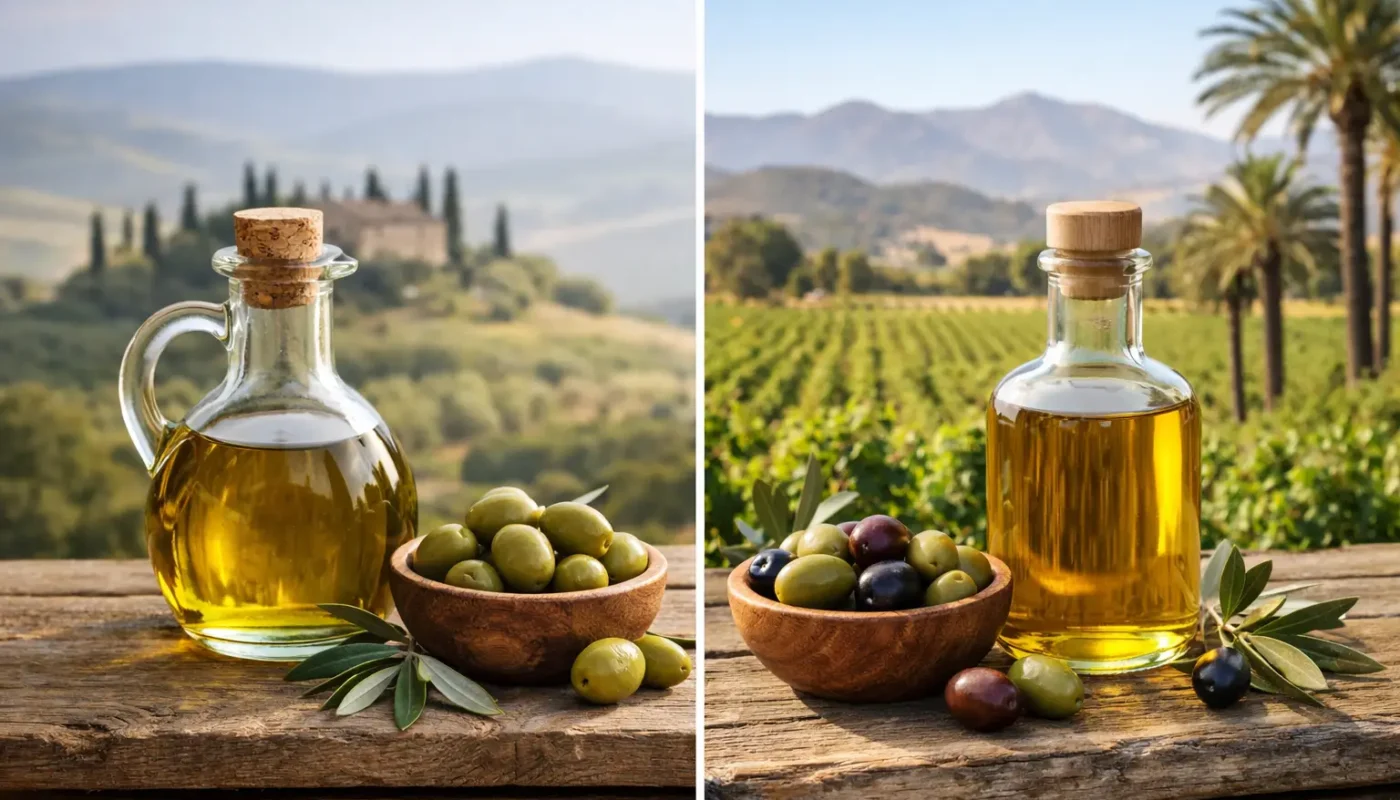
Set two fresh extra virgin olive oils on the counter – one from Italy, one from California – and the difference is usually obvious before the first bite of bread. One may open with tomato leaf, artichoke, and a peppery finish. The other may lean toward green almond, fresh grass, or a softer buttery entry with a clean bite at the end. That is what makes olive oil from italy vs california such a useful comparison for home cooks: this is not about which region is automatically better, but which bottle gives you the flavor, freshness, and versatility you actually want.
If you love to cook, entertain, or simply keep a better pantry, the real answer is that both regions can produce excellent extra virgin olive oil. The smart choice depends on harvest timing, olive varieties, production standards, and how you plan to use it. A finishing oil for grilled vegetables is not always the same bottle you want for baking a citrus cake or building a vinaigrette.
Olive oil from Italy vs California: what changes in the bottle?
The biggest differences usually come from cultivar, climate, and how quickly olives are milled after harvest. Italy has a long, deeply regional olive oil tradition, with oils that can vary dramatically from Sicily to Tuscany to Puglia. California is younger as an olive oil region by comparison, but it has become known for careful production, modern milling, and a freshness-first mindset that appeals to many American shoppers.
That means you are not comparing one single Italian style against one single California style. You are comparing families of flavor. Italian oils often show more savory complexity and regional character, while California oils are frequently praised for clean, bright, approachable profiles and reliable freshness in the US market.
Neither trait is automatically superior. It depends on whether you want a bold, structured oil that announces itself or a polished, versatile oil that slips easily into everyday cooking.
Flavor is where most people notice it first
Italian extra virgin olive oil can be beautifully assertive. Depending on the region and blend, it may taste herbaceous, peppery, grassy, or pleasantly bitter in the way good olives should. That bitterness is not a flaw. In premium EVOO, it is often a sign of fresh olives and healthy polyphenols, the natural compounds tied to both flavor and many of olive oil’s wellness benefits.
California olive oils can also be peppery and green, but many have a slightly more rounded style that American cooks find easy to love right away. You might notice notes of green banana, almond, fresh-cut grass, or even a gentle creaminess. Some California producers make intensely robust oils, but overall the category often feels very clean and fruit-forward.
If you are dipping bread, finishing bean soup, or drizzling over burrata, flavor personality matters. A stronger Italian oil can bring drama and structure. A balanced California oil can bring freshness without overpowering the plate.
Why bitterness and pepper matter
A lot of shoppers still assume smooth means better. With extra virgin olive oil, that is not always true. Bitterness and a peppery tickle in the throat are often signs of freshness and antioxidant content, especially in early harvest oils.
Italian oils are sometimes more likely to surprise beginners with those sensations, though California producers absolutely make oils with bold pungency too. If you want a lively oil for salad greens, grilled steak, lentils, or tomato dishes, those green and peppery notes can be exactly what makes the dish feel alive.
Freshness can shift the comparison
Freshness is one of the strongest arguments in favor of California oil for many US buyers. Olive oil is a fruit juice, not a shelf-stable forever product. Time, light, heat, and oxygen all work against quality. Because California oils are produced domestically, they may reach American kitchens with less travel time and a shorter supply chain.
That does not mean Italian oil is stale by default. Far from it. Excellent Italian producers bottle and ship beautiful oils with care. But for shoppers standing in front of a bottle, region alone tells you less than harvest date, bottling practices, storage, and turnover.
If a California oil was harvested recently and handled well, it may offer a freshness advantage simply because it had fewer miles and fewer months to lose its edge. If an Italian oil has a clear harvest date, dark packaging, and comes from a quality-focused source, it can be every bit as exciting.
This is where specialty retailers make a difference. Curated olive oil programs tend to pay much closer attention to seasonality and sensory quality than the average grocery shelf.
Production style and standards
Italy has centuries of tradition and a huge diversity of producers, from tiny estates to large commercial operations. That range is part of the beauty of Italian olive oil, but it also means quality can vary more than some shoppers expect. A label that says Italian does not automatically guarantee a premium extra virgin experience.
California’s olive oil industry is smaller and more modern in its infrastructure. Many producers emphasize tight harvest-to-mill timing, rigorous testing, and education around defects and freshness. That has helped shape California’s reputation as a strong source for high-quality EVOO, especially for consumers who value transparency.
Still, broad assumptions only go so far. The best bottle is the one that is genuinely extra virgin, fresh, and well made. A great Italian oil beats a mediocre California oil, and a great California oil beats a tired Italian one.
Olive oil from Italy vs California for cooking
This is where the comparison becomes practical. If you are choosing an oil for everyday sautéing, roasting, vinaigrettes, and finishing, California oils often make an easy all-around choice. Their balanced flavor can work across a wide range of dishes without demanding too much attention.
Italian oils shine when you want a little more personality. They can be especially good with pasta, bitter greens, grilled meats, white beans, rustic soups, and simple tomato dishes where the oil is part of the flavor structure, not just a cooking fat.
For baking, it depends on the recipe. A milder California EVOO can be lovely in olive oil cakes, muffins, or quick breads where you want moisture and subtle fruitiness. A more assertive Italian oil can be fantastic too, but it will leave more of its signature on the finished dessert.
Best pairings by style
A peppery Italian oil often pairs beautifully with grilled bread, pasta e fagioli, minestrone, roasted eggplant, steak, or mature cheeses. A fresh California oil can be excellent on salmon, avocado toast, grain bowls, citrus salads, roasted chicken, or whisked into a bright vinaigrette.
If your pantry has room for two bottles, this is the sweet spot: one bold and grassy, one softer and versatile. That gives you options instead of asking one oil to do everything.
Price, prestige, and what you are really paying for
Italian olive oil carries a certain romance, and sometimes a higher price reflects that. Region, estate reputation, protected designation systems, and small-lot production can all add value. Sometimes that value is absolutely deserved. Sometimes you are paying as much for heritage and branding as for what is in the bottle.
California oils can be premium priced too, especially from top producers, but shoppers often feel they are buying clarity and immediacy rather than old-world prestige. For some people, that is a plus. They want the freshest excellent oil available, not the most famous origin story.
The better question is not whether one country deserves more respect. It is whether the oil tastes vibrant, balanced, and true to style, and whether the price matches that experience.
How to choose with confidence
Start with how you cook. If you want an everyday bottle for salads, vegetables, eggs, and weeknight meals, a fresh California EVOO is often a very satisfying place to begin. If you love robust Mediterranean flavors and want your oil to stand up in simple dishes, an Italian bottle may be more your style.
Then look beyond origin. Check for a harvest date if possible. Choose dark glass or protective packaging. Look for sensory descriptors that match your taste – buttery, grassy, herbaceous, peppery, fruity, robust. Buy in a size you will finish while it is still lively, and store it away from heat and light.
Tasting also matters more than many people realize. At a specialty olive oil shop, you can often tell within seconds whether you prefer the savory edge of an Italian oil or the bright clarity of a California one. That kind of side-by-side experience turns olive oil from a basic pantry item into a real ingredient choice, which is exactly how we think about it at Weyira.
The nicest answer to olive oil from italy vs california is that your kitchen does not have to pick a permanent side. Some nights call for the assertive green bite of Italy. Other meals want the polished freshness of California. When you learn the difference, choosing olive oil becomes less about labels and more about pleasure at the table.
