Balsamic Vinegar, Dark Balsamic Vinegar, White balsamic vinegar
Balsamic Vinegar Pairing Guide for Better Meals
Jul
A great balsamic can make a tomato taste sweeter, a roast taste deeper, and strawberries taste like dessert with almost no effort. That is the real value of a good balsamic vinegar pairing guide – not fancy rules, but a faster path to food that tastes more complete.
Most people first meet balsamic in a salad dressing, which is fine, but it barely shows what the ingredient can do. Premium balsamic has acidity, sweetness, texture, and aroma all working at once. When you understand how those pieces behave, pairing gets much easier and much more fun.
How to Use This Balsamic Vinegar Pairing Guide
The simplest way to pair balsamic is to think in terms of balance. Dark balsamic usually brings richer sweetness, deeper fruit notes, and a rounder finish. White balsamic tends to feel brighter, lighter, and a little cleaner on delicate foods. Neither is better in every case. It depends on whether you want contrast, harmony, or just enough acidity to wake a dish up.
A good rule is this: the bolder the food, the more weight your balsamic can carry. Grilled steak, aged cheese, and roasted vegetables can handle a concentrated dark balsamic. Fresh greens, seafood, and pale fruit often benefit from white balsamic because it adds lift without muddying the flavor or color.
Texture matters too. A thick, syrupy balsamic behaves differently from a brisk, more fluid one. The thicker style works almost like a finishing sauce, while the lighter style blends more naturally into vinaigrettes, marinades, and quick pan sauces.
Pairing Balsamic with Vegetables
Vegetables are where balsamic earns its place in the pantry. It brings out natural sugars in produce and adds the kind of contrast that makes even simple sides taste restaurant-worthy.
Tomatoes, greens, and raw vegetables
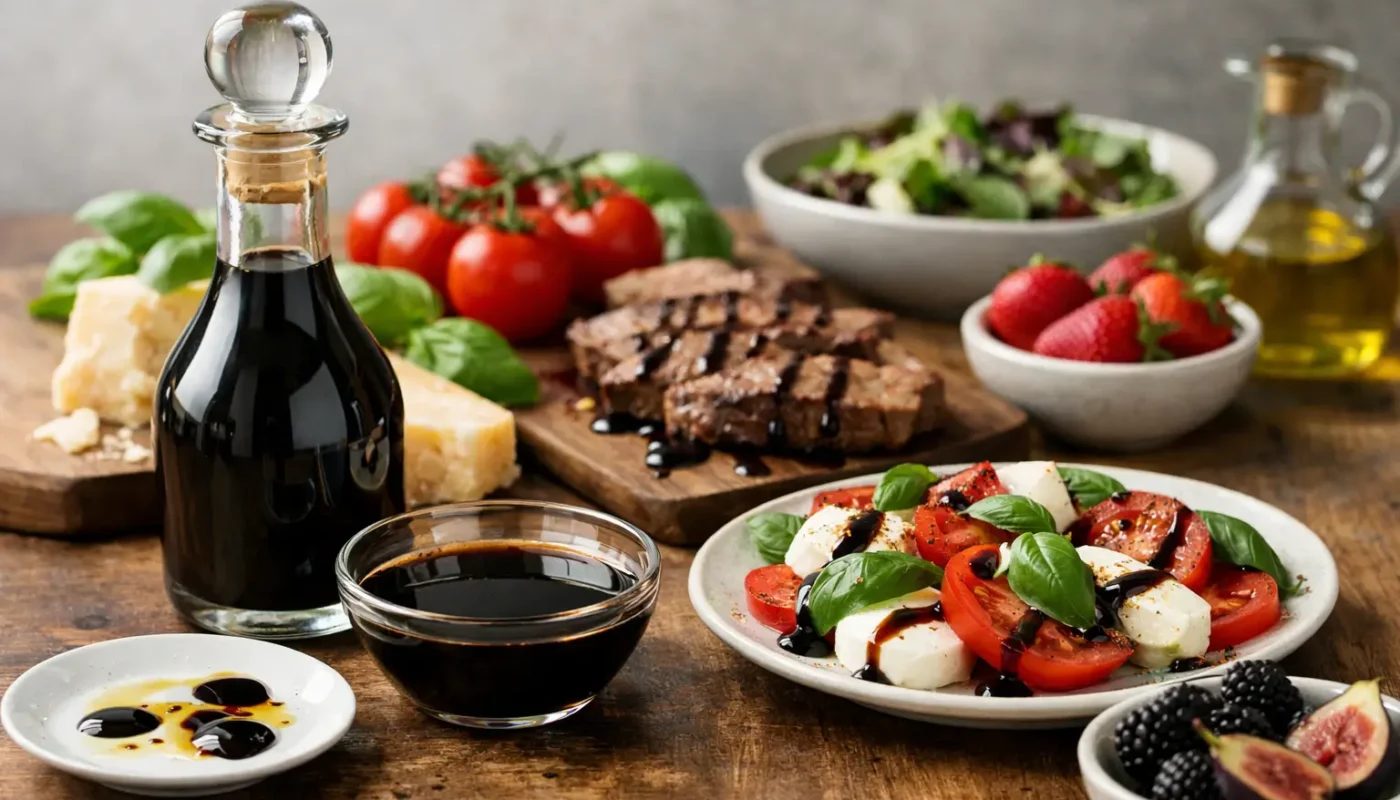
Tomatoes and dark balsamic are a classic for a reason. Sweet acidity meets sweet acidity, and the result tastes fuller rather than sharper. Add a peppery extra virgin olive oil, a pinch of flaky salt, and you have something generous enough for a platter of sliced tomatoes, mozzarella, or bruschetta.
Leafy greens are more flexible than people think. A sturdy salad with arugula, radicchio, or spinach can handle dark balsamic, especially when there are nuts, cheese, or dried fruit in the bowl. Tender butter lettuce, cucumber, and herbs often do better with white balsamic, which keeps the dressing bright and clean.
Raw vegetables with mild flavor, like shaved fennel, carrots, or celery, usually benefit from restraint. Here, white balsamic is often the better call. It sharpens the edges without overwhelming the crisp, fresh character you are trying to preserve.
Roasted vegetables
Roasting changes the equation because vegetables develop sweetness and browning. Brussels sprouts, carrots, beets, sweet potatoes, onions, and squash all love dark balsamic. A drizzle after roasting can be enough, though a small amount tossed on before cooking can help build color and depth.
The trade-off is sugar. Because balsamic contains natural sweetness, using too much before roasting can push vegetables from caramelized to burnt. If your oven runs hot, finish with balsamic at the end instead of early in the process.
Cheese and a Balsamic Vinegar Pairing Guide
Cheese may be the easiest place to experiment because the pairings are so forgiving. Salt, fat, and acidity naturally work well together.
Fresh cheeses like mozzarella, ricotta, chèvre, and burrata pair beautifully with white or lighter dark balsamic. You want enough acidity to cut through the creaminess, but not so much intensity that the cheese disappears. White balsamic with burrata and peaches is especially elegant, while a fruit-forward dark balsamic can make fresh mozzarella taste more savory.
Aged cheeses invite stronger balsamics. Parmigiano Reggiano, aged gouda, pecorino, and sharp cheddar can handle a dense dark balsamic with fig, date, or black cherry notes. That salty-crystalline bite in aged cheese loves sweetness. A few drops can be more effective than a generous pour.
Blue cheese is its own category. It often works best with sweeter dark balsamic styles because you need enough richness to stand up to the pungency. Add walnuts or pears and the whole pairing settles into place.
Best Balsamic Pairings for Meat and Seafood
With proteins, the question is whether balsamic should season, glaze, or finish. The answer changes the pairing.
Chicken, pork, and beef
Chicken is adaptable, which makes it a good starting point. White balsamic works well in marinades when you want citrusy brightness without actual citrus. Dark balsamic is better when you want browning, sweetness, and a slightly lacquered finish, especially on grilled or roasted chicken.
Pork and balsamic are natural partners because pork carries sweetness so well. Pork tenderloin, chops, and even meatballs benefit from dark balsamic with fruit notes like cherry, raspberry, or fig. The vinegar cuts richness while echoing the meat’s savory-sweet side.
Beef needs a little more care. A splash of dark balsamic can add complexity to a steak sauce or pan reduction, and it pairs beautifully with grilled skirt steak, short ribs, and roast beef. But on a premium steak, too much balsamic can dominate. Use it as an accent, not a mask.
Seafood
Seafood is where people sometimes overdo it. Bold dark balsamic can flatten delicate fish if the balance is off. White balsamic is usually the better choice for shrimp, scallops, halibut, and crab because it offers acidity without too much sweetness or color.
That said, richer seafood like salmon or tuna can handle more assertive pairings. A restrained dark balsamic glaze on salmon can be excellent, especially when paired with herbs, mustard, or a fruity olive oil. The key is moderation. You want the fish to remain the main event.
Fruit, Dessert, and Unexpected Pairings
One of the pleasures of a tasting-gallery pantry is realizing that balsamic belongs far beyond savory cooking. Fruit is often the easiest proof.
Strawberries with dark balsamic are famous because the vinegar intensifies both sweetness and aroma. Blueberries, cherries, peaches, figs, and pears also respond beautifully. White balsamic is especially nice with melon, stone fruit, and citrus salads because it adds brightness without turning the dish heavy.
Dessert pairings work best when the sweetness is not one-note. Vanilla ice cream, panna cotta, pound cake, or flourless chocolate cake can all benefit from a restrained drizzle of concentrated dark balsamic. The acidity keeps dessert from tasting flat. A little goes a long way here. You are aiming for intrigue, not salad.
Unexpected pairings can be the most memorable. Balsamic with popcorn sounds odd until you try a light white balsamic misted over warm kernels with sea salt. Dark balsamic with grilled peaches and yogurt feels both simple and special. Even cocktails can benefit from a few drops when you want tartness with depth rather than plain citrus.
How Olive Oil Changes the Pairing
Balsamic rarely works alone. Olive oil shapes the finish, rounds the acidity, and can shift a pairing from sharp to luxurious.
A grassy, peppery extra virgin olive oil gives structure to salads, tomatoes, beans, and grilled vegetables. A softer, buttery olive oil lets a complex balsamic stay in the spotlight. Fused citrus olive oils pair especially well with white balsamic on seafood, grain bowls, and spring salads. More herbaceous oils can anchor dark balsamic on roasted vegetables, beef, and antipasto platters.
This is where premium pantry products really show their value. Better oil and better vinegar do not just taste stronger. They taste more distinct, which makes matching flavors easier.
Common Pairing Mistakes to Avoid
The most common mistake is using one balsamic for everything. A single bottle can be useful, but it will not always be the best fit. Keeping one dark and one white balsamic on hand gives you far more flexibility.
The second mistake is treating balsamic like an automatic marinade ingredient. Because of its sweetness, it can burn faster than expected, especially on the grill. If you want the flavor without the risk, finish after cooking or add it near the end.
The third mistake is ignoring intensity. Delicate foods need a lighter hand. Stronger foods can take more sweetness, more acidity, and more concentration.
A Simple Way to Build Confidence
If you want this balsamic vinegar pairing guide to become second nature, taste in small comparisons. Try one vegetable with dark balsamic and then with white. Taste a fresh cheese with both. Drizzle a tiny amount on strawberries, then on roasted carrots, then on grilled chicken. You will start noticing patterns quickly.
That is where pairing stops feeling like guesswork and starts feeling like good instinct. A well-chosen balsamic does more than add acidity. It adds shape to a dish, helps flavors meet in the middle, and makes even a simple meal feel considered. Start with what you already love to cook, and let the bottle on the counter do more of the work.
