
Ultra Premium Olive Oil
Pantry Accessories for Oil Lovers That Earn Space
Oct
A beautiful bottle of extra virgin olive oil deserves better than a warm spot beside the stove and a sticky ring on the countertop. The right pantry accessories for oil lovers do more than make a shelf look polished. They preserve the flavor you paid for, make everyday cooking more intuitive, and invite you to use your favorite oils and vinegars generously.
For a pantry built around premium olive oil, small details matter. Light, heat, oxygen, and stray moisture can all work against freshness. Meanwhile, a poorly fitted pourer or an oversized bottle on the table can turn a simple finishing drizzle into a mess. A few well-chosen accessories solve those problems while making your oils feel like the culinary ingredients they are – worthy of tasting, pairing, and sharing.
Start With Freshness Protection
Extra virgin olive oil is at its most expressive when it is fresh. A lively oil might offer cut-grass notes, green almond, peppery arugula, or a buttery ripe-fruit finish. Those flavors fade faster when oil sits in bright light or near heat.
Dark glass or stainless steel storage is a practical first line of defense. If you buy olive oil in a larger format, decant a working amount into a smaller opaque bottle and keep the rest sealed in a cool, dark cabinet. This reduces the number of times the full bottle is opened and limits its exposure to air.
Choose storage containers with a secure cap, not a loose-fitting stopper. Decorative clear cruets can be lovely for a dinner party, but they are not the best long-term home for an everyday extra virgin olive oil. Use one for a small amount you expect to finish quickly, then refill it from oil stored properly in dark glass or tin.
Location matters as much as the container. A cabinet away from the oven, dishwasher, and sunny window is ideal. Olive oil does not need refrigeration in most home kitchens, and cold temperatures can make it cloudy or temporarily solid. A consistently cool pantry is the better choice.
A Pour Spout Should Make Cooking Easier
A quality pour spout may be the accessory you use most. It gives you control over the stream, whether you are coating a skillet, dressing roasted vegetables, or finishing a bowl of soup with a peppery ultra-premium EVOO.
Look for a spout that fits your bottle securely and includes a cap or lid. The cap helps keep dust out and slows unnecessary exposure to air. A narrow, steady flow is usually more useful than a wide opening, especially with flavorful infused oils where a little goes a long way.
There is one trade-off: a pour spout is best for a bottle you reach for often. If you use a particular oil only occasionally, keep the original cap on between uses. For example, a robust early-harvest olive oil may be your daily cooking staple, while a fragrant basil or blood orange fused olive oil might stay capped until a specific recipe calls for it.
Keep a small drip tray, coaster, or washable silicone mat beneath frequently used bottles. It sounds simple, but it protects wood shelves and prevents the familiar sticky buildup that makes a beautiful oil station feel neglected. Choose something easy to wipe clean rather than an absorbent fabric surface.
Build a Tasting-and-Finishing Station
The oils used over heat are not always the ones you want to drizzle over a finished dish. Giving your finishing oils their own small section of the pantry or counter makes that distinction easier to remember.
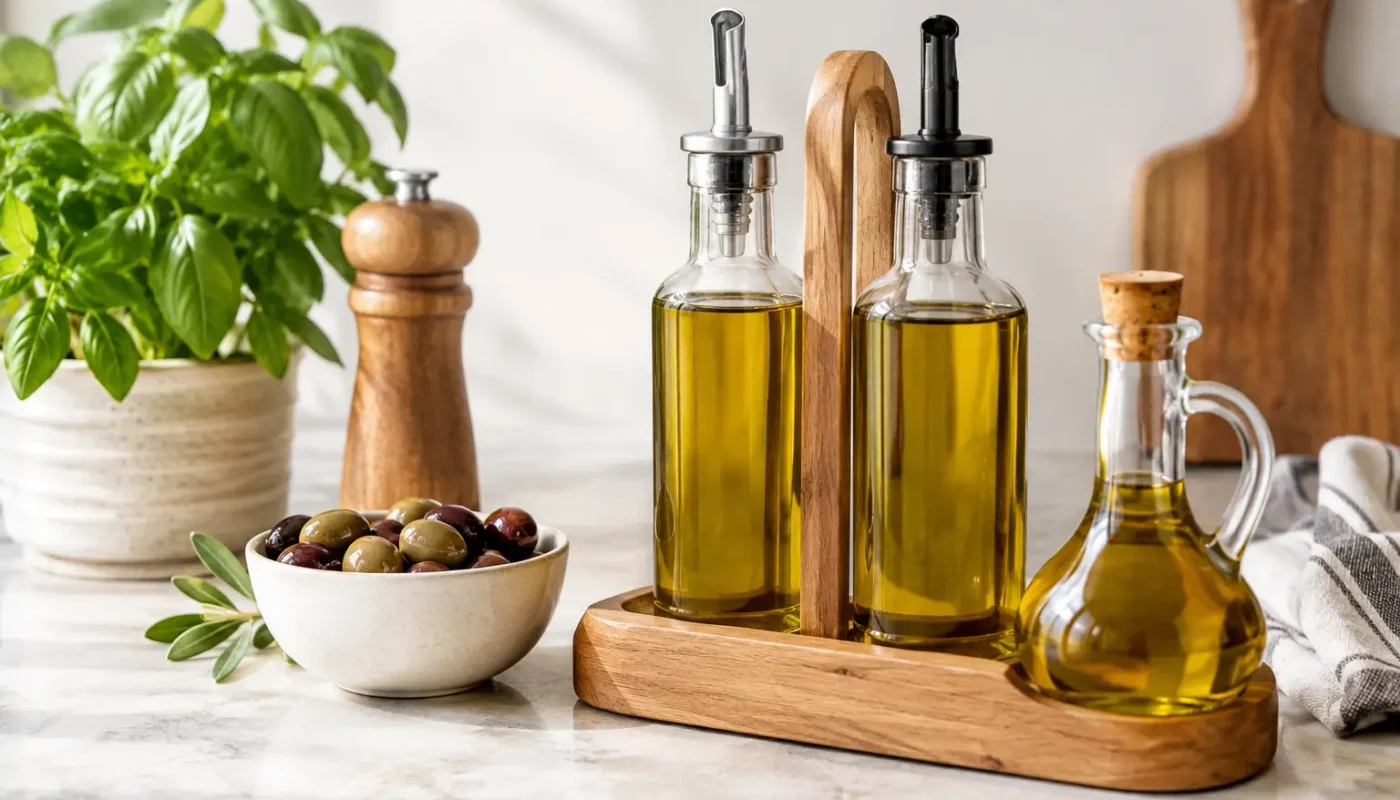
A compact tray is especially useful here. Arrange two or three oils you use in different ways: perhaps a medium-intensity extra virgin olive oil for everyday versatility, a robust oil for beans and grilled meats, and a flavored olive oil for quick weeknight inspiration. Add a favorite balsamic vinegar, and you have the beginning of countless dressings, marinades, and finishing combinations.
For tasting, small ceramic cups are more useful than they may seem. They let you warm a little olive oil in your hands, notice its aroma, and taste its texture and peppery finish without masking it in bread. Tiny tasting dishes also help when comparing oils or deciding which balsamic will best complement a salad, cheese board, or fruit dessert.
Bread dipping bowls are another welcome addition, particularly for entertaining. The best ones are shallow enough for dipping and broad enough to show off a pool of olive oil, herbs, flaky salt, or a ribbon of balsamic. Just remember that dipping oil is a moment to enjoy, not the only way to use a premium bottle. The same oil can bring remarkable depth to vegetables, grains, seafood, eggs, and simple pasta.
Pantry Accessories for Oil Lovers Who Like to Experiment
Flavor discovery is one of the joys of keeping a specialty oil and vinegar pantry. Accessories can make experimentation less random and more delicious.
Labels are a modest but valuable tool, especially if you decant oils or keep several varieties open at once. Include the oil name, purchase or opening date, and a quick pairing note such as “great with tomatoes” or “finish grilled fish.” This prevents a lemon olive oil from being mistaken for a neutral cooking oil and helps you use bottles while they are still at their best.
A small notebook or recipe card box works beautifully for recording pairings you want to repeat. Write down the combination that made roasted carrots memorable, the balsamic that transformed strawberries, or the oil that gave a soup its final spark. Over time, it becomes a personal flavor reference built around your own kitchen.
Measuring spoons and a small glass measuring cup also earn their place. Premium oils deserve intuitive cooking, but measurements matter when you are developing a vinaigrette, baking with olive oil, or balancing a marinade. A dependable starting point for vinaigrette is three parts oil to one part vinegar, then adjust for the acidity and sweetness of the vinegar, the food on the plate, and your own taste.
Keep salt, pepper, spices, and honey nearby if your pantry allows. A well-organized finishing area encourages natural pairings: olive oil with sea salt and cracked pepper for warm bread, garlic oil with herbs for roasted potatoes, or a fruity balsamic with honey and olive oil for a glaze. The goal is not to crowd every surface. It is to keep complementary ingredients close enough that a flavorful choice feels effortless.
Choose Materials That Respect the Ingredients
Ceramic, stainless steel, dark glass, and food-safe silicone are all smart materials for an oil-centered pantry. They are durable, easy to clean, and less likely to hold onto flavors or odors. Wooden trays and boards add warmth, but they need occasional care because oil spills can soak in and leave marks.
Avoid accessories that are difficult to wash or designed mainly for appearance. A complicated stopper with narrow crevices may collect residue. A clear bottle with no cap may look elegant but offers little protection. The accessory that earns its place is the one you will use and clean without hesitation.
If you are choosing a gift for a fellow food lover, pair a practical accessory with a memorable oil or vinegar rather than assembling a collection of objects for its own sake. A handsome dark-glass cruet, a set of tasting cups, or a bread dipping dish becomes more meaningful when it arrives with flavors ready to enjoy.
Let Your Pantry Invite Better Cooking
The most useful oil pantry does not need to resemble a showroom. It should reflect how you cook. If you make quick vegetable-forward dinners, keep your everyday EVOO, a favorite balsamic, and a reliable pour spout within easy reach. If you love hosting, add tasting cups and a serving tray. If you collect infused oils, labels and a simple pairing notebook may matter more than another bottle rack.
At Weyira Olive Oil & Vinegar, we believe a great bottle should be opened, tasted, and returned to often. Give your oils a protected place, give yourself an easy way to use them, and let each drizzle be the beginning of a better meal.
