
Balsamic Vinegar, Dark Balsamic Vinegar, Extra Virgin Olive Oil, Olive Oil, Organic Extra Virgin Olive Oil, Ultra Premium Olive Oil, White balsamic vinegar
Best Oils for Homemade Vinaigrettes
Jul
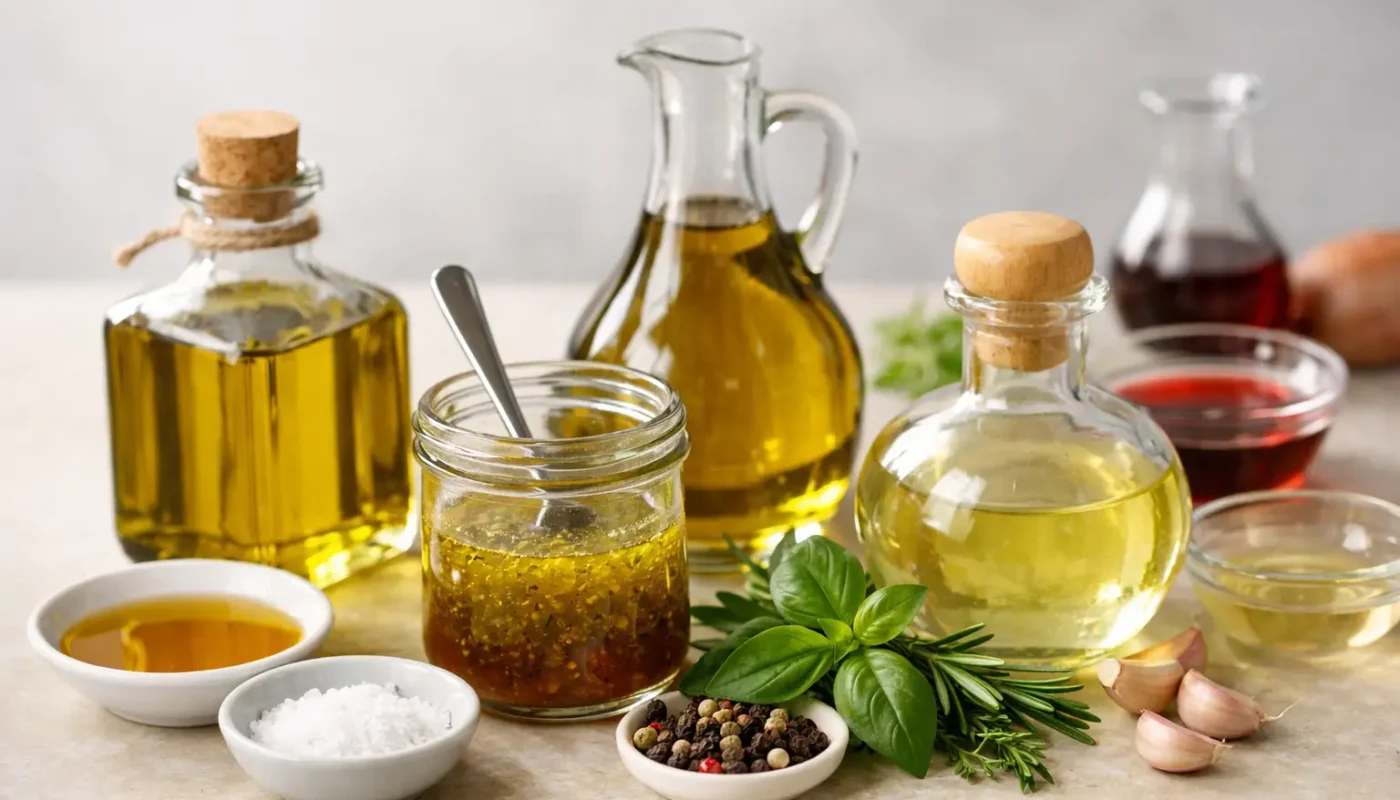
A good vinaigrette can make a weeknight salad taste restaurant-worthy in less than a minute. The trick is not just the vinegar or the mustard – it starts with choosing the best oils for homemade vinaigrettes, because oil sets the texture, carries the aroma, and decides whether your dressing tastes bright, flat, peppery, buttery, or rich.
If you’ve only used one bottle for every salad, this is where homemade dressings get more interesting. Different oils bring different personalities to the bowl, and the right choice depends on what you’re dressing, how bold your vinegar is, and whether you want the oil to lead or quietly support the other flavors.
What makes an oil right for vinaigrette
A vinaigrette sounds simple, but balance is doing a lot of work. Oil softens acidity, rounds out sharp edges, and gives the dressing body so it clings to greens instead of pooling at the bottom of the plate. That means the best oil is not always the most expensive one or the strongest one. It is the one that fits the ingredients around it.
Freshness matters first. Rancid oil will flatten everything, even if the vinegar and seasonings are excellent. With olive oil in particular, fresher oil tastes livelier – grassy, fruity, peppery, or green – while tired oil can taste waxy or stale. For vinaigrettes, that difference is obvious.
Flavor intensity matters too. A delicate butter lettuce salad with herbs can be overwhelmed by a bitter, assertive oil. On the other hand, a grain salad with roasted vegetables can handle something deeper and more robust. Texture plays a role as well. Some oils feel silky and light, while others taste weightier and richer on the palate.
Best oils for homemade vinaigrettes by flavor style
Extra virgin olive oil
For many cooks, extra virgin olive oil is still the benchmark, and for good reason. It offers body, complexity, and a natural affinity with most vinegars. A high-quality extra virgin olive oil can bring notes of green almond, artichoke, fresh-cut grass, herbs, tomato leaf, or ripe fruit, depending on origin and harvest.
This is the oil to choose when you want the dressing to taste vivid and intentional. It pairs beautifully with balsamic, red wine vinegar, champagne vinegar, and lemon juice. It also works across seasons – bright and peppery for spring vegetables, more rounded and fruity for tomatoes, beans, or grilled chicken.
There is a trade-off. Not every extra virgin olive oil behaves the same way. A bold, peppery oil can be wonderful on bitter greens or bean salads but too dominant for tender greens and mild fish. If your vinaigrette tastes harsh, the answer may not be less vinegar. It may be a gentler olive oil.
Mild olive oil
If extra virgin olive oil is the lead singer, a milder olive oil is the skilled backup vocalist. It still gives you olive character, but with less bitterness and less bite. This makes it a smart choice when you’re using delicate white balsamic, citrus juice, fresh berries, or herbs you want to keep front and center.
A mild olive oil is often the easiest everyday option for households that make vinaigrettes frequently. It is versatile, crowd-pleasing, and less likely to overpower a simple salad. When people say they want a homemade dressing that tastes smooth and balanced, this is often what they are looking for.
Avocado oil
Avocado oil is a strong choice if you want a neutral, silky base with a subtle buttery finish. It does not have the grassy complexity of extra virgin olive oil, but that is exactly why it works so well in certain vinaigrettes. It lets your vinegar, aromatics, and herbs take the spotlight.
This oil shines in dressings for chopped salads, slaws, grain bowls, and vinaigrettes with garlic, shallot, or fresh citrus. It is especially useful when you’re pairing the dressing with ingredients that already have pronounced flavor, such as feta, avocado, nuts, or grilled shrimp.
If your goal is a classic Mediterranean vinaigrette, olive oil usually tastes more expressive. But if you want softness and clean texture, avocado oil deserves a place in the pantry.
Walnut oil
Walnut oil brings immediate depth. It is toasty, nutty, and elegant, especially in fall and winter salads. Think bitter greens, sliced pears, blue cheese, roasted beets, or lentils. In those combinations, walnut oil can turn a basic vinaigrette into something that feels composed and memorable.
Because it has a distinct flavor, it is best used with some restraint. Many cooks blend walnut oil with olive oil so the dressing keeps structure while gaining complexity. Used on its own, it can be stunning, but only when the other ingredients support it.
Freshness is even more important here. Nut oils can deteriorate faster than olive oil, so they should taste sweet and fragrant, not dusty or bitter.
Grapeseed oil
Grapeseed oil is one of the quietest oils you can use. It is clean, light, and fairly neutral, which makes it helpful when the acid or add-ins are doing most of the flavor work. If you’re making a vinaigrette with tarragon, basil, Dijon, honey, or fruit-forward vinegar, grapeseed oil keeps everything crisp and unobtrusive.
It is not the oil you choose for drama. It is the oil you choose when you want precision. That can be exactly right for delicate greens, seafood salads, or dressings where color and brightness matter.
Specialty infused and fused oils
This is where homemade vinaigrettes become especially fun. Garlic, basil, lemon, blood orange, Persian lime, Tuscan herb, and other flavored oils can shift a dressing from standard to signature in one pour. A citrus-fused oil with white balsamic makes a fast, polished vinaigrette for spinach or arugula. A basil olive oil with tomato salad tastes like summer without much effort.
The key is restraint. When the oil already contains flavor, keep the rest of the dressing simple. Too many competing ingredients can muddy the result. Start with the flavored oil, a complementary vinegar, salt, and maybe a little mustard or honey if the balance needs help.
How to match oil to vinegar
The easiest way to improve vinaigrette is to think in pairs. Bold oils need either an equally confident acid or a recipe that benefits from contrast. Delicate oils usually pair better with lighter vinegars.
Extra virgin olive oil works naturally with balsamic, red wine, sherry, and lemon. Mild olive oil and avocado oil are excellent with white balsamic, champagne vinegar, apple cider vinegar, and citrus juices. Walnut oil loves sherry vinegar, apple cider vinegar, and darker fruit-forward balsamics.
If a dressing tastes sharp, add a little more oil. If it tastes heavy, brighten it with more acid or a pinch of salt. A tiny amount of honey or maple syrup can help if the vinegar is especially punchy, but sweetness should support the flavor, not cover imbalance.
A note on ratios and texture
The old 3-to-1 ratio of oil to vinegar is a useful starting point, not a rule. Some balsamic vinegars are naturally sweeter and less aggressive, so they need less oil. Some citrus-based dressings taste better closer to 2-to-1. If you’re using a bold peppery olive oil, you may also want a little more acid to keep the dressing lively.
For texture, whisking in Dijon mustard or a spoonful of honey helps emulsify the vinaigrette so it stays together longer. Shallots also soften into the dressing and add body. A really good oil, though, does much of the work on its own by creating a fuller mouthfeel.
When the best oil is not just one oil
Many of the most balanced vinaigrettes use a blend. Half extra virgin olive oil and half avocado oil gives you olive character with a softer finish. Olive oil plus walnut oil creates nutty depth without becoming too heavy. This approach is especially useful if you love flavorful oils but want more flexibility.
Blending also helps when you’re dressing a larger meal with varied flavors on the plate. A blended vinaigrette can feel more versatile and less polarizing, which matters when you’re serving guests.
Buying better oil makes homemade dressing easier
You can season around a mediocre vinegar. It is much harder to hide a mediocre oil. For vinaigrettes, quality pays off in a very direct way because the oil is not being heated or diluted. You taste it exactly as it is.
Look for oils that smell fresh and appealing, not flat. If you enjoy tasting different styles, this is one of the easiest pantry categories to explore because the difference shows up immediately in everyday meals. A peppery California extra virgin olive oil, a buttery avocado oil, and a fragrant walnut oil each open up different kinds of dressings.
That is part of the pleasure of making vinaigrettes at home. You are not stuck with one bottled flavor. You can match the oil to the salad, the season, and even your mood. Once you start tasting oil as an ingredient rather than a background staple, your dressings become more personal, more balanced, and far more memorable.
The best bottle for tonight might be a bright extra virgin olive oil over arugula, or a softer avocado oil whisked with citrus for a grain bowl. Trust your palate, taste as you go, and let the oil do more than just smooth out the vinegar.
