
Ultra Premium Olive Oil
Cloudy Olive Oil: Fresh Press or a Fault?
Oct
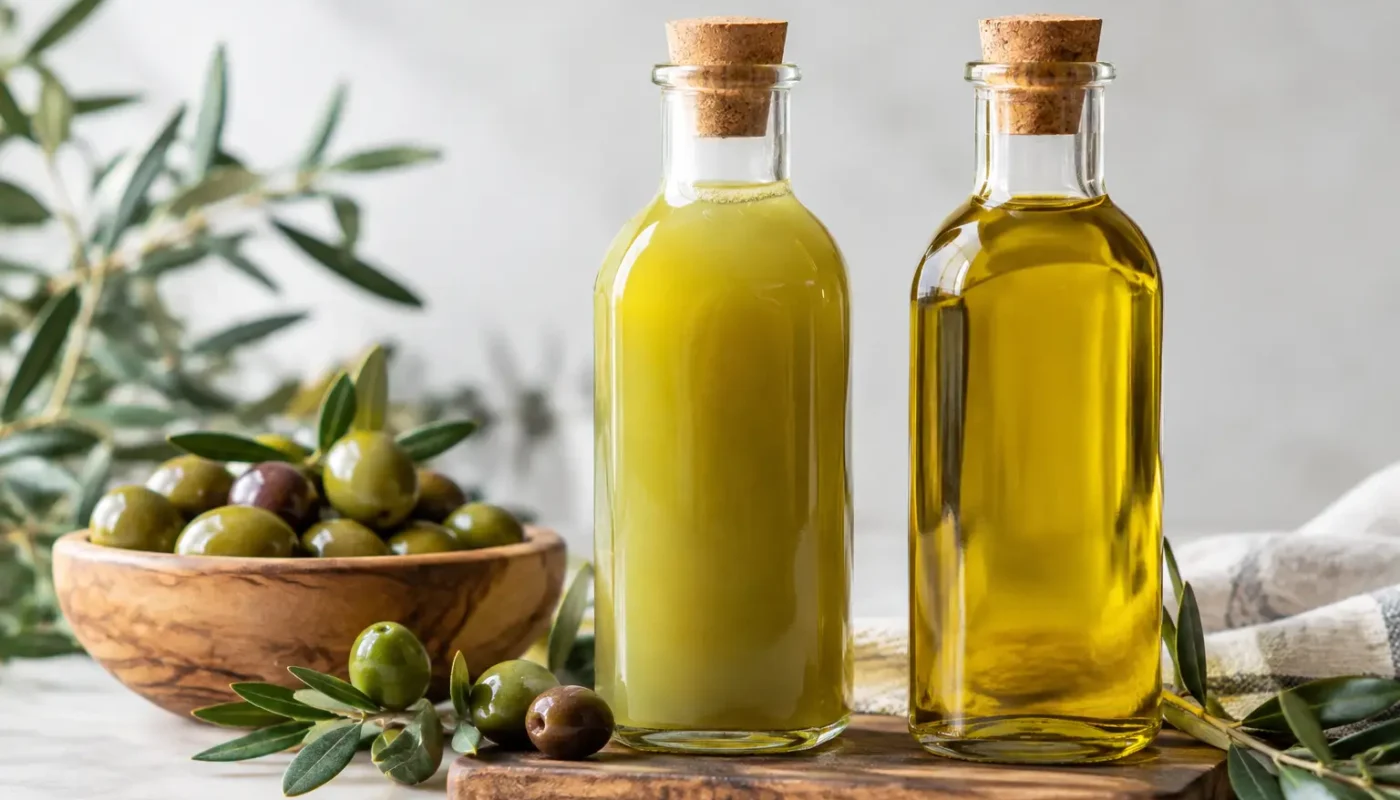
A newly opened bottle of olive oil catches the light and looks almost opaque, with a soft golden-green haze drifting through it. Is that cloudy olive oil a sign of exceptional freshness, or should it stay on the shelf? The honest answer is: it depends. Cloudiness can be a delicious marker of a just-pressed, minimally processed oil, but it can also come from cold temperatures or suspended sediment that shortens shelf life.
For cooks who care about flavor and purity, the useful question is not simply whether olive oil should be clear. It is why it is cloudy, how it smells and tastes, and how quickly you plan to enjoy it.
What Makes Cloudy Olive Oil Look Hazy?
Freshly pressed olive oil contains tiny particles of olive flesh, moisture, and natural waxes. In unfiltered oil, these fine solids remain suspended in the liquid for a time, creating a hazy appearance. Some bottles may also develop a gentle layer of sediment on the bottom as the particles settle.
That appearance is often most noticeable soon after harvest, when an oil is young and vivid. It may smell of freshly cut grass, green tomato, artichoke, herbs, or ripe fruit, depending on the olives and growing region. A well-made unfiltered extra virgin olive oil can offer remarkable texture and an especially direct, just-from-the-mill character.
But cloudiness alone is not a quality grade. A clear oil can be beautifully fresh, peppery, and complex. An unfiltered oil can be outstanding, too. Filtration is primarily a stability decision, not a shortcut or a sign that the oil has been stripped of flavor.
Unfiltered oil and its trade-off
Olive oil producers filter to remove water and olive solids that can encourage fermentation and speed deterioration over time. That means a properly filtered extra virgin olive oil generally has a longer, more predictable shelf life. It also tends to look bright and clear, especially when stored at room temperature.
Unfiltered oil, sometimes labeled naturally settled or non-filtered, leaves more of the fresh press character intact. The trade-off is that it is more perishable. Those microscopic particles and droplets of water are flavorful, but they make careful storage more important. An unfiltered bottle is often best treated as a seasonal pleasure: buy it fresh, use it generously, and do not save it indefinitely for a special occasion that never arrives.
Cloudy Olive Oil After Refrigeration Is Different
A bottle that was clear at purchase can turn cloudy after being stored in a chilly pantry, garage, or refrigerator. This happens because naturally occurring waxes and fatty compounds begin to solidify in cold conditions. You may see a misty haze, pale flakes, or thicker-looking oil.
This is usually harmless. Bring the bottle back to room temperature, keep it away from direct sunlight, and let it warm gradually. The cloudiness should fade as the oil returns to its normal liquid state. There is no need to heat it aggressively or place it near a stove.
The popular refrigerator test, which claims that real olive oil must solidify when chilled, is not reliable. Different olive varieties, harvest conditions, and fatty-acid profiles react differently to low temperatures. Refrigeration may cause cloudiness in authentic extra virgin olive oil, but it cannot confirm purity or quality.
How to Tell Whether the Oil Is Still Good
Your senses are far more useful than the bottle’s appearance. Pour a small amount into a cup or glass, warm it lightly in your hands, and smell it before tasting. Fresh extra virgin olive oil should have an inviting aroma. It may be green and grassy, fruity and floral, or mellow and buttery, but it should smell alive.
A pleasant bitterness on the tongue and a peppery tickle in the throat are often welcome signs, especially in oils made from greener, earlier-harvest olives. These sensations come from beneficial phenolic compounds and are part of the flavor range that makes quality EVOO so compelling.
Be cautious if the oil smells like old nuts, crayons, putty, stale popcorn, or a damp basement. Those aromas can point to rancidity, oxidation, or defects caused by poor storage. If an unfiltered oil tastes fizzy, fermented, muddy, or unpleasantly yeasty, its suspended sediment may have begun to break down.
Cloudiness with a fresh aroma and clean finish is one thing. Cloudiness paired with off flavors is another.
The Best Ways to Use Unfiltered Olive Oil
Think of a fresh, cloudy oil as a finishing ingredient first. Its character can be lost when it is hidden in a heavily seasoned dish, while its texture and aroma shine when used with restraint. Spoon it over warm beans, roasted squash, grilled fish, tomato soup, burrata, or a bowl of lentils. Let it pool around a ripe peach with fresh herbs, or use it for bread dipping with a pinch of flaky salt.
It can also bring a lovely softness to simple baking, mashed potatoes, vinaigrettes, and lemony cakes. If you are making a salad dressing, pair its green, peppery profile with a bright white balsamic or a crisp wine vinegar. If the oil is more delicate and fruity, a dark berry or fig-style balsamic can create a richer contrast.
You can cook with unfiltered olive oil, but it is rarely the best use of a limited, short-lived bottle. Save its brightest moments for dishes where the oil is tasted clearly. For sautéing, roasting, and everyday cooking, a fresh filtered extra virgin olive oil offers excellent flavor with more storage flexibility.
How to Store Cloudy Oil for Its Best Flavor
Olive oil has four persistent enemies: heat, light, oxygen, and time. Unfiltered oils are particularly sensitive because the remaining solids and moisture can accelerate change. Keep the bottle tightly closed in a cool, dark cabinet, away from the oven, dishwasher, and sunny countertop.
A dark glass bottle or opaque tin offers useful protection from light, but the container cannot compensate for a hot storage spot. Aim for a steady, moderate room temperature. Avoid keeping oil in the refrigerator unless your home is consistently very warm and you are comfortable waiting for the oil to return to liquid before using it.
Once opened, use an unfiltered oil promptly. The ideal timeline varies by producer, harvest date, packaging, and storage conditions, but this is not a bottle to nurse for a year. If you cook for one or two people, choose a smaller format and enjoy every pour while its aromas are still expressive.
Look beyond the label language
Terms such as “cold pressed,” “pure,” and “light” do not guarantee freshness or extra virgin quality. When choosing olive oil, look for a harvest date when available, a stated origin, and packaging that protects the oil. A clearly identified harvest season is especially helpful because olive oil is a fruit juice, not an ageless pantry liquid.
It also helps to buy from a source that treats tasting as part of the experience. At Weyira Olive Oil & Vinegar, the pleasure of comparing a bold early-harvest oil with a softer, fruit-forward selection is part of finding the right bottle for your kitchen. A cloudy, unfiltered option can be a wonderful discovery, but it should earn your attention through its aroma and flavor, not just its rustic appearance.
Should You Choose Clear or Cloudy Olive Oil?
Choose cloudy, unfiltered olive oil when you want the fleeting character of a fresh press and know you will use it soon. It is especially rewarding for enthusiastic home cooks, entertaining boards, seasonal vegetables, and gifts for someone who loves tasting food at its most expressive.
Choose filtered olive oil when you want a dependable everyday bottle with a longer shelf life and a clean, stable profile. It is not less artisanal. Many exceptional producers filter with care precisely because they want the oil’s orchard-fresh flavor to last from the mill to your table.
A little haze can be beautiful, but freshness is something you taste. Pour generously, trust your senses, and let the oil you choose make even a simple meal feel more considered.
