
Extra Virgin Olive Oil, Olive Oil, Organic Extra Virgin Olive Oil, Ultra Premium Olive Oil
Extra Virgin Olive Oil Guide for Better Flavor
Jul
A lot of people realize their olive oil is disappointing only after they taste a truly fresh one. The difference is immediate – bright, grassy, peppery, sometimes buttery, sometimes green and bold. This extra virgin olive oil guide is here to make that gap easier to spot, so you can buy with more confidence and cook with far more flavor.
Extra virgin olive oil is one of those pantry staples that seems simple until you start paying attention. Then you notice how much origin, harvest timing, storage, and processing affect what ends up in the bottle. A good EVOO can sharpen a salad, round out roasted vegetables, lift grilled fish, or finish soup with a peppery edge that butter simply cannot give you.
What extra virgin actually means
Extra virgin olive oil is the highest grade of olive oil. It is made from olives without excessive heat or chemical refining, and it must meet strict standards for both flavor and chemistry. In plain kitchen terms, that means the oil should taste fresh and clean, with no stale, waxy, or musty notes hiding in the background.
The best bottles usually show some combination of fruitiness, bitterness, and pungency. That last quality often feels like a peppery tickle in the throat. People sometimes assume pepperiness means the oil is harsh or low quality, but it is often a sign of freshness and beneficial polyphenols. Not every excellent oil is aggressively peppery, though. Some are delicate and floral, while others lean green, herbal, or nutty. Style depends on olive variety, climate, and when the olives were picked.
This is where many grocery store shoppers get tripped up. They think olive oil should taste neutral, when in fact excellent extra virgin olive oil should taste alive.
An extra virgin olive oil guide to what matters most
If you want one shortcut, look for freshness before you look for romance. Beautiful labels and old-world imagery can be appealing, but they do not tell you whether the oil inside still has the vivid character that makes EVOO worth buying.
Harvest date matters more than a vague expiration date. Olive oil is a fruit juice, and freshness affects flavor. A recent harvest generally gives you a better chance at lively, vibrant oil, especially if it has been stored well. Packaging matters too. Dark glass or tins help protect oil from light, which speeds deterioration.
Origin can be helpful, but it is not a guarantee on its own. Outstanding oils come from California, Italy, Spain, Greece, Australia, Peru, Morocco, Turkey, and beyond. What matters is not only where the olives were grown, but how quickly they were milled, how carefully the oil was handled, and how long it sat before reaching your kitchen.
Price also deserves a realistic look. Good EVOO costs more than commodity oil because it requires careful farming, prompt milling, and responsible storage. That said, the most expensive bottle is not always the best bottle for your needs. A bold finishing oil for burrata or grilled bread may be worth a splurge. A clean, well-made everyday EVOO for roasting and vinaigrettes should still taste excellent, but it does not need to be precious.
How to taste olive oil at home
Tasting olive oil sounds formal, but it is one of the easiest ways to become a smarter buyer. Pour a small amount into a little cup or glass. Warm it briefly with your hand, then smell before tasting. You may notice green almond, fresh-cut grass, tomato leaf, apple, artichoke, herbs, or even a soft buttery note.
When you sip, let the oil coat your mouth. Then take in a little air. Good oil should have flavor movement. It may start fruity, then turn pleasantly bitter on the sides of your tongue, followed by that peppery finish in your throat.
What you do not want are signs of age or damage. If the oil smells like crayons, putty, old nuts, damp cardboard, or something flat and dusty, it is likely past its prime. If it tastes greasy rather than vivid, freshness has probably faded.
The more oils you taste side by side, the easier this becomes. You do not need perfect language for it. You just need to notice whether an oil feels fresh, balanced, and appetizing.
Choosing the right style for your cooking
Not every bottle needs to do every job. One of the pleasures of a well-stocked pantry is keeping an oil that suits the dish in front of you.
A robust EVOO shines when you want flavor to announce itself. Think grilled steak, lentil soup, bitter greens, tomato bruschetta, or a finishing drizzle over hummus. These oils often have stronger bitterness and pepper, which can stand up to hearty ingredients.
A medium-intensity oil is the versatile middle ground. It works well for vinaigrettes, grain bowls, roasted vegetables, chicken, and everyday sautéing. If you are buying one bottle for many uses, this is often the sweet spot.
A delicate EVOO is lovely with flaky fish, fresh mozzarella, simple pasta, mild lettuces, or baking where you want nuance rather than assertiveness. Delicate does not mean bland. It means the oil supports rather than dominates.
It also helps to think seasonally. A punchy green oil can feel especially good in spring salads or over grilled vegetables in summer. A rounder, softer oil can be perfect for fall soups and winter bean dishes.
Can you cook with extra virgin olive oil?
Yes, and you should. This is one of the most persistent myths in the kitchen – that extra virgin olive oil is only for drizzling and should never touch heat. In reality, quality EVOO is excellent for many everyday cooking methods, including sautéing, roasting, and gentle pan cooking.
The catch is that not every dish needs your most expensive finishing oil. Heat softens flavor nuances, so using a premium, highly expressive EVOO for a long roast may not make sense when a good everyday extra virgin will do the job beautifully. Save your showpiece bottle for places where its aroma and character can still be noticed.
It depends on the dish. For scrambled eggs, roasted carrots, and skillet chicken, EVOO brings depth and richness. For a very high-heat sear, you may prefer a different fat or simply use an oil meant for that purpose. Cooking is about matching the ingredient to the method, not following rigid rules.
Storage makes a bigger difference than most people think
Even excellent olive oil declines if it is treated carelessly. Light, heat, air, and time are the enemies. Keep your bottle tightly sealed and stored in a cool, dark place away from the stove. A shelf beside the oven may be convenient, but it is not doing your oil any favors.
Once opened, try to use the bottle within a reasonable window while it still tastes fresh. How fast that happens depends on bottle size, headspace, and storage conditions. If you cook often, smaller bottles can be a smart choice because they stay vibrant longer after opening.
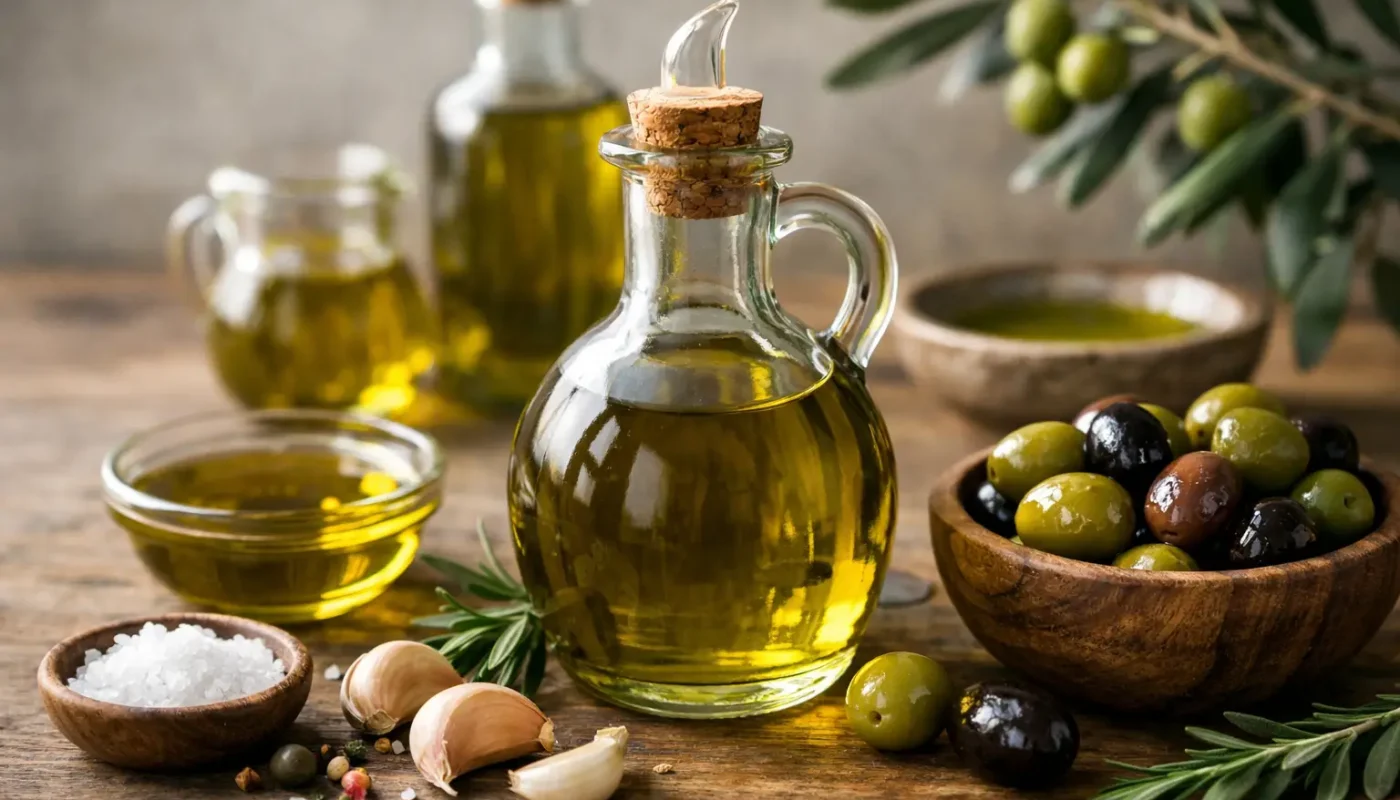
Clear decorative cruets look charming on the counter, but they expose the oil to light and air. If you love the look, refill them in small amounts and keep the main bottle protected.
Health benefits, with a little realism
Extra virgin olive oil earns its reputation for good reason. It contains mostly monounsaturated fat and naturally occurring polyphenols, which are associated with a range of wellness benefits as part of an overall balanced diet. It is one of the reasons Mediterranean-style eating patterns are so often praised.
Still, quality matters. A tired, heavily processed oil is not the same experience as a fresh, carefully handled EVOO. And while olive oil is a wonderful ingredient, it is not a magic fix. The value comes from using it regularly in place of less desirable fats, and from enjoying real food that tastes good enough to keep healthy habits sustainable.
Why specialty olive oil often tastes better
This is where tasting-gallery shops and curated producers have a real advantage. Freshness, sourcing transparency, and style guidance make it easier to find an oil that fits the way you cook. At Weyira Olive Oil & Vinegar, for example, the appeal is not just that the oils are premium. It is that shoppers can discover different regions, flavor profiles, and pairings in a way that turns olive oil from a generic staple into an ingredient with personality.
That kind of guidance matters if you have ever stood in front of a wall of bottles wondering what the labels are actually trying to tell you.
A practical extra virgin olive oil guide for your next bottle
If you are choosing a bottle for the first time or trying to trade up from supermarket basics, keep your standards simple. Look for a recent harvest date when possible, protective packaging, a source that values freshness, and a flavor profile that matches your cooking style. Then taste it. That final step teaches you more than any front label ever will.
A good olive oil should make ordinary food taste more finished. Bread becomes dinner with the right pour. Tomatoes need little else. A bowl of soup suddenly feels restaurant-worthy. Once you know that feeling, you stop shopping for olive oil as a commodity and start choosing it the way you choose wine, cheese, or chocolate – with curiosity, preference, and a little excitement.
The best bottle is the one that makes you want to reach for it again tomorrow night.
