
Ultra Premium Olive Oil
Olive Oil Cake Flavor Examples to Bake Next
Jul
A good olive oil cake does not taste like a spoonful of oil. It tastes plush, fragrant, and unusually alive: the crumb stays tender for days, while the oil brings fruitiness, pepper, herbs, or a soft almond-like richness. These olive oil cake flavor examples are a useful place to start when you want a dessert that feels more special than a standard butter cake, without becoming fussy.
The choice of oil is not a background detail. A delicate extra virgin olive oil can let citrus and vanilla lead, while a fresh, medium-intensity oil gives chocolate, nuts, and warm spices more dimension. For intensely flavored oils, restraint matters. A bold, peppery oil can be beautiful with orange or dark chocolate, but it may overwhelm a light vanilla cake.
Olive Oil Cake Flavor Examples Worth Baking
Lemon, yogurt, and extra virgin olive oil
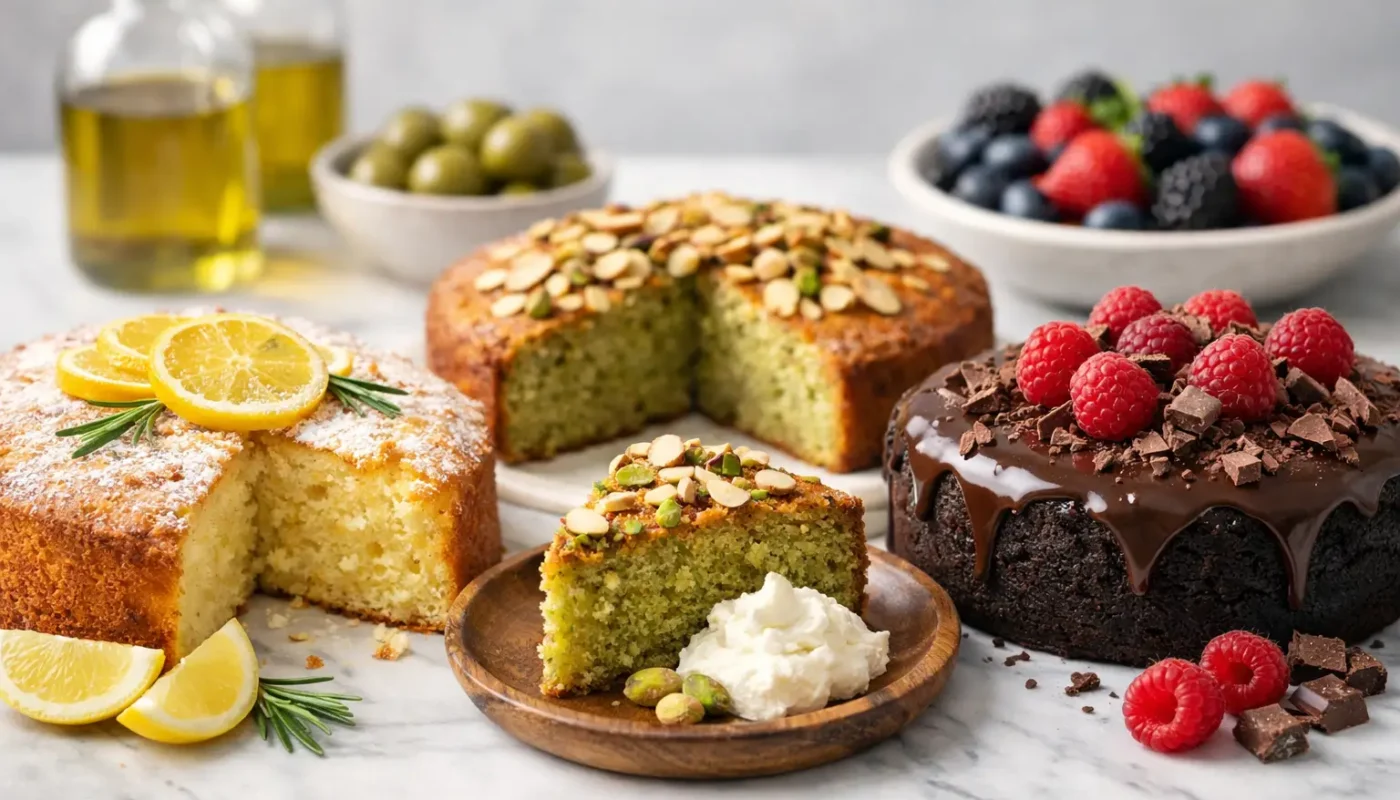
Lemon olive oil cake is beloved for a reason. Lemon zest supplies aroma, lemon juice gives a clean tang, and full-fat yogurt or sour cream creates a moist, finely textured crumb. Choose a mild to medium extra virgin olive oil with fresh, buttery, or gently grassy notes so the citrus stays bright rather than sharp.
This is the cake to make when you want something easy to serve at brunch or after dinner. Finish it with a thin lemon glaze, or skip the glaze and serve slices with berries and lightly sweetened whipped cream. A drizzle of excellent olive oil just before serving is welcome if the oil is mild and fresh.
Orange, almond, and rosemary
Orange and olive oil have a natural affinity, especially when the zest is rubbed into sugar before mixing. Ground almonds make the cake moist and slightly dense, while a little rosemary adds a savory, piney edge that keeps the sweetness in check. Use a medium-fruity extra virgin olive oil with green herbal notes.
Rosemary needs a light hand. One finely chopped teaspoon is often plenty for a standard cake. If you prefer a cleaner citrus profile, leave out the herb and add a splash of orange blossom water instead. This flavor combination is particularly lovely with a spoonful of mascarpone or a simple dusting of powdered sugar.
Chocolate and espresso
Chocolate is one of the most forgiving olive oil cake flavors because cocoa welcomes bitterness, fruitiness, and a touch of pepper. A medium or robust extra virgin olive oil can make a dark chocolate cake taste deeper and less one-dimensional. Espresso powder reinforces the cocoa without making the finished cake taste like coffee.
Here, use Dutch-process cocoa if you want a rounder, darker profile, or natural cocoa for a brighter edge. A fruity olive oil can suggest raspberry or blackberry alongside the chocolate. Serve this cake with flaky sea salt, crème fraîche, or a few macerated cherries. It is also a smart choice for a dairy-free dessert, since olive oil replaces butter so gracefully.
Blood orange and cardamom
Blood orange brings a berry-like depth that standard orange cannot quite match. Cardamom adds floral warmth, and olive oil carries both flavors across the palate. A smooth, medium-intensity oil is ideal, particularly one with ripe fruit notes rather than a pronounced bitter finish.
If blood oranges are out of season, use navel orange zest and a small amount of pomegranate juice in the glaze for color and tang. The cake itself should not rely on juice alone. Zest does most of the aromatic work, which is why freshly grated citrus makes such a noticeable difference.
Apple, brown sugar, and warm spice
For a cooler-weather cake, fold thin apple slices into an olive oil batter scented with cinnamon, ginger, and nutmeg. Brown sugar adds caramel flavor, while olive oil keeps the crumb supple even after refrigeration. A mellow oil is usually the best fit here, because it supports the fruit and spice rather than competing with them.
This combination rewards texture. Add toasted walnuts or pecans for crunch, or use a crisp-tender apple such as Honeycrisp, Pink Lady, or Braeburn. A glossy finish of warm apricot preserves makes the cake look bakery-worthy with very little effort.
Pear, vanilla, and hazelnut
Pears bring a quiet, elegant sweetness to olive oil cake. Pair them with vanilla bean or good vanilla extract, toasted hazelnuts, and a delicate extra virgin olive oil. The result is subtle rather than dramatic, which makes ingredient quality especially visible.
Arrange pear slices over the batter for a simple upside-down style, or dice them and fold them in for a more rustic cake. If your olive oil has a pronounced bitter, green finish, save it for a more assertive flavor pairing. Pear and vanilla benefit from softness.
Strawberry and balsamic
Ripe strawberries and a dark balsamic reduction make an excellent late-spring dessert, especially with an olive oil cake that is only lightly sweetened. Bake the cake with vanilla and lemon zest, then spoon balsamic strawberries over each slice at serving. The acidity makes the fruit taste more intensely like itself.
Do not soak the berries too far ahead or they can become watery. Toss them with sugar and a small amount of quality dark balsamic 15 to 30 minutes before serving. A bright, mild olive oil lets this pairing feel fresh instead of heavy.
How to Match Olive Oil to Cake Flavor
Extra virgin olive oil is not a single flavor. Fresh oils can taste buttery, green, tomato-like, nutty, peppery, grassy, or ripe and fruity. That variety is exactly what makes baking with it so rewarding.
For lemon, vanilla, pear, and delicate berry cakes, begin with a mild oil. For orange, almond, apple, and spice cakes, a medium oil offers more presence without taking over. Save robust, peppery oils for chocolate, coffee, citrus-forward cakes, or recipes where herbs are part of the plan. Fused citrus olive oils can be delicious in cakes as well, but reduce or omit added zest if their flavor is highly concentrated.
Freshness is the nonnegotiable. Oil that tastes stale, waxy, or flat will not improve in the oven. Taste it before baking. A quality oil should smell clean and inviting, and its flavor should have definition. At Weyira Olive Oil & Vinegar, tasting different intensity levels side by side is an easy way to find the style that suits your favorite desserts.
A Few Baking Details That Make the Difference
Olive oil cakes are generally simple, but they reward a few good habits. Use room-temperature eggs so the batter emulsifies smoothly. Whisk the oil with eggs and sugar thoroughly, then fold in dry ingredients only until no streaks remain. Overmixing can make even an oil-rich cake tough.
A standard 9-inch cake often needs about 1/2 to 3/4 cup olive oil, depending on the recipe and whether dairy is included. Do not automatically substitute olive oil for butter cup for cup in a butter-cake recipe. Butter contains water and milk solids, while olive oil is pure fat. A recipe designed for olive oil will give you the most reliable texture.
Let the cake cool before deciding whether it needs more. Olive oil flavors settle and become more integrated after a few hours, and many cakes taste even better the next day. Store the cake tightly covered at room temperature for one to two days, or refrigerate it if it contains fresh fruit, cream cheese, or a dairy-based topping.
The best flavor pairing is the one that makes you want a second slice. Start with lemon if you love brightness, chocolate if you want richness, or orange and almond if you want a cake that feels at home beside coffee, tea, or a celebratory glass of wine. Then taste your olive oil, follow its character, and let one excellent ingredient lead you somewhere delicious.
