
Ultra Premium Olive Oil
How to Identify Rancid Olive Oil at Home
Aug
A beautiful bottle and a reassuringly high price do not guarantee that olive oil is still fresh. To identify rancid olive oil, trust your senses first: its aroma and flavor will tell you far more than its color or a little sediment at the bottom of the bottle. Fresh extra virgin olive oil should make food taste more alive, with notes that can range from green grass and tomato leaf to almond, fresh herbs, or ripe fruit.
Olive oil is a perishable fruit juice, not a forever pantry staple. Once it is exposed to oxygen, heat, and light, its delicate compounds begin to break down. That does not mean every oil needs to be used immediately, but it does mean freshness deserves the same attention you would give to coffee, spices, or a fine bottle of wine.
How to Identify Rancid Olive Oil by Smell and Taste
Rancidity is oxidation. As olive oil ages or is stored poorly, the fat molecules react with oxygen and develop unpleasant aromas and flavors. The change can be gradual, which is why many home cooks do not realize an oil has gone off until they compare it with a truly fresh one.
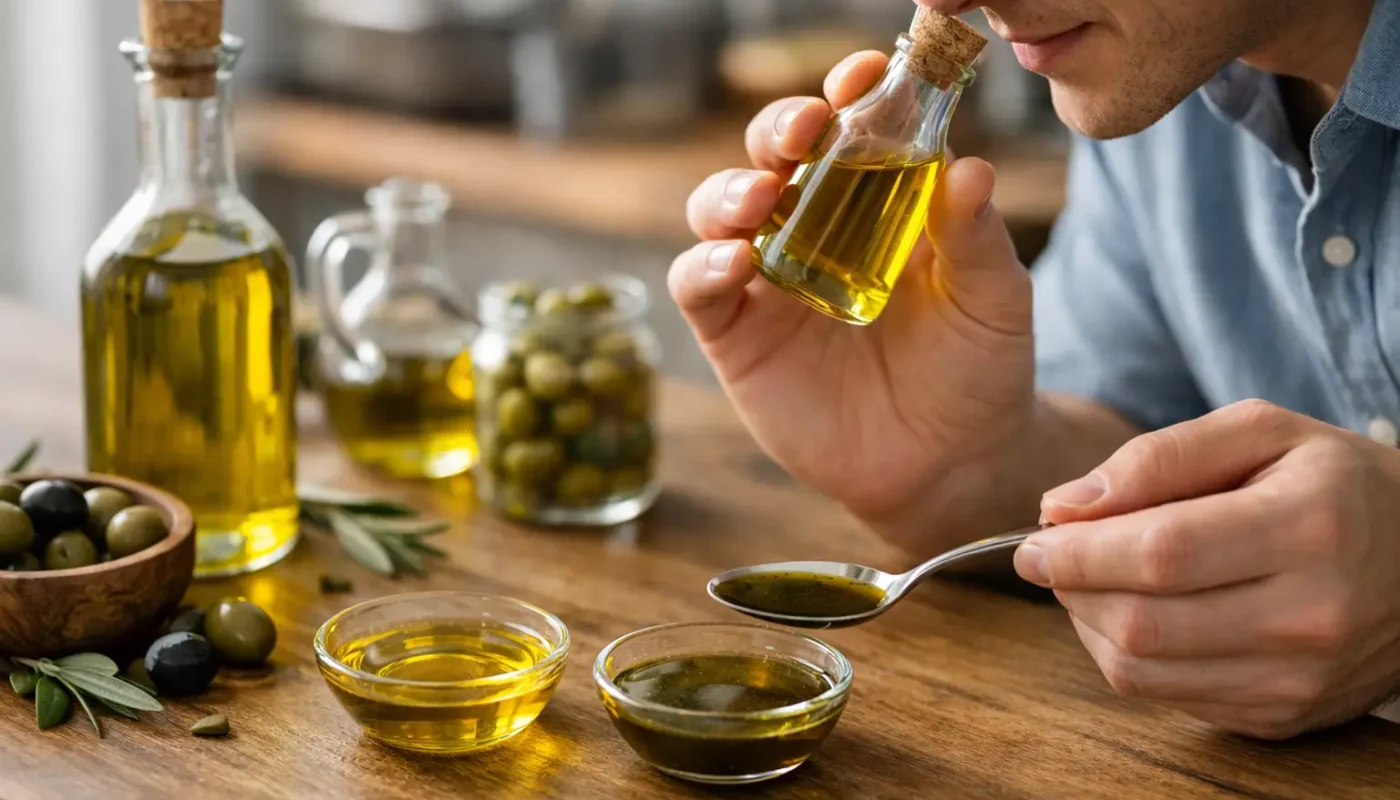
Start by pouring a small amount into a clean glass. Cup the glass in your hand for a minute to gently warm the oil, then swirl it and smell. You are looking for a clean, appealing aroma. A fresh oil may smell grassy, peppery, buttery, herbaceous, floral, or pleasantly fruity, depending on the olive variety and harvest style.
Rancid oil often smells flat and stale. People describe it as old nuts, crayons, putty, wax, dusty cardboard, or the oil left in a deep fryer after too many batches. It can also bring to mind a neglected pantry, a musty basement, or peanuts that have sat open too long. If that description sounds dramatic, it is because the difference between fresh oil and oxidized oil can be striking once you know what to notice.
Taste confirms what your nose suggests. Sip a small amount, letting it coat your mouth, then breathe in gently through your teeth. Fresh extra virgin olive oil should taste clean. It may be mild and buttery or bold and green, but it should not taste greasy, dull, stale, or persistently waxy. A rancid finish tends to linger in an unpleasant way, while a fresh oil leaves you wanting another taste.
Do Not Confuse Rancidity With Bitterness or Pepperiness
This is where many shoppers get tripped up. Fresh, high-quality extra virgin olive oil can be bitter and pungent, especially when it is made from early-harvest olives. Those are generally positive characteristics, not defects.
Bitterness is sensed on the tongue and can resemble arugula, radicchio, walnut skin, or green almond. Pungency is the peppery tickle you may feel in the back of your throat, sometimes strong enough to prompt a small cough. Both qualities come from beneficial phenolic compounds and are common in lively, fresh oils.
Rancidity is different. It does not feel bright, green, or invigorating. It tastes tired. An oil can be delicate in style and still be fresh; it does not need to burn your throat to be good. The question is whether its flavor feels clean and intentional, rather than stale and lifeless.
Cloudiness is not a dependable sign, either. Olive oil can look cloudy because it is unfiltered or because it has been chilled. In some cases, fine olive particles in an unfiltered oil can even shorten shelf life, but cloudiness alone does not prove an oil is rancid. Likewise, color tells you almost nothing about quality. Golden and deep green oils can both be excellent, and both can eventually oxidize.
Check the Harvest Date, Not Just the Best-By Date
A best-by date is useful, but it is only part of the freshness story. Look for a harvest date whenever possible. This tells you when the olives were picked and gives you a clearer sense of the oil’s age.
Extra virgin olive oil is often at its most expressive in the months after harvest. With proper storage, a well-made oil can remain enjoyable for many months, but its bright aromas and complex flavor naturally soften over time. A reasonable rule of thumb is to buy quantities you expect to use within a few months after opening and to favor the newest harvest available.
The exact window depends on the oil. A filtered oil in a well-sealed dark bottle may hold up longer than an unfiltered oil, and a bold, high-phenolic oil may retain its character longer than a very mild style. Storage conditions matter just as much. An oil that spent months beside a hot stove or in direct sun may decline well before its printed date.
If there is no harvest date, consider the packaging and the seller’s turnover. Dark glass, stainless steel, or a protective tin are better choices than clear glass displayed under bright lights. Specialty retailers that regularly bring in fresh harvests can offer a meaningful advantage over bottles that may have spent a long time in a warehouse or on a shelf.
Why Rancid Olive Oil Happens So Quickly
Olive oil has four frequent enemies: light, heat, oxygen, and time. Light accelerates oxidation, which is why quality producers use dark bottles or tins. Heat does the same, making a sunny countertop, windowsill, or cabinet above the oven a poor home for your oil.
Oxygen enters every time you open the bottle. That is normal, but it is a reason to keep the cap on tightly and avoid buying a large container if your household uses oil slowly. A large bottle can be a smart value for an enthusiastic cook, but only if it will be finished while the oil is still tasting its best.
For everyday use, keep olive oil in a cool, dark cupboard away from appliances that give off heat. A stable room temperature is preferable to frequent swings between hot and cold. Refrigeration is usually unnecessary for a bottle you use regularly, and cold temperatures can make oil cloudy or partially solid. That change is harmless, but it is inconvenient and does not reliably measure purity or quality.
What to Do With Olive Oil That Has Gone Rancid
If the oil clearly smells or tastes rancid, it is best not to use it for cooking, dressings, dipping, or baking. Rancid olive oil is not usually a food safety emergency in the way spoiled meat or dairy can be, but it delivers poor flavor and no longer offers the fresh sensory experience you bought it for. The antioxidants that help define quality also diminish as oxidation progresses.
Do not try to hide a stale oil under garlic, balsamic vinegar, or a heavily seasoned recipe. Those ingredients deserve a clean foundation. A lively extra virgin olive oil can turn a simple bowl of beans, grilled vegetables, tomato salad, or warm bread into something memorable. A rancid oil pulls the whole dish in the opposite direction.
If you are uncertain, compare it side by side with a newly opened, freshly harvested oil. Taste each one with a piece of plain bread or a spoonful of neutral food such as cooked rice. The contrast is often more helpful than trying to judge one bottle in isolation.
Build a Fresher Olive Oil Habit
The easiest way to avoid rancid oil is to make tasting part of buying and using it. Choose fresh harvest information when available, buy a bottle size that matches your cooking habits, store it away from heat and light, and taste it occasionally before you pour it into an important dish.
It also helps to keep more than one style on hand if olive oil is central to your kitchen. A robust, grassy oil can shine over grilled meats, soups, and bitter greens, while a softer, fruitier oil may be lovely in baking, seafood, or a delicate vinaigrette. At Weyira Olive Oil & Vinegar, that kind of side-by-side discovery is part of the pleasure: freshness is not just a technical standard, but the flavor that makes every pairing feel more generous.
Treat a fresh bottle as an ingredient worth tasting on its own. When its aroma is bright and its finish is clean, even the simplest meal gets a little closer to the tasting-gallery experience.
