
Ultra Premium Olive Oil
7 Favorite Vinegars for Cocktails Worth Pouring
Nov
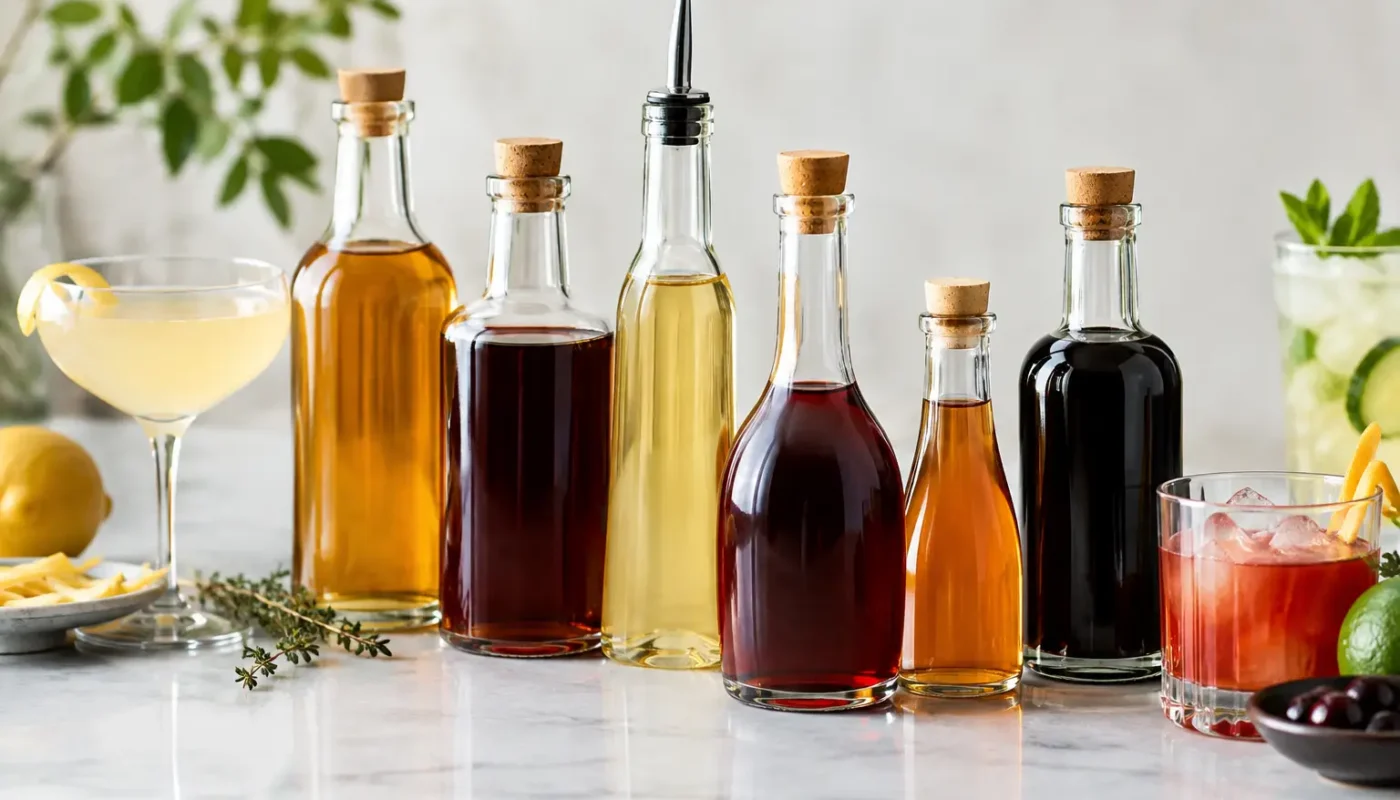
A good cocktail has tension: sweetness against acid, spirit against fruit, aroma against chill. Citrus usually supplies the acid, but a well-chosen vinegar can bring something lemon and lime cannot – depth, gentle sweetness, and a finish that lingers after the sip. Our favorite vinegars for cocktails are not harsh pantry splashes. They are carefully made balsamics and wine vinegars with enough balance to earn a place beside quality spirits.
For home bartenders, vinegar is a small-pour ingredient with outsized influence. A teaspoon can sharpen a sweet aperitif, wake up a berry drink, or make a zero-proof spritz feel complete. The key is choosing a style that supports the drink rather than announcing itself as salad dressing.
What makes a vinegar cocktail-worthy?
Acidity matters, but flavor matters more. Mass-market distilled vinegar is usually too blunt for a mixed drink, while a premium balsamic vinegar can carry fruit, wood-aged complexity, and natural sweetness in the same pour. White balsamics tend to feel fresh and bright. Dark balsamics bring roundness and deeper fruit notes. Wine-based vinegars can offer a clean, savory edge when a cocktail needs structure rather than sweetness.
Taste the vinegar before it reaches the shaker. If it is pleasant enough to sip from a spoon, it has a better chance of behaving beautifully in a drink. Look for a clean finish, a balanced sweet-tart profile, and a flavor you can name: ripe raspberry, juicy peach, crisp apple, fragrant citrus, or caramelized fig.
Then keep the ratio modest. For a single cocktail, start with 1/4 ounce, or about 1 1/2 teaspoons. Taste, then increase toward 1/2 ounce only when the drink has enough fruit, sugar, or richness to meet it. Vinegar should lift the cocktail, not turn it into a shrub unless that is the point.
Favorite vinegars for cocktails by flavor mood
Champagne-style or white wine vinegar for clean, dry drinks
A delicate champagne vinegar or quality white wine vinegar is at home in cocktails that lean crisp, botanical, and not overly sweet. Think gin, dry vermouth, elderflower liqueur, cucumber, basil, and sparkling water. It has the brightness to replace part of the lemon juice without taking over the drink.
Try 1/4 ounce with gin, a small spoonful of honey syrup, muddled cucumber, and plenty of ice. Top with sparkling water. The result is dry, refreshing, and especially welcome before dinner. Because this style is less sweet than balsamic, it is also useful when working with a sweet liqueur or tonic water.
The trade-off is subtlety. A delicate wine vinegar can disappear beside dark rum, bourbon, or strongly spiced ingredients. Save it for lighter spirits and let its clean acidity do quiet work.
White balsamic for bright fruit and garden flavors
White balsamic is one of the easiest starting points for cocktail experimentation. It offers a polished sweet-tart balance, often with fruit-forward character, while keeping the drink pale and luminous. That makes it a natural companion to vodka, gin, blanco tequila, prosecco, and sparkling water.
Peach white balsamic brings sunny softness to bourbon or iced tea cocktails. Sicilian lemon white balsamic can brighten a vodka spritz without the sharpness of straight lemon juice. A crisp apple or pear white balsamic pairs beautifully with gin, thyme, and a thin slice of fresh fruit.
For a simple white balsamic spritz, combine 1/2 ounce fruit-forward white balsamic, 1 ounce vodka or gin, and 1/2 ounce simple syrup only if needed. Shake with ice, strain into a wine glass over fresh ice, then top with sparkling wine or club soda. Taste before adding more sweetness. Premium balsamic already brings some of its own.
Raspberry balsamic for berries, bubbles, and dark spirits
Raspberry balsamic is a bartender’s shortcut to ripe berry flavor with a sophisticated edge. It can replace a berry syrup in a cocktail, bringing both fruit and acidity while avoiding a candy-like finish. The natural pairings are vodka, gin, sparkling wine, and rosé, but it is surprisingly good with bourbon as well.
For a raspberry bourbon sour, shake 2 ounces bourbon, 1/2 ounce raspberry balsamic, 1/2 ounce fresh lemon juice, and 1/2 ounce maple syrup with ice. The maple softens the balsamic’s tang and echoes bourbon’s vanilla and oak notes. A lemon peel or a few fresh raspberries are enough for garnish.
This is also a useful vinegar for a low-alcohol aperitif. Add a bar spoon to a glass of sparkling wine with a splash of soda and a strawberry slice. Keep the pour restrained. Raspberry balsamic is expressive, and too much can crowd out the wine.
Blackberry-Ginger balsamic for spice and whiskey
When a cocktail calls for a darker fruit profile, blackberry-ginger balsamic offers more than sweetness. Blackberry provides jammy richness, while ginger adds a warm, slightly peppery spark. It is particularly appealing with rye whiskey, dark rum, añejo tequila, and even a smoky mezcal.
A rye highball made with 2 ounces rye, 1/4 to 1/2 ounce blackberry-ginger balsamic, and ginger beer has the satisfying snap of a mule with more depth and less need for sugary mixers. Add a squeeze of lime if you want a sharper profile, or skip it if the vinegar provides enough lift.
This flavor can also make a memorable alcohol-free drink. Stir it with chilled black tea, a touch of honey, and sparkling water. The tea gives the drink tannin and body, so it feels designed rather than like a substitute.
Fig or pomegranate balsamic for richer, evening pours
Dark balsamics shine when a cocktail needs a round, almost savory fruit note. Fig balsamic has a mellow, jam-like quality that works with bourbon, brandy, aged rum, and amaro. Pomegranate balsamic is brighter, with a tart red-fruit character that can stand up to tequila, whiskey, or sparkling wine.
For an after-dinner old fashioned variation, stir bourbon with a teaspoon of fig balsamic, a bar spoon of maple syrup, and two dashes of aromatic bitters. Use less maple than you would use standard simple syrup. The balsamic contributes sweetness as well as acid, and the goal is silkiness, not a sour drink.
Pomegranate balsamic offers a livelier direction. Shake it with tequila, orange liqueur, and fresh lime for a margarita with a deeper fruit finish. If your orange liqueur is already sweet, begin with just 1/4 ounce balsamic and let the lime remain the dominant acid.
Grapefruit or citrus balsamic for tequila and aperitifs
Citrus balsamics give cocktails aromatic brightness without requiring a pile of fresh fruit. Grapefruit white balsamic is especially useful in a Paloma-inspired drink, where it reinforces grapefruit soda or fresh juice while adding a lightly floral sweetness. Blood orange balsamic is lovely with tequila, vodka, or Italian-style aperitifs.
Try a grapefruit highball with blanco tequila, 1/2 ounce grapefruit white balsamic, a squeeze of lime, a pinch of salt, and sparkling water. The salt is not optional here. A tiny pinch makes the fruit taste fuller and takes the edge off bitterness.
Citrus balsamics are best used in drinks meant to feel buoyant and refreshing. They may not have enough weight for a stirred, spirit-forward cocktail, but they are exceptional in a patio-ready spritz or brunch drink.
Build the drink around balance, not a recipe
Vinegar cocktails reward tasting as you go. If the drink feels too sharp, add sweetness with honey syrup, maple syrup, or a fruit liqueur. If it feels heavy or overly sweet, add sparkling water, fresh citrus, or another small splash of vinegar. If it tastes flat, a pinch of salt or a strip of citrus peel can bring its aroma into focus.
Pay attention to the spirit, too. Vodka makes vinegar flavors easy to notice. Gin welcomes herbal and floral styles. Tequila loves citrus, pineapple, and pomegranate. Bourbon and rye respond best to darker fruits, maple, fig, and baking-spice notes. Rum can move in either direction, depending on whether it is light and grassy or dark and molasses-rich.
At Weyira Olive Oil & Vinegar, we encourage tasting vinegars the same way you would taste a fine olive oil: slowly, with curiosity, and with an eye toward pairing. A bottle that makes a cheese board, salad, or roasted fruit more interesting can often bring that same dimension to the bar cart.
Keep one bright white balsamic and one deeper dark balsamic within reach, then make your next cocktail by taste instead of habit. A small, thoughtful pour may be the ingredient that turns a familiar drink into the one your guests ask you to make again.
