Ultra Premium Olive Oil
Moroccan EVOO Flavor Profiles, From Green to Peppery
Nov
A good Moroccan extra virgin olive oil can make a plain piece of warm bread feel like a tasting course. Pour a little into a small glass, warm it in your hand, and you may notice fresh-cut grass, green almond, tomato leaf, herbs, and a peppery sensation that arrives at the back of the throat. Moroccan EVOO flavor profiles are especially exciting for cooks who enjoy oils with presence – oils that do more than disappear into a recipe.
The experience is not limited to one fixed taste. Olive variety, harvest timing, growing conditions, milling practices, and freshness all shape the oil in your bottle. That is why tasting with an open mind matters. A bright, assertive oil may be perfect on grilled vegetables and less suited to a delicate vanilla cake. The pleasure is in learning what each profile brings to the table.
What Defines Moroccan EVOO Flavor Profiles?
Morocco has a long relationship with olive cultivation, and its varied terrain and climate give producers a broad palette to work with. Many premium Moroccan oils are made from Picholine Marocaine, a local olive variety prized for its lively character. Depending on ripeness and production choices, it can produce oils that are fresh, green, fragrant, and pleasantly spicy.
In tasting terms, you may encounter fruitiness first. This does not mean the oil tastes sweet like fruit juice. It describes the aroma and flavor of fresh, sound olives, sometimes suggesting green apple, almond, artichoke, or herbs. A fruity olive oil feels alive rather than flat or greasy.
Then come bitterness and pungency. Bitterness is a welcome sensation on the tongue, often reminiscent of radicchio, walnut skin, or arugula. Pungency is the peppery tickle or cough-provoking warmth in the throat. Both are commonly associated with fresh oils rich in natural olive compounds. They should feel clean and energetic, not harsh, musty, or stale.
A bold Moroccan EVOO may lead with green grass and tomato leaf, move into a firm bitter edge, and finish with pepper. A more rounded expression may show ripe almond, softer herbs, and a gentler spice. Neither is automatically better. The right choice depends on what you are cooking and how much of the oil’s personality you want in the finished dish.
Green, Herbaceous, and Peppery: The Classic Style
When people fall for Moroccan olive oil, it is often this vivid green style that wins them over. Early-harvest olives, picked while still green or turning color, tend to yield less oil than fully ripe fruit. But they can offer remarkable intensity: freshly mown grass, green banana, wild herbs, snap pea, artichoke, and tomato leaf are all possible notes.
This profile loves foods with enough character to meet it. Finish a lentil soup with a generous pour. Spoon it over hummus with toasted cumin. Dress a chopped salad of cucumbers, tomatoes, parsley, and feta. The oil’s peppery lift can sharpen creamy ingredients and give familiar weeknight dishes a more deliberate, restaurant-worthy finish.
It also belongs beside char. Try it on grilled zucchini, eggplant, peppers, mushrooms, or a deeply browned steak. The smoky, caramelized flavors make room for bitterness and spice, while the oil adds a fresh top note that keeps the dish from tasting heavy.
Tomato Leaf and Green Almond Notes
Tomato leaf is one of the most distinctive descriptors in premium EVOO. It suggests the fragrant green scent released when you brush against a tomato plant in summer, not the flavor of a ripe tomato. Paired with green almond, it gives an oil a crisp, savory character that feels especially at home in Mediterranean cooking.
Use these oils where fresh herbs would be welcome. They are wonderful over sliced tomatoes, white beans, grilled fish, roasted potatoes, or a simple bowl of pasta with garlic and lemon. If your oil tastes particularly green, try it with a pinch of flaky salt rather than covering it with a heavily seasoned sauce. Let the oil have a speaking role.
The Peppery Finish
That peppery throat sensation can surprise first-time tasters, especially if they are used to mild supermarket oils. In a fresh, well-made EVOO, it is not a flaw. It is part of the oil’s structure and often a sign that the olives were processed with care soon after harvest.
A stronger peppery finish is useful when you want contrast. Drizzle it over creamy burrata, ricotta toast, butternut squash soup, or mashed potatoes. The richness softens the heat, and the oil prevents the dish from becoming one-note. For guests, set out the oil with good bread and a small dish of balsamic vinegar, then invite everyone to taste the difference between peppery and mild.
Riper, Rounder Expressions Have Their Place
Not every Moroccan EVOO is intensely green. Later-harvest olives can produce softer oils with notes of ripe almond, buttery fruit, mild herbs, and a more restrained pepper finish. These styles are still extra virgin olive oil, but their flavor is less angular and more approachable for people who prefer gentleness over intensity.
A rounder Moroccan oil is a lovely choice for mayonnaise, aioli, couscous, grains, and delicate seafood. It can also be a smart option for baking, where a powerful green oil might compete with citrus, chocolate, or fruit. The trade-off is simple: softer oils may be easier to use broadly, while greener oils offer more dramatic flavor and often more bitterness and pungency.
This is also where personal preference matters. If you are building a first premium-oil pantry, one bright, herbaceous EVOO and one mellow, buttery EVOO give you flexibility. Think of them as you would different salts or vinegars: each changes the final dish in a useful way.
How to Taste Moroccan EVOO at Home
You do not need a formal tasting room to understand an oil. Pour a tablespoon into a small glass or cup. Cover the top with one hand, warm the cup with the other, and swirl it gently for a minute. Warming the oil helps release its aromas.
Smell first, looking for green or ripe fruit, herbs, nuts, or vegetables. Take a small sip and let it move across your tongue before swallowing. Then breathe in gently through your mouth. This may feel a little theatrical at first, but it helps you notice the oil’s bitterness and peppery finish.
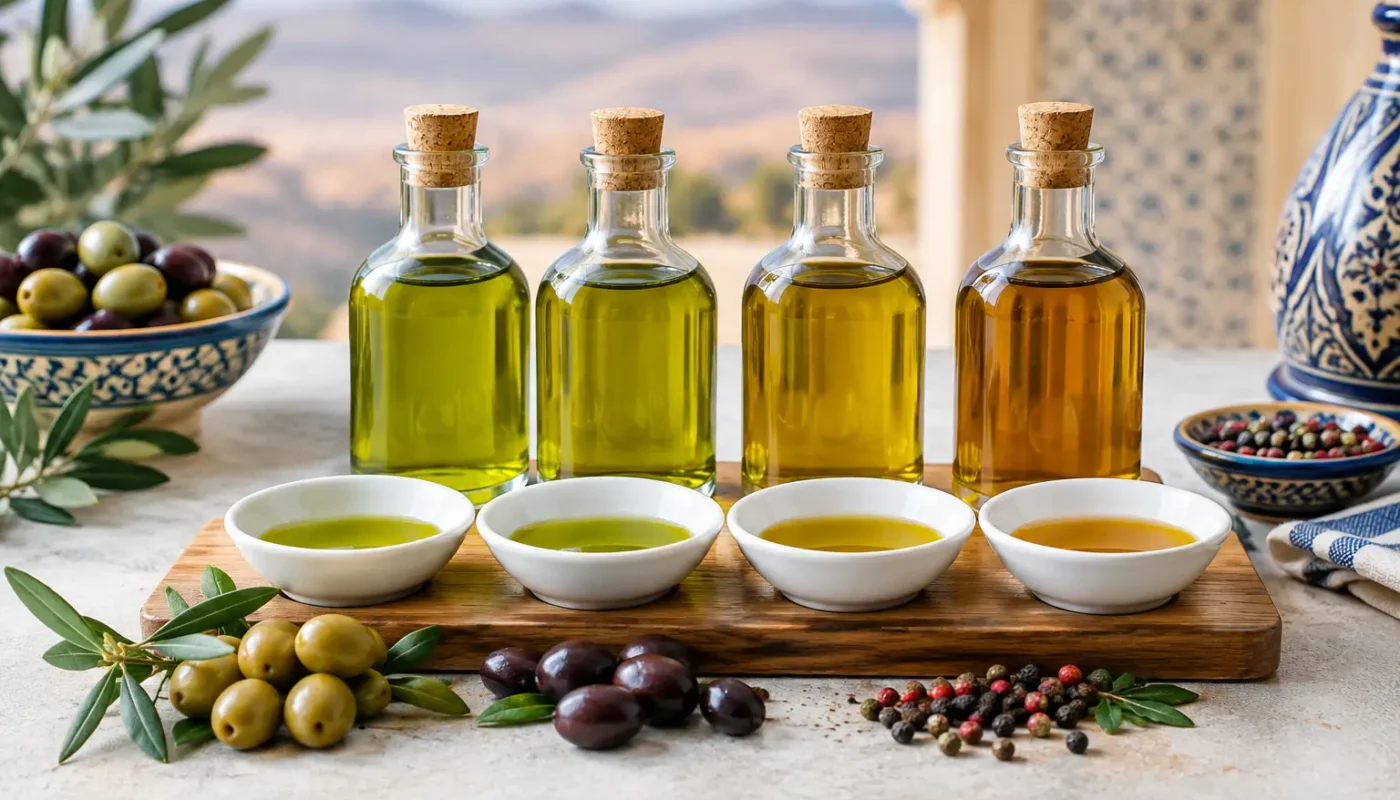
Taste two oils side by side if you can. The contrast teaches faster than any flavor chart. One may read as leafy and sharp; another as almond-like and soft. There is no need to hunt for every descriptor. A useful question is simply: does this taste fresh, and what food does it make you want to cook?
Pairing Moroccan EVOO With Everyday Food
For a green, peppery bottle, reach for dishes with earthy, smoky, creamy, or hearty elements. Bean soups, roasted carrots, grilled chicken, shakshuka, pizza, and avocado toast all benefit from a finishing drizzle. The oil can take the place of an extra herb or a squeeze of lemon, though it is often even better alongside both.
For a milder bottle, use it in vinaigrettes with a white balsamic vinegar, toss it with warm rice or couscous, or fold it into a simple cake batter. Mild does not mean inferior. It means the oil leaves more room for the other ingredients to speak.
Avoid treating a special EVOO only as a cooking fat. High heat has its uses, but the nuanced aromas that make a premium oil memorable are easiest to appreciate when added near the end or served raw. Keep the bottle tightly capped and away from heat and light, and use it while it is fresh rather than saving it indefinitely for a special occasion.
At Weyira Olive Oil & Vinegar, we believe the most rewarding bottle is the one that earns a place on your table every day. Start with a taste, trust your palate, and let a lively Moroccan EVOO turn tonight’s simplest meal into something worth lingering over.
