
Ultra Premium Olive Oil
Best Oils for Pizza for Flavor, Heat, and Finish
Sep
A pizza can come out of the oven with blistered cheese, a crisp-edged crust, and all the right toppings, yet still taste a little flat. Often, the missing piece is oil. The best oils for pizza do more than add richness: they carry aroma, soften the sharp edge of tomatoes, encourage browning, and give each slice a finish that feels thoughtfully made rather than merely assembled.
Olive oil is the natural starting point, but not every bottle belongs in the same moment of the pizza-making process. A bright, peppery extra virgin olive oil is beautiful after baking. A more delicate oil may be the better choice in dough. An infused oil can turn a simple white pizza into something people remember. Once you treat oil as an ingredient with a purpose, pizza night becomes much more interesting.
Best oils for pizza: start with extra virgin olive oil
For most home cooks, fresh extra virgin olive oil is the best all-around pizza oil. Its fruitiness, gentle bitterness, and peppery finish bring dimension to dough, sauce, vegetables, and cheese without covering up their character. It also has the versatility to work before, during, and after baking.
Quality matters because pizza leaves little room to hide a tired oil. Old or poorly stored olive oil can taste waxy, greasy, or faintly stale, especially when drizzled over hot cheese. Fresh EVOO should smell lively and clean. Depending on its origin and harvest style, you may notice green grass, tomato leaf, fresh herbs, almond, artichoke, or a pleasant peppery tingle at the back of the throat.
For a classic margherita, choose a medium-intensity EVOO with a balanced fruitiness. It supports sweet tomato, milky mozzarella, and basil without making the pie feel heavy. For a pizza with sausage, mushrooms, or roasted peppers, a more robust, peppery EVOO can stand up to those deeper flavors.
The simplest use is also one of the best: drizzle a teaspoon or two over the pizza the moment it comes out of the oven. The residual heat releases the oil’s aroma, so you taste its freshness instead of cooking it away. This is where a tasting-gallery-quality olive oil earns its place in the pantry.
Use EVOO in the dough, but keep the amount modest
Oil in pizza dough contributes tenderness, extensibility, and a subtle richness. It can make dough easier to handle and help it brown nicely in a home oven. A typical dough recipe only needs a small amount, often around 1 to 2 tablespoons per batch, depending on the flour and yield.
Extra virgin olive oil works well here, particularly a smooth, mild-to-medium oil. Very robust oils are not wrong, but their sharper notes may become less noticeable after baking, making an expensive finishing oil a better use of your best bottle. If you make airy, Neapolitan-inspired pizza at very high heat, you may prefer less oil in the dough or none at all to preserve that classic chewy structure. For sheet-pan pizza, focaccia-style crust, and weeknight doughs, olive oil is especially welcome.
Olive oil for sauce and pan pizza
Tomato sauce benefits from olive oil’s ability to bring flavors together. Stir a little EVOO into crushed tomatoes with salt, garlic, and herbs, and the sauce takes on a rounder, more complete taste. The oil also helps disperse fat-soluble flavor compounds in dried oregano, chile flakes, and garlic.
For a bright, uncooked pizza sauce, use a fresh medium EVOO and add it at the end of mixing. For a sauce that will simmer, use a good everyday extra virgin olive oil, then save the most expressive oil for finishing the baked pie. This approach gives you flavor at every stage without wasting the nuances that heat can mute.
Pan pizza deserves its own oil strategy. A generous coating of olive oil in a cast-iron skillet or baking pan creates the golden, almost fried underside that makes Sicilian and Detroit-style crusts so satisfying. Here, a mild or medium EVOO is ideal. It should be flavorful enough to season the crust but not so intensely peppery that it distracts from caramelized cheese at the edges.
When infused olive oils are the best choice
Infused and fused olive oils are an easy way to add a deliberate flavor layer without piling on extra toppings. They are particularly useful for white pizzas, vegetable-forward pies, and leftovers that need a little lift. The key is choosing one that complements the pizza rather than competing with every other ingredient.
Garlic olive oil is a natural match for spinach and ricotta pizza, mushroom pizza, roasted chicken, or a simple cheese pie. Brush it lightly around the exposed crust before baking, or drizzle it over the finished slices. It gives you a mellow garlic character without the risk of raw garlic scorching in a hot oven.
Basil olive oil is lovely on tomato and mozzarella pizza when fresh basil is unavailable or when you want another layer of herbal perfume. Lemon olive oil brings welcome brightness to pizzas with shrimp, asparagus, arugula, feta, or grilled chicken. A small finish of lemon oil can make a rich white pizza feel lighter and more balanced.
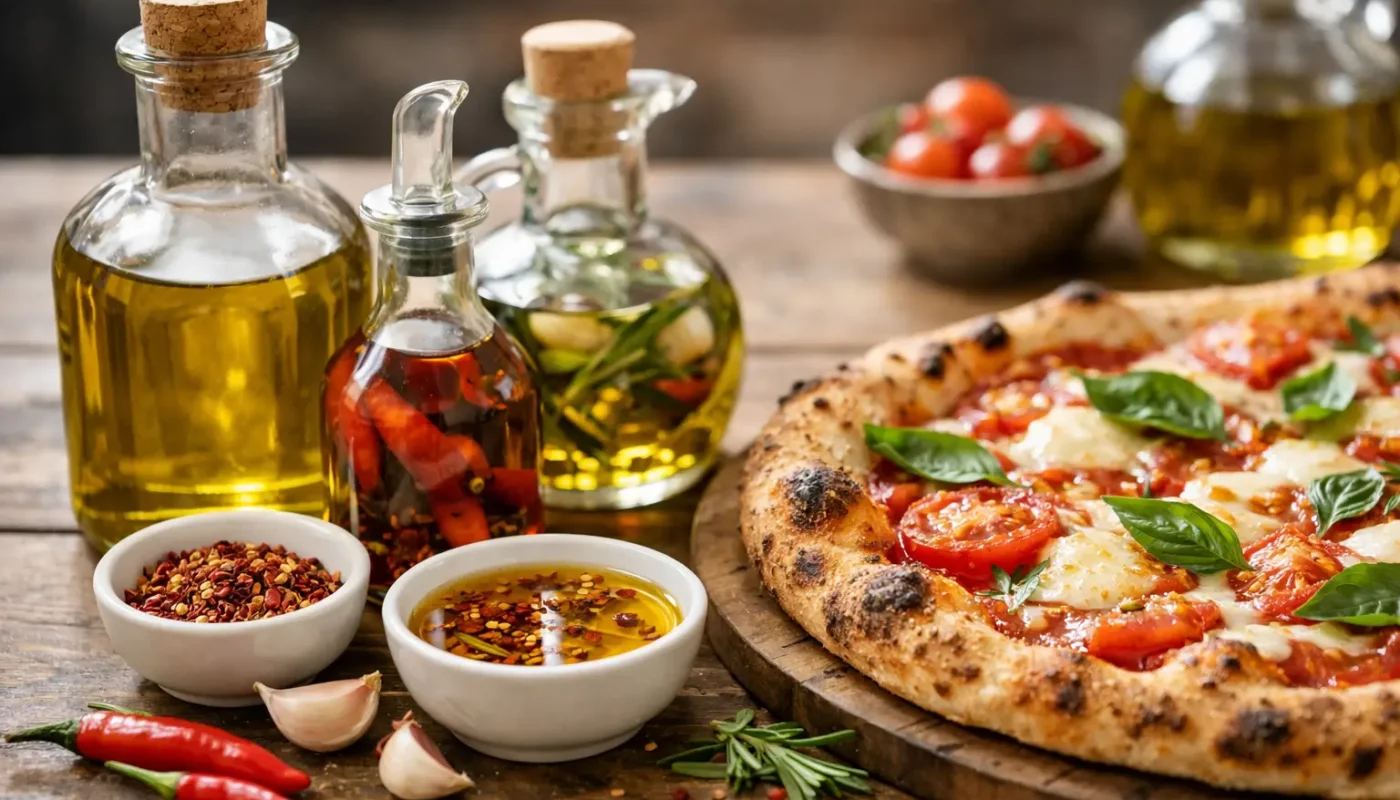
For heat, choose a chile-infused olive oil rather than relying only on dry red pepper flakes. The oil delivers spice more evenly across the slice and adds a warm, fruity chile aroma. Start conservatively. A few drops may be enough for a personal pizza, while a bold pepperoni or soppressata pie can handle a more generous drizzle.
Should you use neutral oils for pizza?
Neutral oils such as avocado oil, grapeseed oil, and refined sunflower oil can have a place in pizza-making, particularly when high heat or a clean flavor is the priority. They are practical for oiling a peel, preparing a pan, or making a dough where you do not want olive flavor to be noticeable.
Avocado oil is a good option for very hot home ovens because of its high smoke point and mild taste. It works well for a crisp pan crust, though it lacks the aromatic payoff of EVOO. Grapeseed oil is similarly unobtrusive and can be useful for greasing pans, but it does not offer much to a finished pizza.
This is the trade-off: neutral oils handle heat quietly, while olive oil actively contributes flavor. If the oil will be hidden in dough or used to coat a pan, neutral oil can be perfectly sensible. If it will touch the finished crust, mingle with tomato sauce, or pool lightly around melted cheese, reach for extra virgin olive oil.
Match the oil to the pizza on your table
A few pairing instincts make choosing easier. Delicate pizzas need oils with restraint, while hearty pizzas welcome more intensity. A medium EVOO suits tomato, mozzarella, and basil; robust EVOO is excellent with bitter greens, olives, anchovies, mushrooms, and cured meats. Garlic oil fits creamy and savory toppings, lemon oil brightens seafood and spring vegetables, and chile oil belongs wherever you want warmth without overwhelming the rest of the pie.
For a white pizza with ricotta, mozzarella, and roasted garlic, finish with garlic olive oil and a few turns of black pepper. For a mushroom and sausage pizza, try a peppery EVOO after baking, then a small spoonful of aged balsamic glaze if you enjoy sweet-savory contrast. For a summer pie with tomatoes, corn, and basil, a grassy EVOO makes the vegetables taste even more vivid.
Avoid pouring oil over pizza before tasting it. Great oil is concentrated flavor, and too much can make the cheese slick or weigh down a crisp crust. Drizzle in thin lines, taste a slice, then add more if the pizza asks for it.
Store your pizza oils like the flavor ingredients they are
The best bottle cannot stay at its best if it lives beside a warm stove or in direct sunlight. Heat, light, and oxygen gradually dull olive oil’s fresh aromas. Keep bottles tightly closed in a cool, dark cabinet, and buy a size you can enjoy while the oil is still lively.
It also helps to keep two oils on hand: a versatile extra virgin olive oil for cooking and finishing, plus one flavored olive oil for quick personality. That small choice gives homemade pizza an easy sense of occasion, whether you are stretching dough from scratch or upgrading a Friday-night takeout pie. A final drizzle is not decoration. It is the last, delicious decision you make before serving.
