
Ultra Premium Olive Oil
How to Prepare Olive Oil Bread Dip at Home
Oct
A great bread dip is one of the simplest ways to make a table feel generous. To prepare olive oil bread dip that guests remember, start with oil worth tasting on its own. Fresh extra virgin olive oil brings fruitiness, pepper, and a pleasant bitterness that turn a few pantry ingredients into a small, shareable tasting experience.
The secret is restraint. A dipping plate should showcase the character of the olive oil, not bury it under a heavy layer of dried seasoning or thick, sugary vinegar. With the right proportions, warm bread, and a few thoughtful finishing touches, it can be the first bite that makes dinner feel special.
How to Prepare Olive Oil Bread Dip
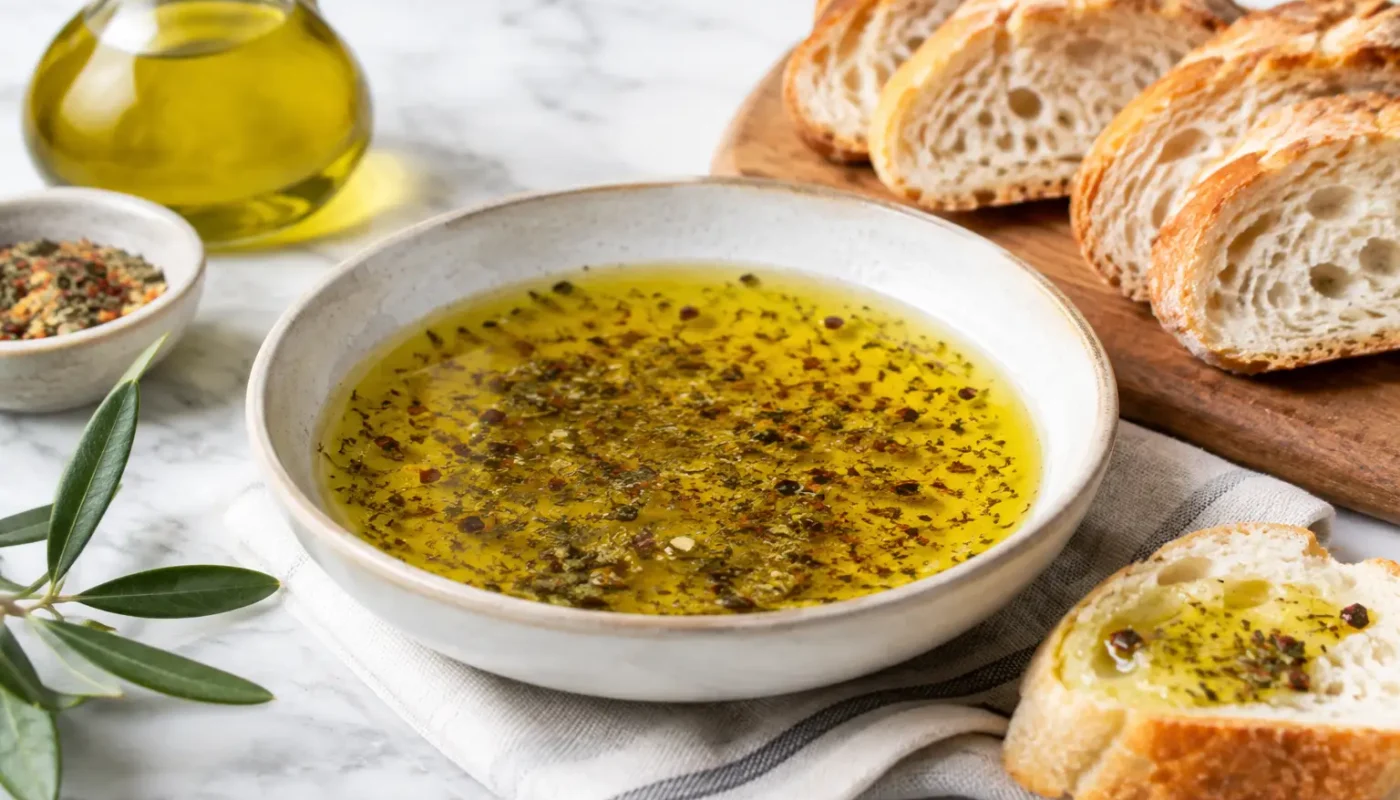
For four to six people, pour 1/3 cup of fresh extra virgin olive oil into a wide, shallow bowl or small plate with a raised rim. The broad surface gives everyone a good balance of oil and seasonings with each piece of bread. A narrow bowl tends to leave the herbs floating in one spot and makes dipping less enjoyable.
Add 1 to 2 tablespoons of balsamic vinegar. Start with less than you think you need. Premium balsamic has concentration, sweetness, and acidity, so a little goes a long way. Drizzle it over the oil rather than stirring aggressively. Those distinct pools and ribbons look beautiful, and guests can choose a more oil-forward or vinegar-forward bite.
Finish with a pinch of flaky sea salt, a few cracks of black pepper, and 1 teaspoon of an Italian-style herb blend or a combination of dried oregano, basil, thyme, and rosemary. If using dried herbs, let the dip sit for five to 10 minutes before serving. That brief rest allows the herbs to soften and release their aroma into the oil.
Serve immediately with sliced, warmed crusty bread. A rustic sourdough, ciabatta, baguette, or country loaf works especially well because the crumb can absorb the oil without falling apart.
Choose an Olive Oil That Deserves Center Stage
Olive oil is not just a base in this recipe. It is the main ingredient, so freshness matters more here than it might in a baked dish or marinade. Look for extra virgin olive oil with a harvest date when available, and choose oil that has been stored away from heat and light.
A medium-intensity extra virgin olive oil is often the easiest place to begin. It has enough personality to taste lively with bread, yet it will not overwhelm mild herbs or a traditional balsamic. Expect notes that may lean grassy, green, buttery, herbal, or ripe-fruit forward, depending on the variety and origin.
For a bolder crowd, select a more robust oil with a peppery finish. That throat-catching pepper sensation is often a sign of naturally occurring olive compounds and can be wonderful beside aged balsamic and salty bread. A delicate oil can be lovely too, particularly with a white balsamic and citrus accents, but it needs a lighter hand with assertive seasonings.
At Weyira Olive Oil & Vinegar, tasting different extra virgin olive oils side by side is a reminder that olive oil has as much range as wine. A bread dip is an easy, low-pressure way to explore that range at your own table.
Why grocery-store oil can fall flat
Olive oil does not improve with age. Over time, exposure to oxygen, warmth, and light dulls the fresh flavors that make a dip exciting. An older oil may taste waxy, stale, or simply neutral, which often leads people to compensate with excess garlic, salt, and vinegar.
Fresh EVOO does the opposite. It gives you natural flavor from the first pour, allowing the other ingredients to stay in proportion. Store the bottle tightly closed in a cool, dark cabinet, not beside the stove or on a sunny countertop.
Build Flavor Without Covering the Oil
The classic combination of EVOO, balsamic, herbs, salt, and pepper is popular for good reason: it delivers richness, brightness, fragrance, and texture in one bite. But the best version depends on the bread, the meal, and the oils and vinegars you choose.
If dinner includes grilled steak, mushrooms, roasted vegetables, or a hearty pasta, use a traditional dark balsamic with rosemary, black pepper, and a tiny pinch of red pepper flakes. The savory, woodsy profile has enough depth to stand beside richer food.
For seafood, chicken, spring vegetables, or a lighter lunch, try a white balsamic with a bright profile, such as lemon, grapefruit, or herbaceous notes. Pair it with a mild or medium EVOO, fresh parsley or basil, and lemon zest. Keep the salt modest until you taste the bread, since some artisan loaves are already well seasoned.
Garlic is delicious, but it requires judgment. Fresh minced garlic creates a sharp, spicy dip that is best served right away. Roasted garlic offers a softer, sweeter flavor and is a better match for a relaxed appetizer board. Garlic powder can work in a pinch, but use very little. Too much can make the dip taste dusty rather than fresh.
Fresh herbs make the prettiest presentation, while dried herbs give a more pantry-friendly result. If you use fresh rosemary or thyme, mince it finely. Large, woody pieces are unpleasant to bite into and do not distribute well through the oil.
The Right Bread Makes the Difference
Warm bread is not a garnish. It is part of the recipe. Heat slices briefly in a 350°F oven until warm and lightly crisp at the edges, usually five to eight minutes. The warmth lifts the aroma of the olive oil and makes the crumb more receptive to the dip.
Avoid bread that is overly soft, sweet, or heavily flavored. Brioche and cinnamon-raisin bread, for example, compete with the savory dip. Very thin crackers can work as part of a grazing board, but they do not offer the same satisfying contrast between crisp crust, tender interior, and silky oil.
If you are serving a crowd, bring out the bread in small batches. Replenishing it warm is a simple hospitality detail that people notice. It also keeps the first basket from disappearing before everyone has had a chance to taste the dip.
Make It Feel Like a Tasting, Not an Afterthought
A bread dip can open a casual weeknight meal, but it is especially effective when you are entertaining. Serve it before the main course with olives, toasted nuts, a few slices of cheese, or fresh fruit. Keep the additions simple so the oil and vinegar remain the focal point.
For a more interactive experience, set out two small dipping dishes with different profiles. One might feature peppery EVOO, traditional balsamic, rosemary, and flaky salt. The second could pair a smooth EVOO with white balsamic, lemon zest, and basil. Guests quickly discover how dramatically a change in vinegar or oil can shift the entire bite.
This is also a smart approach when you are unsure of preferences. Some people love a bold balsamic swirl; others want to taste the pure olive oil. Separate dishes make both choices feel intentional rather than like a compromise.
Common Bread Dip Mistakes to Skip
The most common mistake is treating the dip like a seasoning packet. When dried herbs, grated cheese, garlic, pepper flakes, and salt are all added in large amounts, the oil becomes a background ingredient. Start modestly, taste with bread, then add another pinch only if the dip needs it.
Another mistake is preparing the dip too far ahead. Dried herbs benefit from a short rest, but bread dip is at its best within about 15 minutes of assembling. The oil looks brighter, the vinegar stays distinct, and the bread has not had time to cool.
Finally, do not save a communal dipping dish for later. Once bread has been dipped, discard leftovers. If you want to make components ahead, portion the oil and vinegar separately, keep herbs covered, and assemble just before guests arrive.
A beautiful olive oil bread dip asks very little of the cook: good ingredients, warm bread, and enough patience to taste before adding more. Set it on the table while the bread is still warm, and let that first fragrant tear of crust do the welcoming.
