
Ultra Premium Olive Oil
Are Infused Oils Safe? A Fresh, Flavorful Answer
Sep
A drizzle of garlic olive oil can turn grilled bread, roasted vegetables, or a simple bowl of pasta into something memorable. But flavor should never come at the expense of food safety. So, are infused oils safe? Yes – when they are professionally produced and stored as directed. Homemade oils made with fresh garlic, herbs, chiles, or vegetables require a much more careful approach.
The difference comes down to what is in the bottle, how it was prepared, and whether the producer has controlled the conditions that allow harmful bacteria to grow. Once you understand that distinction, you can enjoy flavored oils with confidence and keep your pantry both delicious and well cared for.
Why infused oils need special attention
Oil has a reputation for preserving food, but it does not make fresh ingredients safe on its own. Fresh garlic, herbs, peppers, and vegetables naturally carry moisture. When submerged in oil, they are kept away from oxygen. That low-oxygen environment can create conditions in which Clostridium botulinum may grow and produce a dangerous toxin.
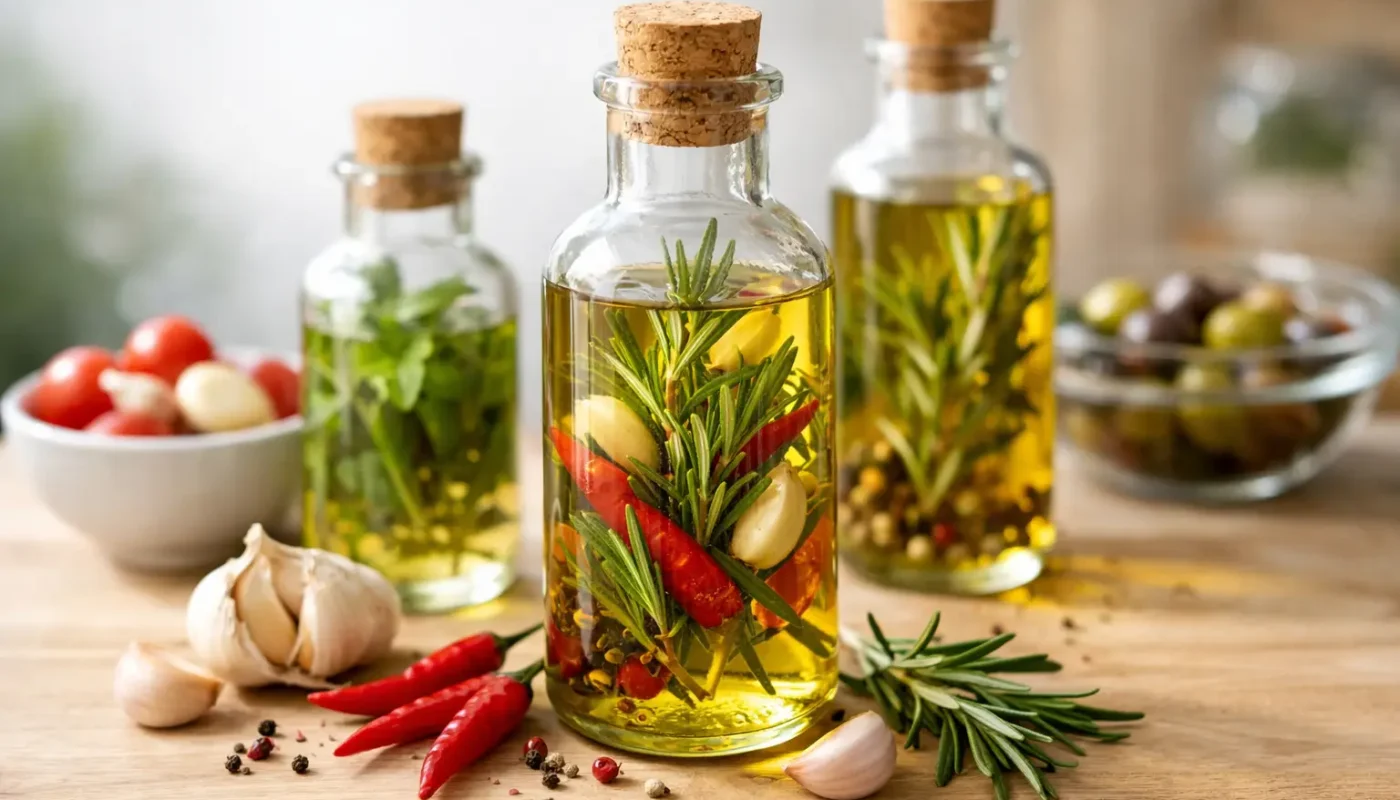
This is not a concern to brush aside because botulism is rare. The toxin has no reliable smell, taste, or visible warning sign. A beautiful bottle with a rosemary sprig floating inside may look like a thoughtful kitchen gift, yet appearance cannot tell you whether it is safe to keep at room temperature.
Acidity, water activity, heat treatment, and controlled production methods all matter. Professional producers use validated processes to manage those factors. A home cook who simply adds fresh garlic or herbs to olive oil has not necessarily done the same.
Are infused oils safe when you buy them?
Commercially prepared infused olive oils are generally safe when they come from a reputable producer, remain sealed until use, and are handled according to the label. These products are formulated and packaged for their intended shelf life. Depending on the product, the flavor may come from extracts, dried ingredients, natural flavor components, or ingredients treated through a controlled process rather than a fresh clove or sprig placed directly in the bottle.
That distinction is one reason a quality flavored oil is more than a convenience. It offers dependable flavor without asking you to gamble on a countertop infusion. You get the warm, savory character of roasted garlic, the bright lift of lemon, or the gentle heat of chili while maintaining a pantry-ready product designed for safe enjoyment.
Still, “commercial” does not mean immortal. Check the best-by date, keep the cap clean and tightly closed, and follow any refrigeration or storage directions printed on the bottle. If a product looks damaged, leaks, has a broken seal, or has been stored in extreme heat for a long period, choose caution and do not use it.
Fused oils and infused oils are not quite the same
You may also see the word “fused” on premium olive oil bottles. A fused oil is made by crushing fresh fruit, such as lemons or blood oranges, together with olives during milling. The fruit’s aromatic oils become part of the finished oil in a carefully managed production process.
An infused oil is flavored after the olive oil has been produced. Both can be wonderful in the kitchen, but they achieve flavor differently. Neither term alone is a safety claim, so the best practice is still to purchase from a trusted specialty source and follow the bottle’s instructions.
The homemade garlic oil rule
Homemade infused oil is where the guidance becomes firmer. Fresh garlic in oil should not be stored at room temperature. The same caution applies to fresh herbs, fresh peppers, onions, mushrooms, and other fresh plant ingredients.
If you make a fresh garlic or herb oil at home, refrigerate it promptly and use it within four days. This short window follows widely used food-safety guidance for oil mixtures containing fresh produce. When in doubt about how long it has been sitting out or how it was handled, discard it. Do not taste it to test it.
Freezing is a useful option when you want to make a larger batch. Freeze small portions in a clean, freezer-safe container or an ice cube tray, then use a portion directly in cooking as needed. It is a practical way to preserve a weeknight shortcut without turning a bottle of oil into a lingering question mark.
Dried herbs and dried spices involve far less moisture than fresh ingredients, but homemade infusions can still vary in quality and safety depending on the ingredient, sanitation, and storage. For a gift, a long-term pantry item, or anything you plan to keep beyond a few days, professionally made flavored oils are the more dependable choice.
Storage that protects flavor and freshness
Food safety is the first concern with fresh-infused oils, but olive oil quality also depends on storage. Light, heat, and oxygen gradually dull the fresh, lively character that makes a premium olive oil so satisfying. A good bottle deserves better than a sunny windowsill beside the stove.
Store unopened and opened commercial oils in a cool, dark cupboard, away from heat sources. A cabinet near the oven may be convenient, but it is rarely ideal. Keep the cap on between pours, and avoid repeatedly opening a large bottle if you use only a small amount at a time. For everyday cooking, transferring a reasonable amount to a smaller, clean cruet can help protect the rest of the bottle from air exposure.
Refrigeration is not generally necessary for a shelf-stable commercial infused oil unless the label says otherwise. Cold temperatures can make olive oil look cloudy or solid, which is usually a harmless and reversible change. Let it return to room temperature before judging its appearance or pouring it.
Trust the label, not kitchen folklore
A few common habits deserve retirement. Leaving fresh garlic in oil on the counter is not made safe by using extra virgin olive oil. Adding salt, lemon juice, or a splash of vinegar does not reliably acidify the entire mixture to a safe level. And a fragrant smell does not prove that an oil is safe.
The label on a professionally produced bottle is your best guide. It reflects the product’s specific formulation, packaging, and intended storage. For a homemade mixture containing fresh ingredients, the refrigerator-and-four-day rule is the safer path.
Choosing flavored oils with confidence
Start with the flavor you want to bring to the table. Garlic olive oil adds savory depth to roasted potatoes, pizza, and sautéed greens. Basil olive oil makes tomatoes and mozzarella feel instantly more complete. Lemon or citrus-infused olive oil brightens seafood, grain salads, cakes, and vinaigrettes. A chili-infused oil can bring measured heat to eggs, soups, and grilled meats without overwhelming the dish.
Then consider how you will use it. Delicate citrus and herb oils shine as finishing oils, where their aroma can be appreciated. Garlic and pepper oils are especially useful for roasting, sautéing, and marinades. Because flavored oils bring seasoning as well as fat, taste before adding extra salt, garlic, or chile flakes to a recipe.
Choose bottles from sellers who can speak clearly about freshness, ingredients, origin, and storage. At Weyira Olive Oil & Vinegar, that tasting-gallery approach matters: a flavored oil should taste expressive and true to its name, not artificial, stale, or heavy. Quality makes it easier to use an oil generously and thoughtfully, whether you are building a simple dinner or setting out a bread-and-oil tasting for guests.
When to throw an oil away
Discard a homemade fresh-ingredient oil that has been at room temperature, has been refrigerated longer than four days, or has an uncertain history. With commercial products, discard the oil if the seal was compromised, the bottle is badly damaged, or the product is well past its labeled date and its quality is clearly diminished.
For quality alone, an oil that smells stale, waxy, putty-like, or oddly rancid will not do your cooking any favors. Fresh olive oil should smell appealing, whether that means green and grassy, ripe and mellow, citrusy, herbaceous, or warmly spiced. Safety and great flavor are different questions, but both are reasons to treat a fine bottle with care.
A well-made infused oil lets you reach for bold flavor with ease. Keep homemade fresh infusions cold and short-lived, store professionally prepared bottles thoughtfully, and let every pour add the kind of bright, confident finish that makes a meal worth lingering over.
