Extra Virgin Olive Oil, Fused Extra Virgin Olive Oil, Gourmet Oil, Infused Extra Virgin Olive Oil, Organic Extra Virgin Olive Oil
Best Olive Oil for Roasting Vegetables
Jul
A tray of vegetables can go from worthy to memorable with one small upgrade: the oil. If you have ever pulled bland carrots or soggy Brussels sprouts from the oven and wondered what went wrong, the answer is often hiding in plain sight. Choosing the best olive oil for roasting vegetables affects browning, texture, aroma, and the way every herb and spice lands on the palate.
Roasting is simple cooking, but it is not neutral cooking. Heat concentrates sugars, dries surfaces, and builds those crisp edges everyone reaches for first. The oil you use has to do more than coat the pan. It needs to help vegetables caramelize, carry flavor, and still taste clean after 20 to 40 minutes in a hot oven.
What makes the best olive oil for roasting vegetables?
The short answer is this: a fresh, high-quality olive oil with a flavor profile that suits the vegetables you are cooking. For most home cooks, that means a well-made extra virgin olive oil is not only acceptable for roasting, but often the best choice.
There is a persistent belief that extra virgin olive oil should never go near high heat. That idea gets repeated so often it sounds like kitchen law, but real cooking is more nuanced. A quality extra virgin olive oil has a smoke point that works well for common roasting temperatures, especially in the 375 to 425 degree range where most vegetables roast beautifully. More importantly, fresh EVOO brings antioxidants and flavor compounds that refined oils simply do not.
That said, not every olive oil behaves the same way. A delicate, buttery oil may disappear on a tray of cauliflower, while a bold, peppery oil can make potatoes, broccoli, and onions taste more vivid. The best choice depends on what is in the pan and how much olive character you want in the finished dish.
Extra virgin vs regular olive oil
If you are choosing between extra virgin olive oil and standard olive oil, start with flavor and quality. Extra virgin olive oil is mechanically extracted and less processed, so it retains more of the fruit’s natural aroma, polyphenols, and complexity. Standard or light olive oil is more refined and has a milder taste.
For roasting vegetables, extra virgin usually wins because vegetables benefit from that added dimension. Sweet potatoes taste sweeter, mushrooms taste earthier, and squash picks up a rounder, richer finish. Refined olive oil can still work, especially if you want a very neutral result, but it tends to give you less of what makes roasted vegetables exciting in the first place.
If you roast at very high temperatures, say above 450 degrees, or you are broiling aggressively at the end, a milder olive oil may feel safer. But for most sheet-pan cooking, premium extra virgin is a better culinary choice.
Flavor matters more than people think
When shoppers ask for the best olive oil for roasting vegetables, they are often thinking only about heat tolerance. That is part of the equation, but flavor is where the real upgrade happens.
A grassy, herb-forward olive oil pairs beautifully with green vegetables like asparagus, zucchini, and green beans. A medium-intensity oil with almond or artichoke notes works well on cauliflower, onions, and fingerling potatoes. A more robust, peppery oil stands up to Brussels sprouts, eggplant, and root vegetables, especially when you add garlic, rosemary, smoked paprika, or cumin.
There is also a question of timing. Some oils are perfect for roasting from the start, while others really shine as a finishing drizzle after the vegetables come out of the oven. If you have a delicate, high-aroma oil you love, you do not have to choose one or the other. Roast with one EVOO and finish with another for extra contrast and freshness.
How much quality changes the result
Good olive oil is not just about prestige. It changes the way vegetables roast. Fresh, well-produced EVOO coats more evenly, tastes cleaner, and avoids the waxy or stale note that can flatten a whole pan of food.
This is especially noticeable with simple preparations. If your roasted vegetables are just oil, salt, and pepper, there is nowhere for a mediocre oil to hide. Premium olive oil gives you more fruitiness, more balance, and a cleaner finish. That matters when you are cooking for guests, but it matters just as much on a Tuesday night when you want dinner to feel a little less routine.
At a specialty olive oil shop, this is often the biggest surprise for first-time tasters. The difference between a fresh, vibrant EVOO and an old grocery-store bottle is immediate. Roasting does not erase that difference. In many cases, it highlights it.
Best olive oil styles for different vegetables
Not every vegetable wants the same partner. Dense root vegetables can handle a more assertive oil because they roast longer and develop deeper sweetness. Think robust EVOO with potatoes, carrots, parsnips, and beets.
Tender vegetables do better with something more balanced. Zucchini, bell peppers, asparagus, and summer squash can turn soft quickly, so a medium or delicate extra virgin olive oil keeps the final dish tasting bright rather than heavy.
Cruciferous vegetables like broccoli, cauliflower, and Brussels sprouts sit in the sweet spot. They love olive oil with some personality. A peppery finish can offset their natural bitterness and make their browned edges taste even more savory.
Mushrooms are a special case because they absorb fat readily and release moisture as they cook. Use enough oil to coat them, but do not drown them. A medium-intensity EVOO works well here, and a finishing splash of balsamic after roasting can be outstanding if you want more depth.
How to roast vegetables so the olive oil can do its job
Even the best oil cannot rescue overcrowding or a cold pan. Roasting success starts with dry vegetables, enough space, and the right amount of oil.
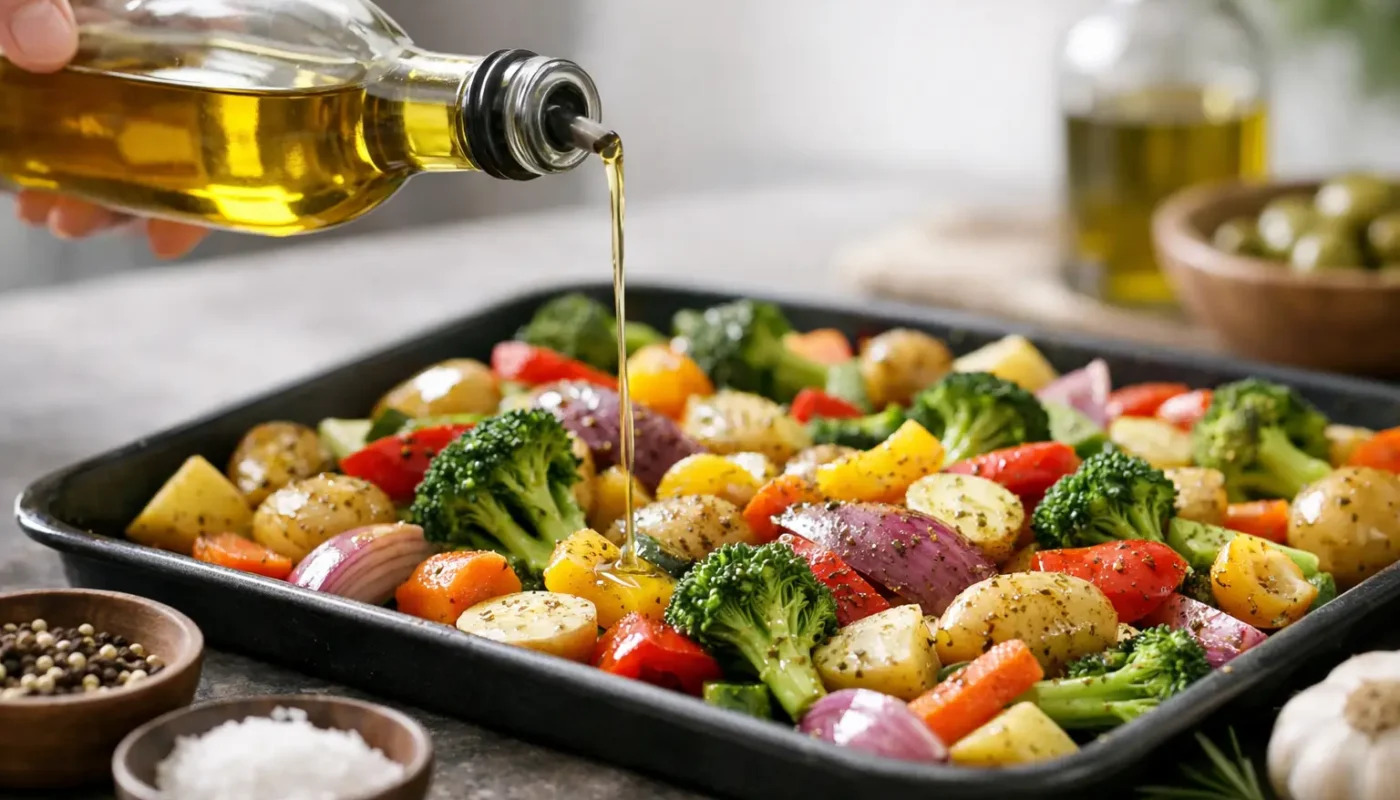
Cut vegetables to similar sizes so they cook at the same pace. Toss them thoroughly so every surface gets a light, even coating. You are aiming for gloss, not saturation. Too little oil and the vegetables dry out before they brown. Too much and they steam.
Roast most vegetables at 400 to 425 degrees. That range gives you enough heat for caramelization without pushing the oil unnecessarily hard. Turn once if needed, but not constantly. Contact with the hot pan helps create those crisp, dark edges.
Salt matters too. Season before roasting for better penetration, then taste again after cooking. If you want the olive oil to remain front and center, keep the seasoning simple. If you are building bigger flavors with chili, za’atar, garlic, or Parmesan, choose an oil that can hold its own.
Common mistakes when choosing olive oil for roasting
One mistake is assuming the cheapest bottle is fine because the oven does all the work. Roasting concentrates everything, including flaws. If an oil tastes flat, greasy, or stale from the bottle, it will not improve on a sheet pan.
Another mistake is using a very delicate finishing oil for a long roast and expecting it to keep all its subtle notes. Some aromas naturally soften in the oven. That does not mean the oil is wasted, only that a second drizzle at the table may give you more of what you love.
The opposite mistake is going too bold for everything. A highly peppery olive oil can be glorious on broccoli and potatoes, but it may overpower sweet roasted fennel or delicate squash. This is where tasting and pairing become useful, not fussy.
So what should you actually buy?
For most kitchens, the best olive oil for roasting vegetables is a fresh, high-quality extra virgin olive oil in the medium to robust range. It is versatile, flavorful, and well-suited to common roasting temperatures. If you cook a wide variety of vegetables, this style gives you the best balance of browning support and flavor payoff.
If you like to tailor your pantry more precisely, keep two bottles on hand: one medium-intensity EVOO for everyday roasting and one more delicate or more assertive bottle for finishing. That small shift makes weeknight vegetables taste more intentional.
If you are shopping from a specialty retailer like Weyira Olive Oil & Vinegar, look for harvest freshness, clear origin information, and tasting notes that match your cooking style. Butter, green almond, artichoke, ripe tomato, and pepper are not just poetic labels. They are real clues for how the oil will perform with food.
The nicest thing about roasted vegetables is that they do not need much. A hot oven, good salt, and a genuinely flavorful olive oil can carry the whole dish. Once you taste that difference, the bottle you reach for stops feeling like a pantry basic and starts feeling like part of the recipe.
