
Ultra Premium Olive Oil
How to Create Dipping Oil Blends at Home
Nov
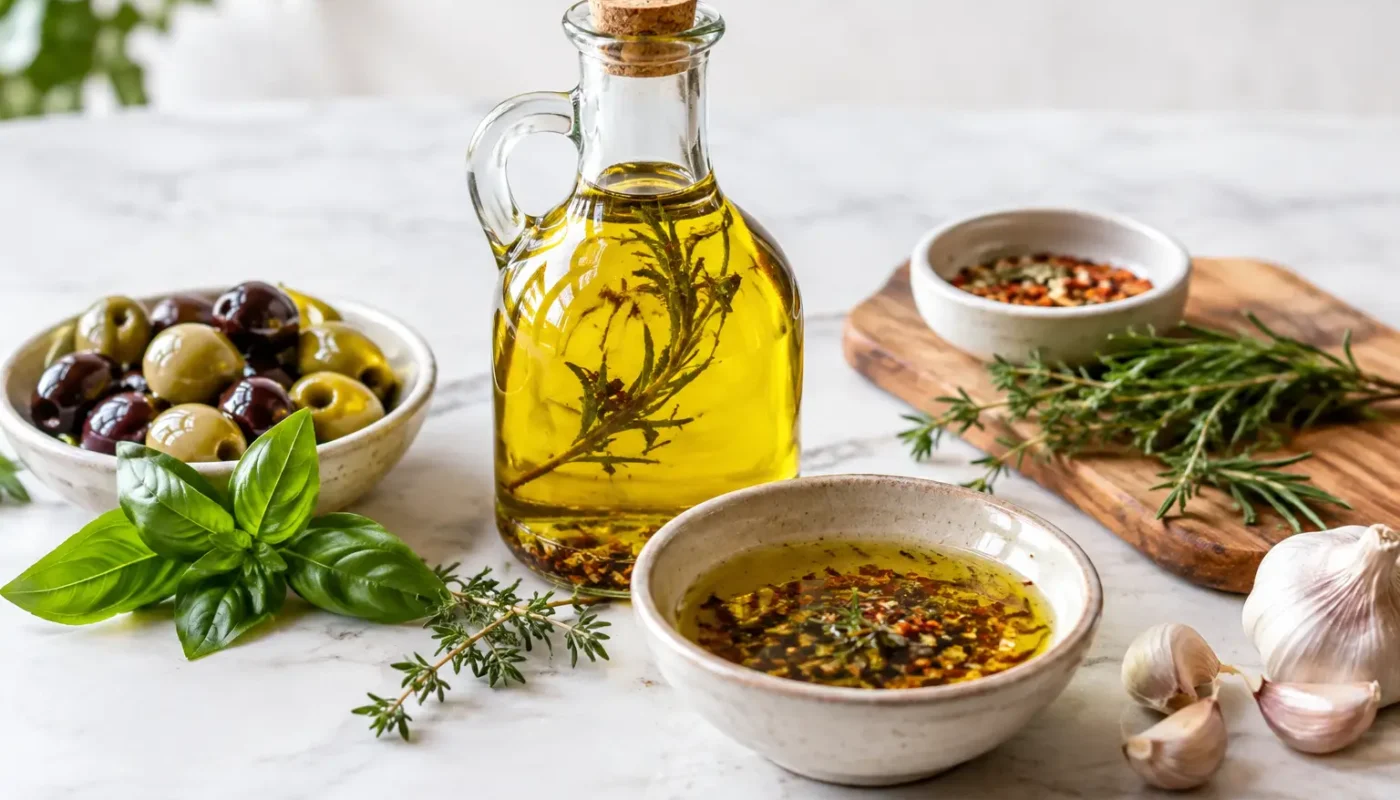
A warm loaf of crusty bread deserves more than a puddle of ordinary oil. When you create dipping oil blends with a fresh, flavorful extra virgin olive oil as the foundation, a simple appetizer becomes a small tasting experience – peppery, bright, herbaceous, smoky, or gently sweet, depending on what you add.
The secret is not loading the bowl with every herb in the pantry. It is choosing a few ingredients that let the olive oil shine. A quality EVOO brings fruitiness, pepper, and aroma to the table; herbs, spices, citrus, and vinegar should give it direction rather than hide it.
Start With an Olive Oil Worth Tasting
Dipping oil is served uncooked, so there is nowhere for a dull or stale oil to hide. Choose a fresh extra virgin olive oil with a taste you would enjoy on its own. A delicate oil can feel buttery and soft with mild bread, while a medium or robust oil offers grassy, green, peppery character that stands up beautifully to sourdough, focaccia, grilled vegetables, and aged cheese.
Freshness matters as much as style. Extra virgin olive oil is a fruit juice, and its flavor fades with age, heat, and light. Store the bottle tightly closed in a cool, dark cupboard, not beside the stove or in a sunny window. If an oil smells waxy, flat, or like old nuts, it will not make a memorable dipping blend.
For a more intentional tasting, set out two oils with different personalities. A smooth, mellow oil can carry garlic and gentle herbs. A bolder, more peppery olive oil is excellent with rosemary, citrus zest, or a few drops of dark balsamic. This is one reason a specialty olive oil collection is so enjoyable: each bottle gives the same bread a different destination.
How to Create Dipping Oil Blends With Balance
Begin with about 1/4 cup of extra virgin olive oil for two to four people. Add dried seasonings a little at a time, stir, and let the blend sit for five to ten minutes before tasting. Dried herbs need a moment to soften and release their aroma into the oil.
A reliable starting point is 1/4 cup oil, 1/2 teaspoon dried herbs or spices, a small pinch of salt, and an optional acidic accent. Taste with the bread you plan to serve, not just from a spoon. Salty bread, tangy sourdough, and soft baguette each change how the oil tastes.
Salt is often the missing piece, but restraint is useful. Flaky sea salt adds a pleasing crunch just before serving, while a fine sea salt dissolves more fully into the blend. If you are using salty olives, Parmesan, or cured meats on the same board, use less salt in the oil.
Acidity adds lift. A teaspoon of balsamic vinegar creates a lovely oil-and-vinegar dip, though it will not remain fully blended. That is part of its charm. Swirl it just before serving, or offer the balsamic in a second small dish for guests who prefer to control the balance themselves.
Four Flavor Directions for the Bread Basket
Classic Italian Herb and Garlic
For a familiar, crowd-pleasing blend, combine 1/4 cup EVOO with 1/2 teaspoon Italian herb seasoning, 1/4 teaspoon crushed red pepper, a pinch of sea salt, and a light sprinkle of grated Parmesan. Dried garlic is especially useful here because it gives savory flavor without the food-safety concerns of storing fresh garlic in oil.
Serve this blend with ciabatta, a toasted baguette, or warm focaccia. If you want a brighter finish, add a few drops of traditional dark balsamic just before the bowl reaches the table.
Rosemary, Lemon, and Black Pepper
Rosemary’s piney aroma loves a lively olive oil. Stir 1/4 cup EVOO with 1/2 teaspoon crushed dried rosemary, 1/4 teaspoon freshly ground black pepper, a pinch of flaky salt, and finely grated lemon zest. Let it rest briefly so the rosemary can bloom.
This blend is particularly good with grilled chicken, white bean dip, roasted potatoes, or a cheese board with goat cheese and toasted almonds. Use zest rather than lemon juice if you want the dip to remain mostly oil-forward.
Smoky Chili and Citrus
For guests who like a little heat, use 1/4 cup olive oil, 1/4 teaspoon smoked paprika, 1/4 teaspoon crushed red pepper, a small pinch of cumin, sea salt, and orange or lemon zest. The paprika brings warmth and color, while citrus keeps the blend from tasting heavy.
A robust EVOO works well here, but keep the chili modest at first. Heat intensifies as the spices sit in the oil. This is a natural partner for grilled flatbread, roasted peppers, shrimp, or a mezze-style spread.
Balsamic, Herb, and Honey
A sweeter savory blend makes an elegant companion for salty cheeses and charcuterie. Whisk 1/4 cup extra virgin olive oil with 1 teaspoon dark balsamic vinegar, 1/2 teaspoon honey, a pinch of dried thyme, and a few turns of black pepper. The honey should be subtle, not dessert-like.
Try it with warm bread, blue cheese, prosciutto, figs, or pears. A fig or berry balsamic can be wonderful in this style, but choose one accent flavor at a time. Too many sweet notes can overwhelm the olive oil’s natural fruitiness.
Fresh Ingredients Need a Different Approach
Fresh basil, parsley, minced shallot, lemon juice, and fresh garlic can make a beautiful dipping bowl for a meal, but they should be treated as same-day ingredients. Fresh garlic and herbs contain moisture, and garlic stored in oil can create a food-safety risk when held improperly at room temperature.
If using fresh garlic, make only what you will serve immediately. Refrigerate any leftovers promptly and use them within a few days, or simply discard what remains. Do not leave a fresh garlic oil blend on the counter for later. For make-ahead gifts or pantry-ready seasoning mixes, stick to dried herbs, dried garlic, dried onion, spices, and salt.
Fresh herbs are best added at the last minute, especially tender leaves such as basil and parsley. Woody herbs like rosemary and thyme can be lightly crushed between your fingers first to release their fragrant oils.
Pair the Blend With More Than Bread
A well-made dipping oil earns a place beyond the appetizer plate. Spoon the rosemary-lemon blend over roasted vegetables, use the smoky chili version to finish pizza, or dress warm cannellini beans with classic herb oil. The balsamic-honey blend can bring a polished finish to a grain salad or roasted squash.
The same principle applies when selecting flavored olive oils. A garlic-infused olive oil can simplify an herb blend, while a citrus-fused oil can bring brightness without extra zest. Infused oils are convenient, but they are already seasoned, so reduce the number of additional ingredients. Let one starring flavor lead.
At Weyira Olive Oil & Vinegar, this kind of tasting is part of the pleasure: compare a peppery EVOO with a softer buttery one, then notice how a rosemary pinch or a ribbon of balsamic shifts the entire experience. There is no single best combination, only the one that suits the bread, the menu, and the people around your table.
Serve It Like a Tasting, Not a Recipe Test
Choose a shallow bowl rather than a deep cup so guests can see the oil’s color and easily catch herbs with their bread. Pour the oil shortly before serving, add the finishing salt or cheese at the end, and bring it out with warm bread. Cold bread dulls aroma and can make even a fine oil seem less expressive.
If you are entertaining, offer two small blends instead of one oversized bowl. One classic and one unexpected option gives guests an easy point of comparison without turning the appetizer into a complicated project. Keep the rest of the board simple: good bread, a few cheeses, olives, and fruit are enough.
The best dipping oil blends are made with curiosity, not strict rules. Start with a fresh olive oil you are proud to pour, make one thoughtful addition, and taste as you go. Your next favorite blend may be as simple as peppery EVOO, a pinch of rosemary, and bread still warm from the oven.
