
Ultra Premium Olive Oil
Olive Oil Marinades That Make Dinner Better
Nov
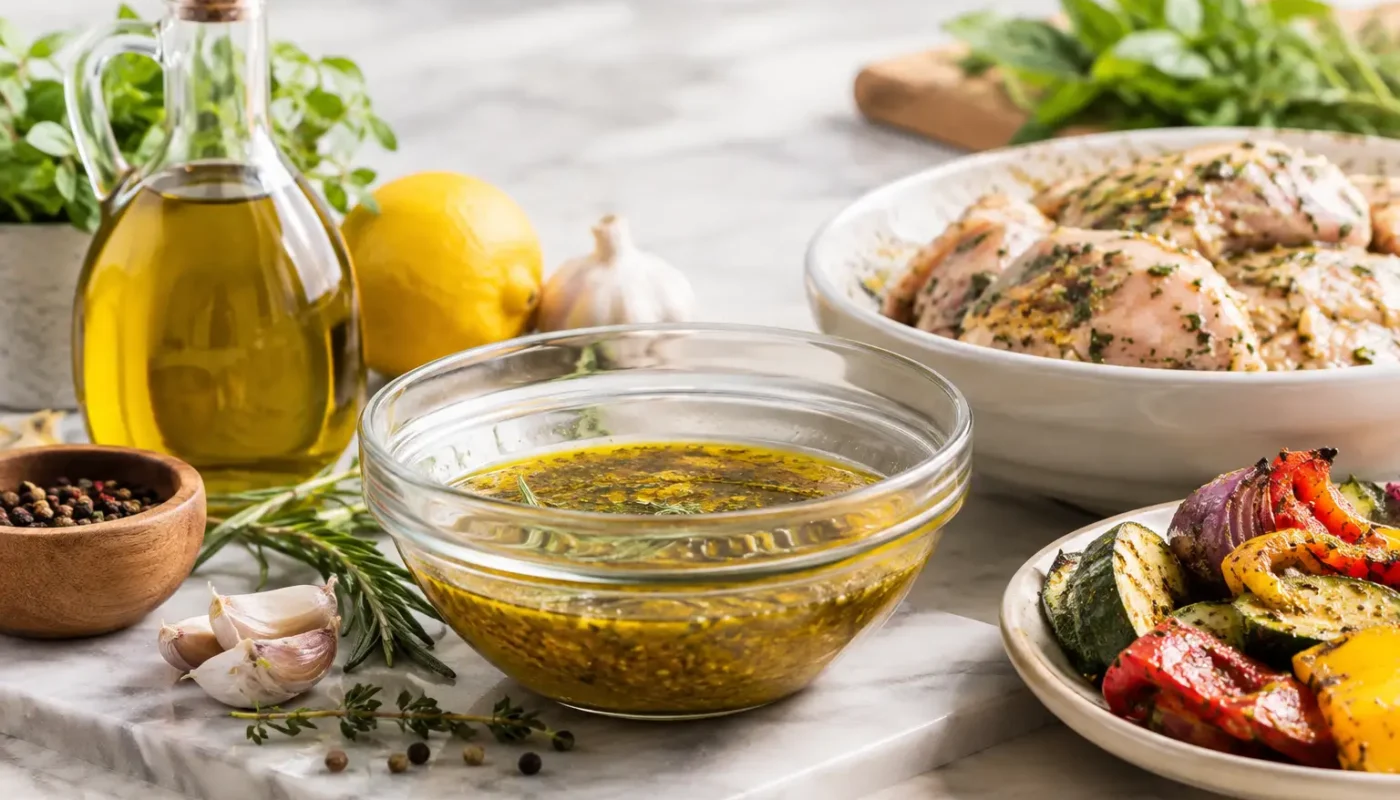
A good marinade should do more than make dinner taste vaguely seasoned. The best olive oil marinades carry herbs and spices across every surface, add a glossy finish, and build the kind of layered flavor that makes a simple grilled chicken breast or tray of vegetables feel thoughtfully made. Start with fresh, well-made extra virgin olive oil, and even a short marinade can bring remarkable character to the table.
Why olive oil marinades work so well
Olive oil is an exceptional flavor carrier. Many of the aromatic compounds in garlic, citrus zest, dried chile, rosemary, cumin, and fresh herbs are fat-soluble, meaning they bloom and travel more effectively when mixed with oil. Rather than sitting in dry patches on the food, those flavors coat it evenly.
Extra virgin olive oil also contributes its own personality. A delicate oil can lend a soft, buttery fruitiness to seafood or spring vegetables. A more robust, peppery oil has enough presence for lamb, steak, mushrooms, and charred eggplant. That is one reason a premium olive oil is worth tasting before it goes into a marinade. If it tastes fresh and lively from a spoon, it will bring that same vitality to the finished dish.
Oil alone does not tenderize meat, but it helps protect the exterior from drying out during high-heat cooking. It can also encourage attractive browning, especially when excess marinade is lightly wiped away before food hits the grill or pan. The result is flavor that tastes integrated rather than poured on at the end.
Build a balanced olive oil marinade
There is no single perfect ratio, but a useful starting point is three parts olive oil to one part acid. For example, combine 1/2 cup extra virgin olive oil with 3 tablespoons of balsamic vinegar, fresh lemon juice, wine vinegar, or another acidic ingredient. Then add salt, aromatics, and herbs to suit what you are cooking.
Acid brings brightness, but more is not always better. A highly acidic marinade can make the outer layer of seafood mushy and give chicken or pork an oddly cured texture if left too long. Balsamic vinegar is especially useful because it contributes sweetness and body along with acidity. White balsamic offers a lighter, fruit-forward direction for chicken, fish, and vegetables, while dark balsamic has the depth to stand beside beef, pork, or roasted root vegetables.
Salt should be included with intention. It seasons beyond the surface over time, particularly with thinner cuts of meat, but it can also pull moisture from delicate ingredients. For a quick vegetable marinade, add salt just before cooking. For chicken thighs or pork tenderloin, salting in the marinade is a delicious choice.
A dependable formula includes olive oil, acid, salt, a savory aromatic such as minced garlic or shallot, and an herb or spice. From there, choose a flavor direction instead of adding every ingredient in the pantry. Clear, focused combinations taste more polished.
Four flavor combinations to keep on hand
For lemon-herb chicken, pair a bright extra virgin olive oil with lemon zest, lemon juice, garlic, oregano, and black pepper. The zest is essential – it provides fragrant citrus oil without pushing acidity too far.
For balsamic rosemary pork, use olive oil, dark balsamic vinegar, rosemary, Dijon mustard, crushed garlic, and a touch of honey. The mustard helps the marinade cling, while honey supports caramelization. Keep the heat moderate to prevent burning.
For a Mediterranean vegetable marinade, stir together olive oil, white balsamic vinegar, sliced garlic, thyme, smoked paprika, and a pinch of flaky sea salt. It is especially good with zucchini, peppers, mushrooms, onions, and cauliflower.
For a savory steak marinade, choose a robust olive oil with balsamic vinegar, Worcestershire sauce, cracked black pepper, garlic, and a small amount of soy sauce. This is a bold blend, so use it on skirt steak, flank steak, or mushrooms rather than delicate fish.
Match the marinade to the ingredient
A marinade should flatter the food, not cover it up. Seafood benefits from restraint. Shrimp, scallops, and firm white fish need only 15 to 30 minutes with olive oil, lemon zest, herbs, and a modest amount of acid. For salmon, olive oil paired with maple, Dijon, and a mild fruit balsamic creates a glaze-like finish without masking its richness.
Chicken is more forgiving and welcomes aromatic blends. Boneless chicken breasts generally need 30 minutes to 2 hours, while thighs can go for 2 to 6 hours. If citrus juice or vinegar is prominent, stay closer to the shorter end of that range. A marinade left overnight is not automatically better.
Pork tenderloin does well with 2 to 8 hours of marinating time. Its mild flavor welcomes balsamic, mustard, garlic, warm spices, and herbs. Beef can handle bolder ingredients, although quality cuts such as ribeye need little more than olive oil, salt, pepper, and perhaps rosemary. Save stronger marinades for cuts that benefit from extra flavor and a little surface softening.
Vegetables are often overlooked, yet they may be the easiest place to appreciate a beautiful olive oil. Toss hearty vegetables 20 to 30 minutes before grilling or roasting. Tender vegetables such as asparagus, tomatoes, or summer squash can be seasoned immediately before cooking. The oil helps create caramelized edges while herbs and spices toast into the surface.
Timing matters more than quantity
Marinades work at the surface. They do not penetrate deeply into a thick roast, no matter how long it sits in the refrigerator. That is why scoring, cutting ingredients into smaller pieces, or choosing thinner cuts can be more effective than extending marinating time.
Use these windows as practical guidance:
- Shrimp, scallops, and delicate fish: 15 to 30 minutes
- Firm fish and seafood such as salmon or swordfish: 30 minutes to 1 hour
- Vegetables: 0 to 30 minutes
- Chicken breasts and thighs: 30 minutes to 6 hours
- Pork tenderloin: 2 to 8 hours
- Flank steak, skirt steak, or tougher beef cuts: 2 to 8 hours
Always marinate in the refrigerator, using a nonreactive glass, ceramic, or food-safe container. Turn the food once if possible so the coating remains even. Before cooking, lift food from the marinade and let the excess drip off. Too much liquid can steam food instead of allowing it to brown.
Use infused oils with a lighter hand
Fused and infused olive oils make marinade building wonderfully simple. A garlic olive oil can replace both plain oil and minced garlic. Lemon olive oil gives poultry and seafood a clean citrus perfume. Basil, rosemary, or herb-infused oils can create a complete flavor foundation in minutes.
Because these oils already contain concentrated flavor, simplify the rest of the mixture. A lemon olive oil with white balsamic, Dijon, and fresh dill needs little else for salmon. Garlic olive oil, dark balsamic, rosemary, and black pepper makes an easy marinade for portobellos or pork. Taste the mixture before adding salt, particularly if you are also using soy sauce, Parmesan, or a salty spice blend.
This is also where experimentation becomes rewarding. Pair a Persian lime olive oil with honey and cumin for chicken tacos, or use a blood orange olive oil with white balsamic and ginger for grilled shrimp. The goal is not novelty for its own sake. It is to create a flavor that feels intentional from the first bite.
A few safety and cooking details
Never reuse a marinade that has held raw meat, poultry, or seafood unless you boil it thoroughly first. The simplest approach is to reserve a clean portion before adding the protein, then use that reserved mixture as a finishing drizzle, sauce base, or basting liquid.
Sugar, honey, and many balsamic vinegars can char quickly over direct heat. They are delicious in olive oil marinades, but cook over medium heat, use a two-zone grill, or finish the food away from the hottest part of the flame. For lean proteins, a final spoonful of fresh olive oil after cooking can restore aroma and richness that heat naturally softens.
The next time dinner needs more than salt and pepper, begin with an olive oil you genuinely enjoy tasting. A thoughtful marinade is less about a long ingredient list and more about choosing a few beautiful flavors that know how to work together.
