Ultra Premium Olive Oil
How to Use Finishing Oils for Better Flavor
Aug
A spoonful of the right oil can make a weeknight bowl of beans taste like something you would linger over at a favorite neighborhood restaurant. Learning how to use finishing oils is less about following strict rules and more about recognizing what a fresh, flavorful oil contributes after the cooking is done: aroma, texture, brightness, and a satisfying sense of completeness.
A finishing oil is not simply oil used at the end of a recipe. It is an ingredient chosen for its character. A peppery extra virgin olive oil can wake up creamy soup, while a fragrant basil or lemon olive oil can bring grilled fish, ripe tomatoes, or roasted vegetables into sharp focus. The goal is to preserve the oil’s most beautiful qualities instead of cooking them away.
What makes an oil a finishing oil?
Finishing oils are typically high-quality oils with distinctive flavor and aroma. Fresh extra virgin olive oil is a natural choice because its fruity, grassy, buttery, or peppery notes are meant to be tasted. Infused and fused olive oils are equally useful when you want to add a clear flavor direction without reaching for several separate ingredients.
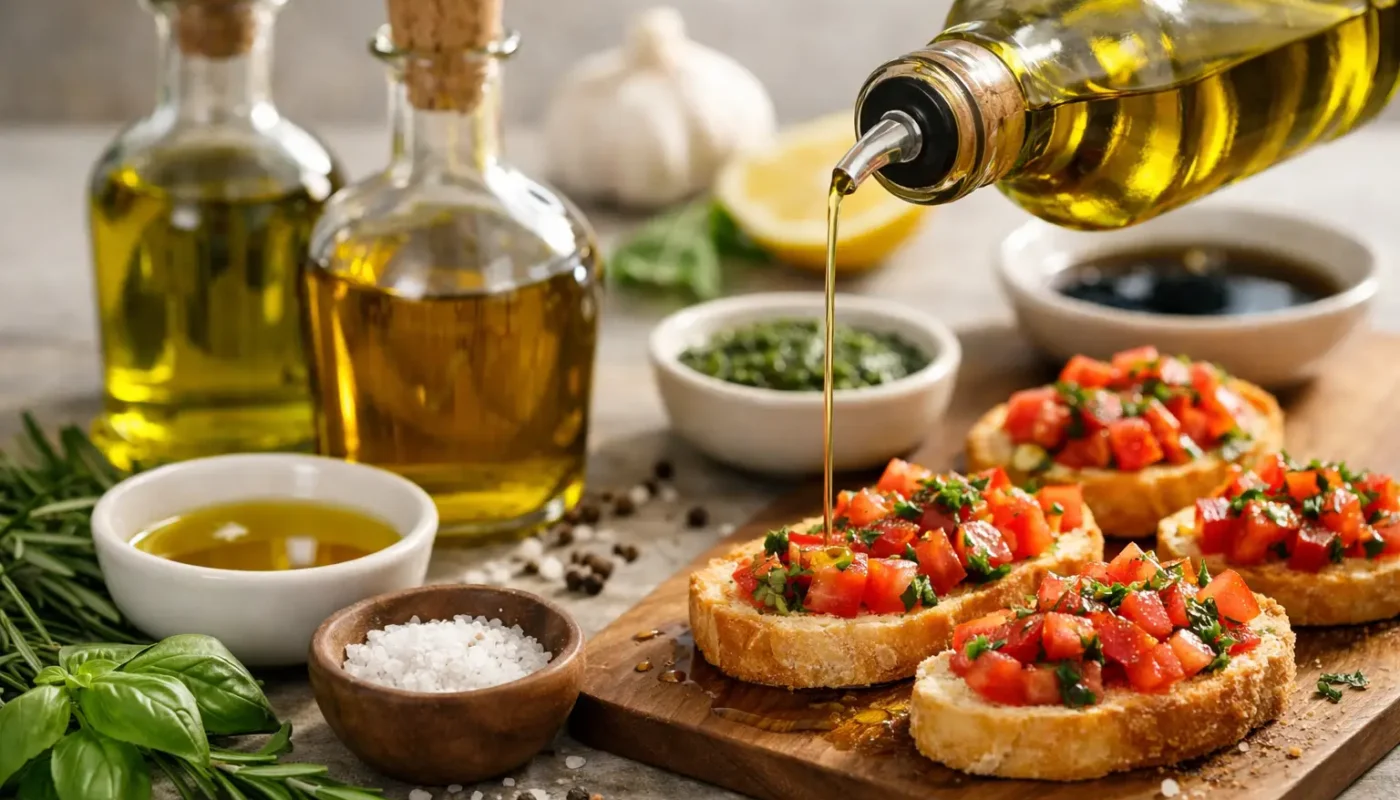
The difference comes down to timing. Cooking oil handles heat and helps food brown, crisp, or sauté. A finishing oil is added just before serving or brought to the table for a final drizzle. This protects its delicate aromatic compounds and lets its flavor sit on the surface of the food, where you notice it first.
That does not mean premium olive oil can never be used for cooking. It absolutely can. But when you have a particularly fresh, complex extra virgin olive oil, saving a portion for the final touch gives you more of what you paid for. Think of it as seasoning with flavor, not just fat.
How to use finishing oils without overpowering a dish
Start small. For an individual plate, a teaspoon is often enough. For a platter of roasted vegetables, a bowl of soup, or a grain salad serving four, begin with one to two tablespoons. Drizzle slowly, taste, and add more only if the food asks for it.
Use the oil after the food has left the direct heat. Hot food is ideal because its warmth releases the oil’s aroma, but a vigorously boiling pot can mute the fresh notes you are trying to highlight. Let a soup settle for a minute, plate it, then finish it. Do the same with pasta, pizza, grilled meat, and vegetables.
Balance matters as much as quantity. Rich dishes often welcome a robust, peppery oil because its bite cuts through creaminess and fat. Delicate ingredients such as crab, fresh mozzarella, white fish, and tender spring greens are usually better with a mild, fruity oil. If your first drizzle makes everything taste like oil rather than food, simply use less next time or choose a gentler style.
Treat finishing oil like a final seasoning
Salt, acid, heat, and oil work together. A finishing oil may make a dish taste rounder, but it cannot replace salt or acidity. A tomato salad, for example, becomes far more vivid when ripe tomatoes are seasoned with salt, a bright vinegar, and a generous yet measured pour of extra virgin olive oil.
Taste the dish before and after the drizzle. A good finishing oil should make flavors feel more open and connected. You may notice a peppery sensation at the back of the throat with certain fresh EVOOs. That pleasant tickle is often a sign of naturally occurring phenolic compounds, especially in more robust oils.
Pair the oil with the food’s personality
There is no single best finishing oil. The most rewarding pairings follow the dominant flavor in the dish and the mood you want to create.
A medium-intensity extra virgin olive oil is wonderfully versatile. Try it over warm sourdough, scrambled eggs, lentils, roasted chicken, or a simple salad of greens and shaved Parmesan. Its fruitiness brings a polished finish without competing with the main ingredient.
Robust extra virgin olive oil earns its place with earthy, hearty foods. Drizzle it over white beans, mushroom risotto, grilled steak, roasted squash, bitter greens, or tomato-rich pasta. Its green, peppery character can stand up to char, garlic, and deeper savory flavors.
For food that needs lift, reach for citrus-infused or citrus-fused olive oil. Lemon olive oil is especially good over grilled shrimp, steamed asparagus, roasted potatoes, sautéed spinach, and berry salads. Persian lime oil gives tacos, corn, black beans, and avocado a clean, lively finish. These oils are an easy way to create brightness when you do not have fresh citrus on hand.
Herb oils make everyday food feel thoughtfully composed. Basil olive oil loves tomatoes, burrata, pasta, and grilled zucchini. Garlic olive oil brings instant depth to mashed potatoes, pizza, roasted cauliflower, and crusty bread. Rosemary olive oil is a natural match for lamb, chicken, white beans, and roasted root vegetables. With infused oils, restraint is especially useful: their flavor is concentrated, so a light drizzle often goes a long way.
Try a finishing oil beyond dinner
Finishing oils belong at breakfast and dessert, too. Drizzle a mild EVOO over ricotta toast with honey and flaky salt. Add lemon olive oil to yogurt with fresh fruit. Pour a fruity extra virgin olive oil over vanilla ice cream with a pinch of sea salt, or pair a blood orange olive oil with dark chocolate brownies. The savory-sweet contrast is memorable, not fussy.
For entertaining, set out one or two oils with a small dish of good salt and sliced bread. Guests can taste the difference between a buttery, delicate oil and a bold, peppery one. It is a simple tasting experience that turns an appetizer into a conversation.
Four easy ways to begin tonight
If you are new to finishing oils, start with familiar dishes rather than an elaborate recipe:
- Drizzle fresh extra virgin olive oil over tomato soup, then add cracked black pepper and a few torn basil leaves.
- Finish roasted broccoli or carrots with garlic or lemon olive oil just before serving.
- Toss hot pasta with a final spoonful of EVOO after the sauce is mixed in, not only before.
- Spoon a peppery oil over hummus, labneh, or whipped feta, then serve with warm pita or vegetables.
These uses reveal the oil clearly, which helps you learn its personality. Once you know whether you prefer delicate fruitiness, herbaceous green notes, or a bold peppery finish, pairing becomes intuitive.
Common mistakes that flatten the flavor
The most common mistake is adding finishing oil too early. If it spends several minutes in a hot pan, its most expressive aromas fade. Use your everyday oil for sautéing if you like, then reserve the fresher or more specialized bottle for the plate.
Another mistake is storing beautiful oil where heat and light can damage it. Keep bottles tightly closed in a cool, dark cupboard, away from the stove and sunny windows. Buy a bottle size you can reasonably enjoy while it is fresh. Premium olive oil is a living agricultural product, and its flavor is at its best when treated that way.
Finally, do not assume every dish needs the same oil. A strong garlic oil may be perfect on pizza but too assertive for a delicate peach salad. Let the dish lead. When in doubt, taste a small spoonful of oil first, then imagine it alongside the food.
Make the final drizzle intentional
A finishing oil is one of the easiest ways to cook with more confidence because it gives you control at the last moment. You can taste, adjust, and make a simple meal feel more generous without adding another complicated step.
Keep one fresh extra virgin olive oil and one flavor-forward option within reach. At Weyira Olive Oil & Vinegar, that might mean a vibrant EVOO for everyday drizzling alongside a lemon, basil, or garlic olive oil for quick inspiration. The next time dinner seems almost finished but not quite special, reach for the bottle after the heat is off and let a small, fragrant pour do the rest.
