
Ultra Premium Olive Oil
How to Pair Olive Oil With Bread Like a Taster
Sep
A warm loaf and a small pool of excellent olive oil can be more memorable than an elaborate appetizer. The secret to how to pair olive oil with bread is not finding one universal match. It is noticing the bread’s crust, crumb, salt level, and grain character, then choosing an oil that either echoes those qualities or gives them a welcome contrast.
Premium extra virgin olive oil deserves the same attention you might give wine, cheese, or coffee. Pour it into a small dish, warm it slightly with your hands, and taste it before the bread arrives. You may find fresh-cut grass, green almond, tomato leaf, artichoke, pepper, ripe fruit, or a gentle buttery finish. Those details are what turn bread and oil into a proper tasting experience.
Start With Freshness, Not a Complicated Dip
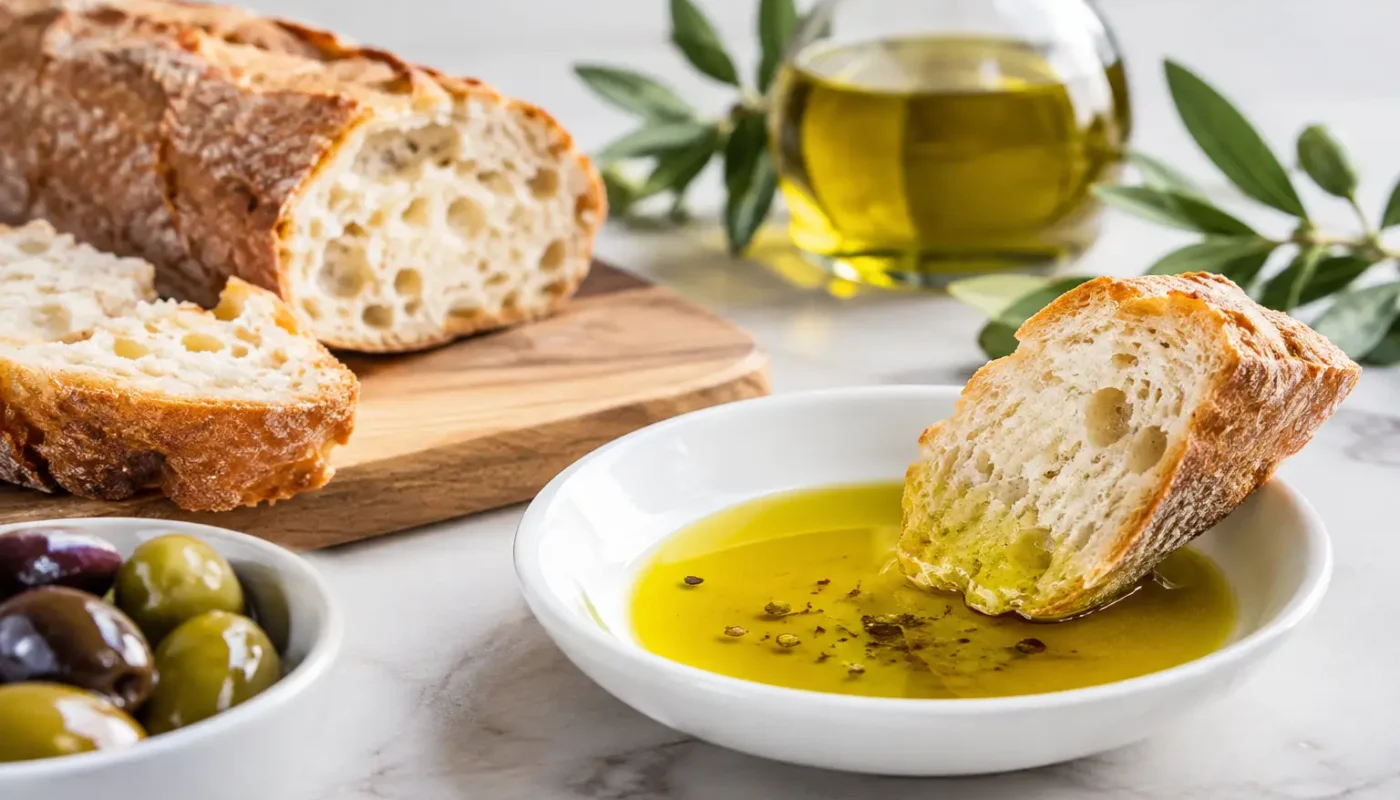
For the first taste, keep the setup almost bare: fresh bread, extra virgin olive oil, and a pinch of good salt if the bread is unsalted. This is the clearest way to understand both ingredients. A stale loaf, a bland oil, or a dish overloaded with herbs can hide the very flavors you hoped to enjoy.
Choose an oil that is fresh and well stored, with a harvest character that still feels lively. A quality EVOO may have bitterness on the tongue and a peppery tickle in the throat. Those are often welcome signs of naturally occurring olive compounds, not flaws. The intensity can range from delicate to bold, so the best pairing depends on how assertive the bread is.
Serve the oil at room temperature in a shallow, light-colored dish. A shallow pour lets guests see its color and makes dipping easy, though color alone does not tell you whether an oil is high quality. Set out small plates and encourage a taste before adding balsamic, spices, or toppings.
How to Pair Olive Oil With Bread by Texture
Texture is the quickest place to begin. Crusty bread needs enough body and flavor to meet its toasted exterior. Soft, tender bread can be overwhelmed by a strong, peppery oil, especially when the crumb is airy and lightly seasoned.
Crusty sourdough and country loaves
Sourdough’s tang and deeply baked crust are natural partners for medium or robust extra virgin olive oils. Look for grassy, herbaceous, or peppery notes that can stand beside the bread’s fermentation and char. A robust Tuscan-style profile can be especially satisfying here, as can a fresh California or Australian-style EVOO with a bright green finish.
If the sourdough is very tangy, add a small pinch of flaky salt rather than immediately reaching for balsamic. Acid plus acid can become sharp. If you do want balsamic, use just a few drops of a rich dark balsamic, allowing the olive oil to remain the main event.
Baguette and other lean French breads
A classic baguette has a shattering crust and a mild, wheaty center. It leaves room for a medium-intensity oil with green almond, fresh herb, or subtle pepper notes. Avoid an oil that is so aggressive it makes every bite feel hot at the back of the throat.
For a simple entertaining plate, offer the baguette with EVOO, sea salt, and a dish of aged dark balsamic on the side rather than mixing everything together. Guests can choose a clean oil-and-bread bite or create their own balance of fruitiness, sweetness, and acidity.
Focaccia
Focaccia already carries olive oil in its crumb and crisp edges, so matching it calls for restraint. A delicate to medium EVOO with buttery, ripe olive, or mild herbal notes adds fragrance without making the bread greasy. Rosemary focaccia welcomes a savory oil, while tomato or olive focaccia is excellent with a brighter, greener oil that cuts through its richer toppings.
Fused citrus olive oils can be beautiful with plain focaccia, particularly lemon or blood orange. Use them sparingly. The goal is to lift the bread, not make it taste like dessert.
Brioche, challah, and soft enriched breads
Buttery breads need softer, fruit-forward oils. Choose a delicate extra virgin olive oil with ripe apple, almond, or mild floral character. The oil should feel silky rather than peppery, giving the bread a polished finish.
These breads also open the door to sweeter combinations. A drizzle of mild EVOO with white balsamic, honey, or a pinch of cinnamon sugar can make a lovely brunch bite. Keep the portions small, since rich bread and sweet condiments can become heavy quickly.
Whole grain, rye, and seeded loaves
Nutty grains, toasted seeds, and rye’s earthy edge can carry bolder flavors. Medium or robust EVOO is often the right move, especially one with artichoke, walnut-like bitterness, or black pepper character. A garlic-infused olive oil can work well, but use it as a deliberate flavor choice rather than a default.
For an open-faced snack, pair whole grain bread with olive oil, a little salt, and sliced radish or tomato. The crunch and freshness prevent the grain flavors from feeling dense.
Match Flavor Intensity Before Adding Extras
A useful tasting rule is simple: delicate bread wants delicate oil; hearty bread can handle more intensity. That does not mean every pairing must be perfectly matched. Contrast is often delicious. A mild ciabatta with a peppery EVOO can feel exciting, while a dark rye with a mellow oil can let the grain take center stage.
Consider the oil’s three classic tasting sensations. Fruitiness is the aroma and flavor of fresh olives. Bitterness appears on the tongue, often like arugula, endive, or almond skin. Pungency is the peppery sensation in the throat. A robust oil can have all three in abundance, while a delicate oil may feel softer and rounder.
When serving several breads, offer two oils instead of trying to make one bottle do every job. A delicate, fruit-forward EVOO and a more robust, grassy EVOO create an easy tasting flight. Label them by flavor, not by technical jargon alone: “soft and buttery” and “green and peppery” gives guests confidence to experiment.
Build a Bread-and-Oil Board That Feels Generous
A good bread-and-oil board does not need a crowded collection of ingredients. Start with two or three contrasting breads, two olive oils, salt, and one or two complementary accents. Fresh herbs, roasted garlic, cracked pepper, marinated olives, seasonal tomatoes, or a small pour of balsamic are plenty.
If you are serving a dark balsamic, place it in its own dish or drizzle it lightly over the oil at the last minute. Whisking a large batch of oil and vinegar ahead of time can mute the individual personalities of both products. Separate dishes also let guests taste the EVOO on its own, which is especially worthwhile when the oil has a distinct regional character.
For a more colorful spread, pair a bright herb-infused olive oil with rustic bread and fresh vegetables, or serve a citrus-fused oil beside grilled flatbread and creamy cheese. The bread should act as a canvas, not compete with every item on the table.
Common Pairing Mistakes to Avoid
The biggest mistake is treating all olive oil as interchangeable. A grocery-store bottle that has sat under bright lights for months may taste flat, while a fresh extra virgin olive oil can bring aroma, complexity, and a clean finish. If your bread-and-oil plate tastes dull, quality and freshness are more likely the problem than a missing spoonful of seasoning.
Another common misstep is pouring too much oil into a deep bowl. Guests end up soaking the bread until it is soggy, and the oil becomes more about quantity than flavor. A modest shallow pour encourages tasting and keeps the crust crisp.
Finally, do not assume garlic, parmesan, and balsamic improve every oil. They can be wonderful, but they can also bury nuanced fruitiness and pepper. Taste first. Then add one accent at a time, paying attention to what actually makes the next bite better.
Make the Pairing Your Own
There is no need to reserve this ritual for a dinner party. A slice of toasted sourdough with a green, peppery EVOO can make lunch feel considered. Warm focaccia with a delicate oil can welcome friends without requiring a complicated appetizer. At Weyira Olive Oil & Vinegar, we believe the pleasure is in the comparison: try the bread with one oil, then another, and let your own palate choose the favorite.
The most satisfying pairing is the one that makes you reach for a second piece of bread, not because the toppings are louder, but because the oil and loaf have made each other taste more alive.
