
Ultra Premium Olive Oil
How to Choose Olive Oil You’ll Want to Finish
Sep
A great bottle of olive oil does not disappear into a recipe. It gives a simple tomato, a warm piece of bread, or a bowl of beans a fresh, peppery lift that makes the whole plate taste more alive. That is the pleasure of choosing olive oil with care: it turns an everyday ingredient into one of the easiest ways to cook with more flavor.
For many home cooks, the olive oil aisle can be confusing. Labels mention extra virgin, cold extracted, first press, light, infused, and regions from around the world. Some terms matter more than others. The goal is not to memorize every label claim. It is to know what freshness tastes like, choose an oil that suits how you cook, and give it the storage it deserves.
What Makes Olive Oil Worth Choosing Carefully
Olive oil is fruit juice, not a shelf-stable seed oil refined for neutrality. Fresh olives are harvested, crushed, and separated to produce oil, and the care taken at every stage affects the result in your kitchen. Olive variety, growing region, harvest timing, milling practices, and storage all shape the aroma, texture, and finish.
The highest-quality category is extra virgin olive oil, often called EVOO. It is made without chemical refining and should have no sensory defects. At its best, it can smell grassy, herbaceous, green apple-like, floral, nutty, or like a ripe tomato vine. On the palate, it may be buttery and mild or distinctly bitter and peppery.
That peppery feeling in the throat is not a flaw. In a fresh, well-made EVOO, it can be a welcome sign of naturally occurring olive compounds. A cough after a small tasting sip is common with more robust oils. Of course, intensity is a matter of preference. A delicate oil may be the better choice for a tender fish or vanilla cake, while a bolder style can stand up beautifully to grilled vegetables, bitter greens, and a steak salad.
Start With Freshness, Not Just a Pretty Label
A dark bottle looks handsome on the counter, but the information on its label should earn your attention first. Olive oil is perishable. Light, heat, and oxygen gradually dull its lively character, which is why harvest information and responsible packaging matter.
Look for a harvest date when available. Unlike wine, olive oil generally is not something to age. A recently harvested oil, properly stored, is usually the most vibrant choice. A best-by date can be useful, but it is less revealing because it does not tell you when the olives were picked. A named country or region can offer helpful context, especially when paired with clear harvest and producer details.
Color is not a reliable quality test. Olive oil can range from deep green to glowing gold depending on the olive variety and ripeness, and both can be excellent. Professional tastings even use blue glasses so color does not influence judgment. Let your nose and palate do the deciding instead.
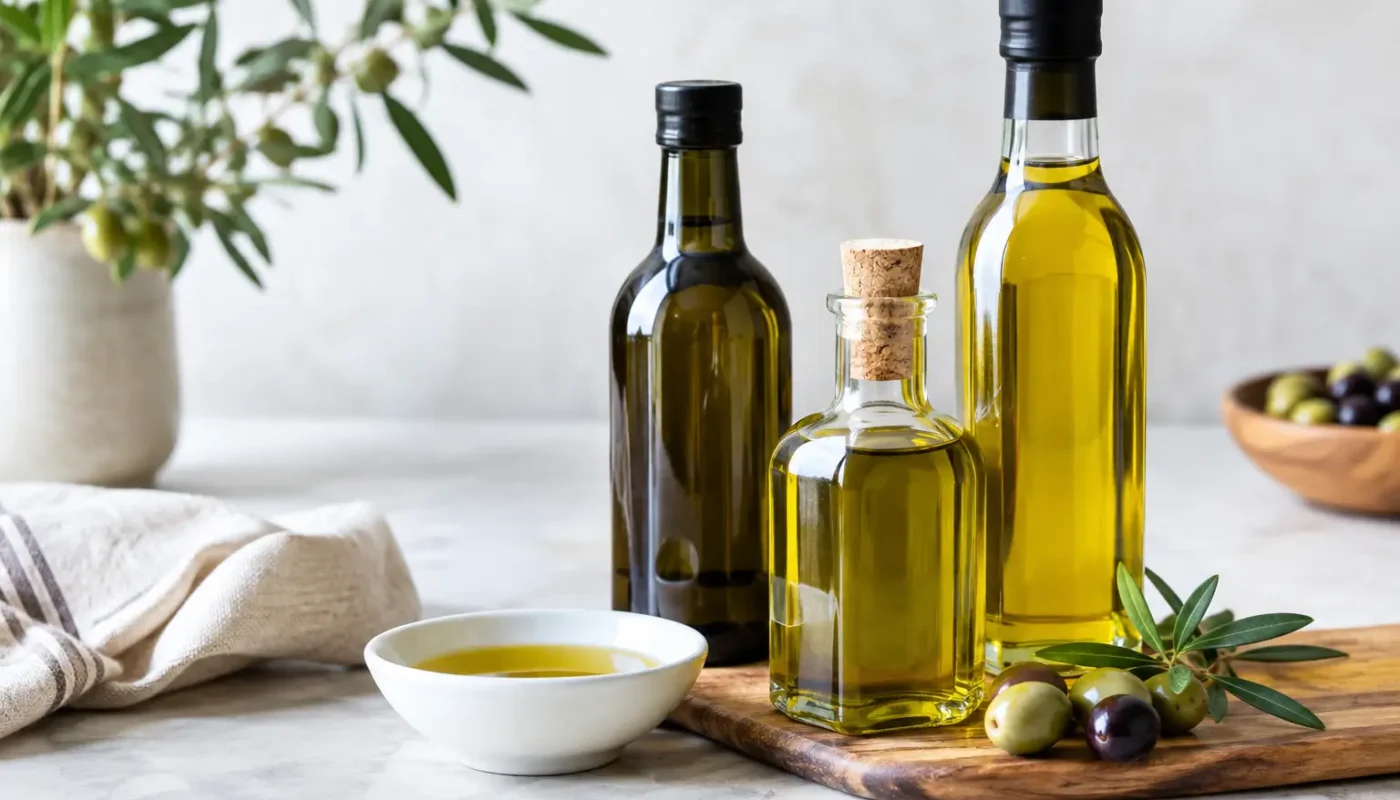
Packaging matters, too. Dark glass or a well-sealed tin helps shield oil from light. Large containers can make sense for households that use olive oil generously and will finish them promptly. If you reach for it only occasionally, a smaller bottle may give you a fresher experience from first pour to last.
Taste Olive Oil Like a Specialty Ingredient
You do not need a formal tasting room to learn what you enjoy. Pour a small amount of olive oil into a small glass or cup, warm it gently in your hands, and cover the top for a moment. This concentrates the aromas. Then uncover it and smell.
A fresh oil may remind you of cut grass, artichoke, almond, green banana, fresh herbs, or tomato leaves. Take a small sip and let it move across your palate before swallowing. Notice whether it tastes mild and round, green and bitter, or peppery at the finish.
A few flavors signal that a bottle has passed its prime. Rancid oil can seem waxy, stale, or reminiscent of old nuts. Musty flavors may suggest damaged fruit or poor handling. These notes are easy to overlook when oil is mixed into a heavily seasoned dish, but tasting it on its own makes the difference clear.
The best olive oil is not always the boldest. It is the one with clean flavor, appealing freshness, and a profile that fits what you want to cook. Keeping two styles on hand is often more useful than searching for one bottle that does everything: a robust EVOO for finishing and hearty dishes, plus a milder oil for baking, delicate vegetables, and gentle vinaigrettes.
Match the Style to the Meal
Think of olive oil as a seasoning with its own personality. A peppery, early-harvest style can add drama to lentil soup, roasted squash, pizza, hummus, or a plate of sliced tomatoes. Its bitter-green edge gives rich foods contrast.
A medium-intensity oil is a generous everyday partner. Use it in sautéed onions, grain salads, roasted chicken, pasta sauces, marinades, and vinaigrettes. It offers character without taking over the dish.
Delicate olive oils are especially lovely when you want softness rather than bite. Try one over white beans, fresh mozzarella, steamed asparagus, poached eggs, or citrus cake. Their subtle flavor can also be a smart choice for homemade mayonnaise or aioli, where an aggressively bitter oil may become more pronounced.
Flavored oils open another route to easy creativity. Fused oils are made by crushing fresh citrus, herbs, or other ingredients with olives, while infused oils typically have flavor added after the oil is made. Both can be useful, but their effects are different. A lemon olive oil brightens shrimp, green beans, and blueberry muffins; a garlic oil gives roasted potatoes or a quick pasta an instant savory base. Use flavored oils as accents, then balance them with a complementary vinegar, fresh herbs, or a pinch of finishing salt.
Can You Cook With Extra Virgin Olive Oil?
Yes. Extra virgin olive oil is excellent for everyday cooking, including sautéing, roasting, pan-frying, and baking. Its performance depends on the specific oil, the temperature, and the food being cooked, but normal home-cooking methods are well within its comfort zone.
The practical consideration is flavor and cost. A distinctive, ultra-fresh finishing oil may be too special to use by the cup for a high-heat fry, while a well-made everyday EVOO is a satisfying choice for roasting vegetables or searing chicken. There is no rule that says premium oil must be reserved only for bread dipping. Use the bottle in ways that let you enjoy it.
For a simple test, roast carrots or cauliflower with olive oil, salt, and black pepper. Finish the hot vegetables with a second small pour just before serving. The oil used in the oven contributes richness; the oil added at the end delivers aroma. That two-step approach is a small habit with a restaurant-worthy payoff.
Store It So the Last Pour Is Still Good
Olive oil belongs in a cool, dark cupboard, not beside the stove and not in a sunny window. Heat and light speed oxidation, while repeated exposure to air gradually flattens flavor. Keep the cap tightly closed and avoid leaving a decorative open cruet on the counter for weeks.
There is no need to refrigerate olive oil for most kitchens. Chilling can make it cloudy or solid, and while that does not necessarily harm the oil, it is inconvenient. A consistently cool pantry is usually ideal.
Once opened, use your bottle regularly. The exact timeline depends on the bottle size, storage conditions, and how often it is opened, but buying an amount you can enjoy while it is fresh is always a smart move. Consider olive oil a pantry staple with a season, not a permanent fixture.
Build a More Flavorful Pantry, One Pour at a Time
The most rewarding way to choose olive oil is to give yourself permission to compare. Taste a delicate style beside a robust one. Notice what happens when a bright balsamic meets a peppery EVOO over strawberries, or when a rich dark vinegar softens the bitterness of leafy greens. A tasting is not a test of expertise. It is simply how you learn what makes dinner more memorable.
At Weyira Olive Oil & Vinegar, that sense of discovery is part of the point: an oil from California may bring a different character to your kitchen than one from Italy, Morocco, Australia, or Peru. There is room in a well-loved pantry for more than one bottle and more than one mood.
Tonight, start with the easiest possible invitation: pour fresh olive oil over something warm, add a pinch of salt, and taste before you reach for anything else. Your next favorite meal may begin there.
