
Ultra Premium Olive Oil
Why Use Balsamic Vinegar on Fruit at Home
Nov
A ripe strawberry does not need much help. But add a few drops of well-balanced balsamic, and its sweetness becomes deeper, brighter, and almost jam-like. That is the pleasure of choosing to use balsamic vinegar on fruit: not covering its flavor, but giving it contrast.
The best balsamic vinegars bring more than acidity to the plate. They offer body, natural sweetness, and layered notes that may suggest dark cherry, caramel, fig, citrus, or warm spice. Fruit already contains sugar and aroma; balsamic gives those qualities definition. It is one of the easiest ways to make a simple bowl of berries, a cheese board, or a summer dessert feel thoughtfully composed.
Why use balsamic vinegar on fruit?
Sweet and tart are natural partners. Fruit can taste flat when it is very ripe, especially in a salad or dessert where other ingredients are mild. A small amount of balsamic adds acidity that wakes up the palate, while a quality dark balsamic also contributes a rounded, concentrated sweetness.
The effect depends on the fruit. With berries, balsamic emphasizes perfume and sweetness. With peaches, nectarines, and plums, it highlights their floral, stone-fruit character. With melon, it creates a savory-sweet edge that pairs beautifully with salty cheese or cured meat. Apples and pears become more complex, especially when roasted or grilled.
This is also why vinegar quality matters. Thin, aggressively sharp grocery-store balsamic can make delicate fruit taste sour. A carefully made balsamic with a fuller texture and a clean finish needs only a light hand. Taste it first from a spoon. If you enjoy its balance on its own, it is far more likely to flatter the fruit.
Start with a light touch
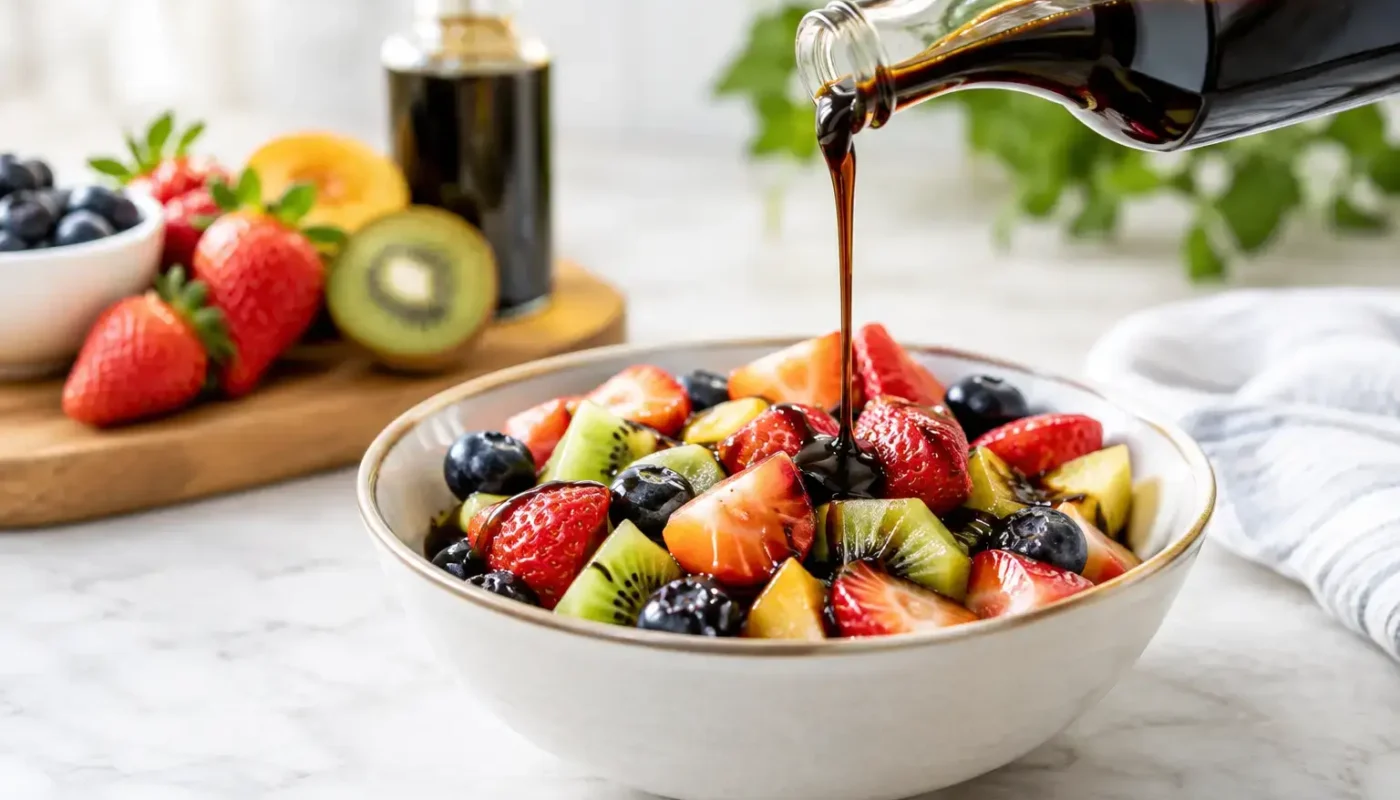
For a bowl of fresh fruit, begin with one teaspoon of balsamic for every two cups of fruit. Toss gently, wait five minutes, then taste. The brief rest allows the vinegar to mingle with the fruit juices without turning berries soft or watery.
Some fruit benefits from a drizzle just before serving instead. This is especially true for sliced peaches, melon, and figs, where you want the surface to stay fresh and distinct. For roasted fruit, add balsamic near the end of cooking or immediately after it comes out of the oven. High heat can concentrate its sugars quickly, which is delicious up to a point but can become sticky or bitter if overdone.
A pinch of flaky salt is often the small detail that makes the pairing sing. Salt does not make the fruit savory so much as it amplifies sweetness and balances the vinegar’s tang. Freshly cracked black pepper, torn basil, mint, or thyme can work just as well when the dish leans more appetizer than dessert.
The best fruit and balsamic pairings
Berries with dark balsamic
Strawberries are the classic choice, and for good reason. Their juicy sweetness and gentle acidity welcome a rich traditional-style balsamic. Let sliced strawberries sit with a drizzle for 10 minutes, then spoon them over vanilla gelato, Greek yogurt, shortcake, or ricotta toast.
Blackberries and blueberries can handle slightly bolder flavors. A blackberry-ginger or dark chocolate-style balsamic, used sparingly, turns them into a memorable topping for mascarpone or a simple cheese course. Raspberry balsamic is lovely with mixed berries, but keep the overall dish in balance. Pairing raspberry vinegar with raspberries can be delicious, yet it can also feel one-note if the fruit is not especially ripe. Add peach slices or a creamy dairy element for contrast.
Stone fruit with fruit-forward balsamics
Peaches, apricots, nectarines, and plums are exceptional with white balsamics and lighter fruit-infused varieties. White peach balsamic with grilled peaches is an easy favorite, particularly with fresh mozzarella, burrata, or soft goat cheese. The vinegar’s brightness keeps the dish from becoming too rich.
For a more dramatic dessert, grill halved peaches cut-side down, then finish with a dark balsamic and a little honey. Serve with toasted almonds and a spoonful of crème fraîche. The char from the grill adds a welcome bitterness that makes the fruit taste even sweeter.
Melon, pineapple, and tropical fruit
Melon likes contrast. Cantaloupe and honeydew are especially good with a crisp white balsamic, fresh mint, and a small pinch of salt. Watermelon can take a more assertive approach: try it with a bright balsamic, feta, basil, and a few drops of extra virgin olive oil.
Pineapple is naturally tangy, so choose a balsamic that adds warmth rather than more sharpness. A dark balsamic with a caramel-like finish is excellent over grilled pineapple, while a coconut or citrus-forward white balsamic can give a fruit salad a lively, vacation-worthy character. Mango works beautifully with a white balsamic, lime, and a touch of chile for a fresh salsa to serve alongside grilled fish or chicken.
Apples, pears, and figs
Apples and pears shine when roasted, sautéed, or arranged on a cheese board. A fig balsamic over sliced pears with blue cheese and walnuts brings together sweet, salty, creamy, and crisp elements in a few bites. Apples pair well with cinnamon, pecans, and a dark balsamic that has enough body to stand up to their crunch.
Fresh figs are already luxurious, so restraint is the right move. Split them open, add a few drops of aged balsamic, and serve with ricotta, goat cheese, or a thin slice of prosciutto. The result feels restaurant-worthy but takes minutes.
Fresh, grilled, or roasted: choose the right method
Fresh fruit is the best place to appreciate delicate balsamics. Use white balsamic or a refined dark balsamic when the fruit is ripe and fragrant, then add herbs, cheese, or nuts only if they support the main flavor.
Grilling suits sturdy fruit such as peaches, pineapple, watermelon, and firm plums. Brush the grill grates well, cook until clear marks appear, and add the balsamic after grilling. A premium extra virgin olive oil can be brushed on before cooking to encourage browning and add a soft, peppery note.
Roasting is ideal for apples, pears, grapes, figs, and stone fruit that is slightly underripe. Roast at 400°F until tender and lightly caramelized. Finish with balsamic rather than drowning the pan at the beginning. You will preserve the vinegar’s character and have better control over sweetness.
Pair balsamic fruit with more than dessert
Fruit and balsamic belong on the savory side of the table, too. A strawberry salad with peppery greens, creamy goat cheese, and toasted pecans can be dressed with balsamic and extra virgin olive oil. Grilled peaches make a beautiful addition to pork, chicken, or a summer grain salad. Roasted grapes with balsamic are wonderful beside roast chicken or on crostini with whipped ricotta.
For entertaining, build a simple tasting board around the pairing. Put out seasonal fruit, two cheeses with different textures, toasted nuts, and a small bowl of balsamic for drizzling. Guests can taste how a dark balsamic changes a strawberry or how a white balsamic lifts melon. It is a relaxed, generous way to make ingredient quality part of the conversation.
A few mistakes worth avoiding
Do not soak fragile fruit for hours. Berries and bananas will lose their texture, and even firmer fruit can become overly acidic. Do not assume more vinegar means more flavor, either. The goal is a gloss of contrast, not a puddle.
Also consider the sweetness of the balsamic before adding sugar, honey, or maple syrup. Many premium balsamics already have a naturally lush finish. Taste the fruit and vinegar together first, then decide whether the dish needs anything else.
The next time a carton of berries or a few ripe peaches lands on your counter, reach for a balsamic you would happily taste by itself. One thoughtful drizzle can turn an everyday piece of fruit into the kind of small, generous pleasure worth lingering over.
