
Ultra Premium Olive Oil
8 Balsamic Dessert Recipes Worth Repeating
Sep
A spoonful of the right balsamic can make vanilla ice cream taste less ordinary, bring ripe berries into focus, or give a chocolate cake a darker, more layered finish. That is the appeal of balsamic dessert recipes: they do not turn dessert into a vinegar course. They use acidity, fruit, and gentle sweetness to make familiar treats taste more complete.
The bottle matters here. A thin, sharply acidic grocery-store balsamic can overwhelm delicate fruit and dairy. A well-crafted dark or white balsamic has a fuller texture and a balanced sweet-tart character that belongs on the dessert table. Start lightly, taste as you go, and let the dessert remain the main event.
What Balsamic Brings to Dessert
Balsamic works especially well with ingredients that already carry sweetness, creaminess, or a toasted edge. Its acidity brightens rich mascarpone, cheesecake, whipped cream, and custard. Its natural fruit notes flatter strawberries, stone fruit, figs, pears, and citrus. In baked goods, it can deepen cocoa, caramel, brown sugar, and roasted nuts.
Dark balsamics tend to be the natural choice for chocolate, berries, caramel, and warm spices. White balsamics are often lighter and more fragrant, making them excellent with peaches, lemon, pineapple, melon, and vanilla-forward desserts. Fruit-infused varieties can be wonderfully direct: blackberry with berries, raspberry with chocolate, and peach with summer fruit.
A useful rule is to add balsamic in one of three ways. Drizzle it at the end for a bright finish, reduce it briefly for a glossy sauce, or whisk a small amount into a filling, glaze, or fruit mixture. Long reductions concentrate flavor fast, so use a modest amount and keep the heat low.
8 Balsamic Dessert Recipes for a Better Finish
1. Strawberry Balsamic Shortcakes
Toss sliced strawberries with 1 tablespoon of dark berry balsamic, 1 tablespoon sugar, and a tiny pinch of sea salt. Let them sit for 20 to 30 minutes, until their juices become ruby-red and lightly syrupy. Spoon over warm biscuits with softly whipped cream.
Traditional dark balsamic is beautiful here, but a strawberry or blackberry balsamic makes the fruit feel especially lush. The salt is not optional if you want a fuller flavor. It keeps the berries from tasting merely sweet.
2. Vanilla Ice Cream With Fig Balsamic and Pistachios
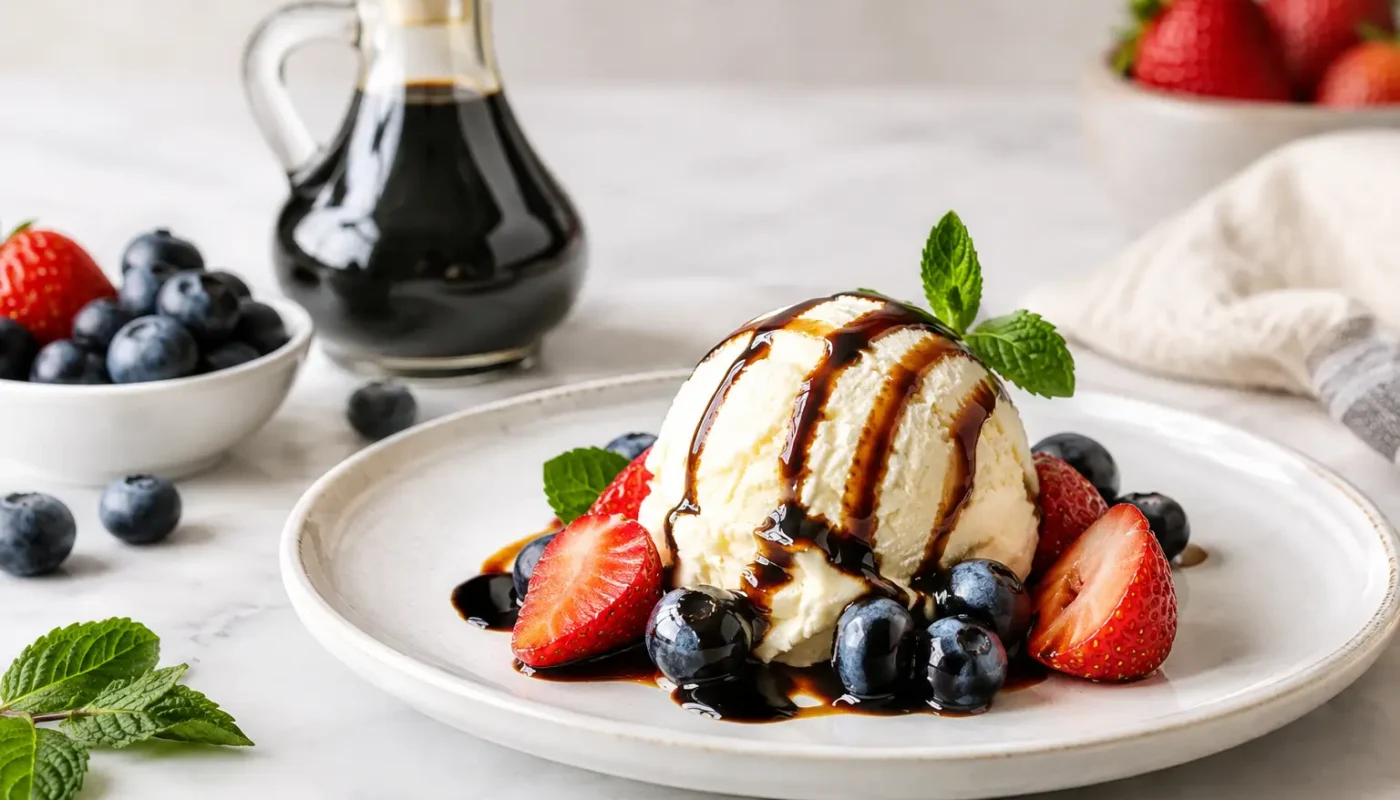
Serve a generous scoop of quality vanilla ice cream, then add just 1 to 2 teaspoons of fig balsamic and a scattering of toasted pistachios. Finish with flaky salt if you enjoy a sweet-salty contrast.
This is the kind of dessert to make when company arrives unexpectedly. The ice cream provides a clean, creamy canvas; fig balsamic brings jammy depth; pistachios add the crunch. If the vinegar is very sweet and dense, use less than you think.
3. Dark Chocolate Balsamic Pots de Crème
For six small servings, heat 1 cup heavy cream until steaming. Pour it over 6 ounces finely chopped dark chocolate, then whisk until smooth. Whisk in 1 to 2 teaspoons traditional dark balsamic, a pinch of salt, and 1 teaspoon vanilla. Chill in small cups until set.
Chocolate and balsamic share a certain dark, bittersweet elegance. The vinegar should be felt as a lift at the finish, not identified immediately. Raspberry balsamic is also a lovely option, particularly with a few fresh raspberries on top.
4. Roasted Peaches With White Balsamic Mascarpone
Halve and pit four ripe but firm peaches. Brush the cut sides with a little extra virgin olive oil, roast at 400°F until tender, and drizzle with peach or lemon white balsamic while warm. Serve with mascarpone loosened with a touch of honey and vanilla.
The olive oil helps the peaches caramelize and gives the plate a more polished, Mediterranean character. Choose a mild, buttery extra virgin olive oil rather than a strongly peppery one. Nectarines, plums, and apricots work the same way.
5. Balsamic Blackberry Crisp
Combine 4 cups blackberries with 1 tablespoon dark balsamic, 2 tablespoons sugar, 1 tablespoon cornstarch, and lemon zest. Top with an oat crumble made from rolled oats, flour, brown sugar, butter, and chopped almonds. Bake at 375°F until bubbling and golden.
Balsamic is particularly useful in a crisp because it keeps the filling lively beneath the buttery topping. Blackberry or blueberry balsamic intensifies the berry character, while a traditional dark balsamic gives a more restrained, wine-like note. Serve warm with vanilla ice cream.
6. Olive Oil Cake With Orange Balsamic Glaze
A tender olive oil cake has enough richness to welcome a citrusy glaze. Bake your favorite orange or lemon olive oil cake, then whisk together 1/2 cup confectioners’ sugar, 1 to 2 teaspoons orange white balsamic, and enough citrus juice to make a pourable glaze. Drizzle over the cooled cake.
White balsamic gives the glaze a clean tang without the darker color of traditional balsamic. This is a good place to use a vibrant citrus fused olive oil in the batter, too. The pairing feels special, but the technique remains wonderfully simple.
7. Balsamic Pear Galette
Slice two firm pears and toss them with 1 tablespoon maple balsamic or traditional dark balsamic, 1 tablespoon brown sugar, cinnamon, and a pinch of salt. Arrange in the center of a round pie crust, fold up the edges, and bake at 400°F until the crust is deeply golden.
Pears need contrast. Their gentle sweetness can fade into pastry unless something brings a little edge, and balsamic does that beautifully. Add toasted walnuts or hazelnuts before baking for more texture. A spoonful of crème fraîche alongside the warm galette is worth the extra step.
8. Pineapple With Coconut Cream and White Balsamic
Grill pineapple rings or wedges until marked and caramelized. Drizzle with pineapple or coconut white balsamic, then top with lightly sweetened coconut cream and toasted coconut flakes. A few chopped mint leaves bring a fresh finish.
This recipe is proof that balsamic desserts need not be heavy. White balsamic has a brighter profile than dark balsamic and lets tropical fruit stay sunny and clear. For an adults-only variation, add a small spoonful of dark rum to the coconut cream.
A Few Pairing Choices That Make a Difference
When working with balsamic in sweets, match the vinegar to the dessert’s weight. Delicate melon, berries, and whipped dairy prefer bright white or fruit balsamics. Chocolate, baked pears, and caramel desserts can carry the deeper bass notes of a traditional dark balsamic. A flavored vinegar should echo an ingredient already on the plate rather than introduce a competing idea.
Also consider temperature. Cold desserts mute flavor, so a slightly more assertive drizzle can be welcome over ice cream or panna cotta. Warm fruit and fresh berries need less because they release aroma readily. If you are uncertain, spoon a portion of the dessert into a small bowl and test a few drops first.
At Weyira Olive Oil & Vinegar, we think the best pantry ingredients earn their place by making everyday food more memorable. Keep one dark balsamic and one bright white balsamic within reach, and dessert can become your most playful tasting course.
