
Ultra Premium Olive Oil
10 Best Balsamic Dessert Pairings to Try
Nov
A spoonful of richly aged balsamic over ripe strawberries can make a weeknight bowl of fruit taste like it belongs at a favorite neighborhood bistro. That is the pleasure of the best balsamic dessert pairings: they do not bury a dessert in sweetness. They add brightness, depth, and a gentle tang that makes every other flavor more vivid.
Premium balsamic vinegar is especially at home in desserts because its natural acidity keeps rich ingredients from becoming heavy. The darker, syrupier styles can bring notes of fig, raisin, cherry, caramel, or wood, while fruit-infused and white balsamics offer a lighter, more aromatic finish. The key is choosing a vinegar that supports the dessert rather than competing with it.
What Makes Balsamic Work With Dessert?
Desserts often need contrast. Cream, butter, chocolate, and pastry all contain richness, while fruit brings sugar and moisture. A good balsamic supplies the missing high note. It can sharpen the flavor of berries, make vanilla taste more fragrant, and give dark chocolate a deeper, almost fruity character.
Quality matters here. A thin, sharply acidic grocery-store vinegar can taste aggressive when drizzled over something sweet. A carefully made, well-balanced balsamic has enough body and sweetness to be used in small amounts without a harsh finish. Taste it first, then start with less than you think you need. A teaspoon may be perfect for one serving of ice cream; a tablespoon may be right for a whole fruit salad.
Temperature also changes the experience. Cold desserts mute flavor, so a slightly bolder balsamic often works beautifully with gelato or cheesecake. Warm desserts release aroma quickly, which means a delicate fruit balsamic can be enough. Let the dessert lead, then choose the vinegar with intention.
The Best Balsamic Dessert Pairings for a Memorable Finish
1. Strawberries, berries, and dark balsamic
This classic earns its reputation. Strawberries have a floral sweetness that becomes more concentrated when paired with a dense, dark balsamic. Halve the berries, add a light drizzle, and let them sit for 10 to 15 minutes. The berries release a ruby-colored juice that is wonderful over shortcake, pound cake, yogurt, or whipped mascarpone.
Raspberries and blackberries are equally appealing, although their tartness calls for a softer, sweeter vinegar. A blackberry, raspberry, or traditional dark balsamic can work well, depending on how sweet the fruit is. If the berries are out of season and lack fragrance, add a little balsamic and a pinch of sugar, then roast them briefly. Heat turns an ordinary carton of berries into a dessert worth serving to guests.
2. Vanilla gelato or ice cream and aged balsamic
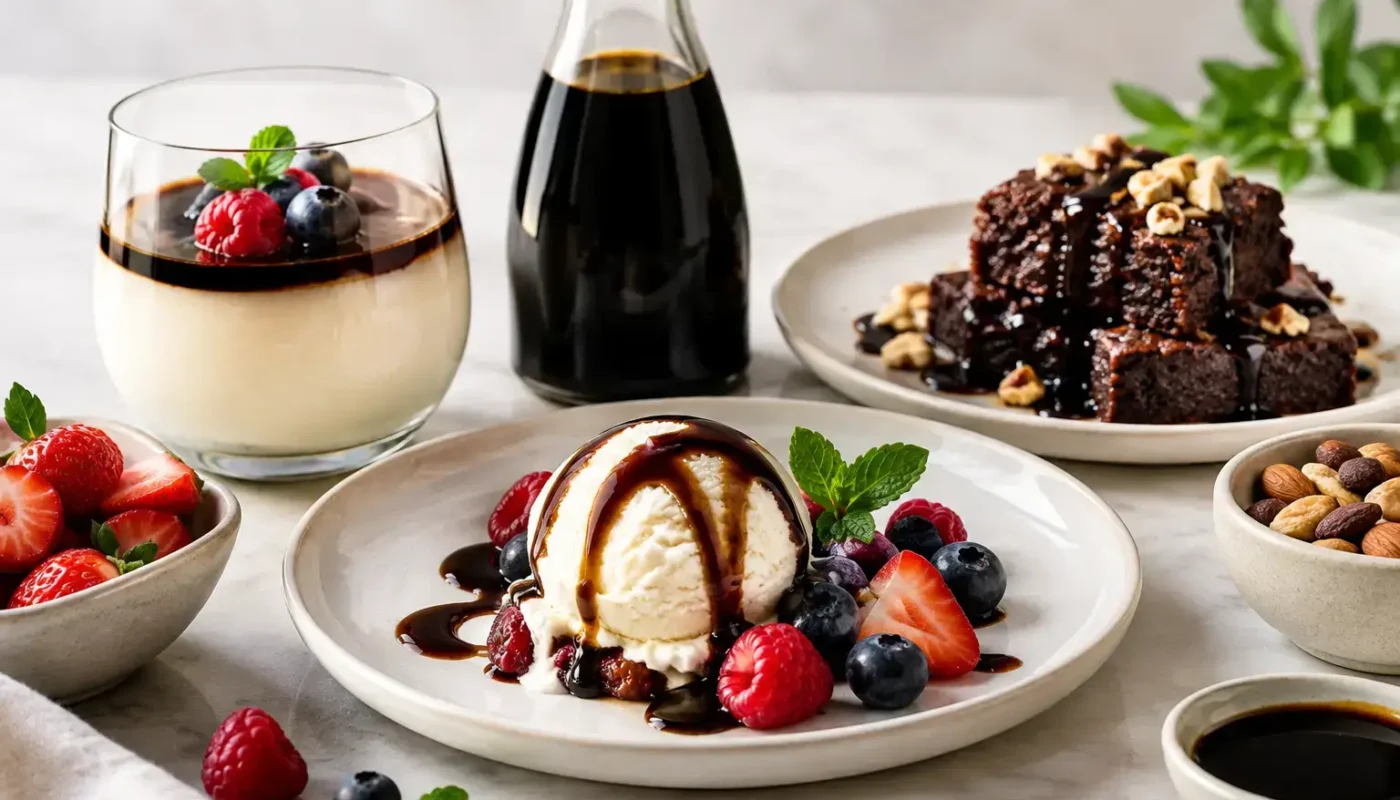
Vanilla ice cream is a canvas, not a compromise. A slow drizzle of aged dark balsamic brings out its custardy qualities and creates a striking sweet-tart contrast. Add toasted hazelnuts, pistachios, or shaved dark chocolate for texture, and the result feels polished with almost no preparation.
Use restraint. Too much vinegar can cause the ice cream to melt before it reaches the table and can overwhelm vanilla’s quiet flavor. A thick, naturally sweet balsamic is the best choice, and serving it at room temperature helps it flow in a fine ribbon.
3. Chocolate desserts and cherry or raspberry balsamic
Chocolate welcomes acidity, especially dark chocolate. A cherry balsamic or raspberry balsamic can make flourless chocolate cake, chocolate pots de crème, brownies, and chocolate sorbet taste more complex without adding another heavy sauce. The fruit note reads as intentional, much like a handful of cherries beside a chocolate torte.
For a simple plated dessert, serve a warm brownie with vanilla bean ice cream and a few drops of cherry balsamic. Avoid pooling it across the entire plate. Chocolate is powerful, and the vinegar should appear as a bright accent rather than a competing flavor.
4. Cheesecake and blueberry, lemon, or fig balsamic
Cheesecake’s richness makes it an ideal partner for balsamic, but the topping should match the style of cake. Blueberry balsamic is lovely with classic New York-style cheesecake, particularly when spooned over fresh blueberries. Lemon balsamic complements a lighter ricotta or goat cheese cheesecake. Fig balsamic is a more luxurious option for a honeyed cheesecake with walnuts or a graham cracker crust.
Because cheesecake is chilled and dense, fruit toppings benefit from a little preparation. Warm the fruit just until it begins to soften, then add the balsamic off the heat. This preserves its aroma while creating a glossy, spoonable sauce.
5. Peaches, nectarines, and white balsamic
When stone fruit is ripe, white balsamic offers a brighter, cleaner direction than dark balsamic. Peach, apricot, or white balsamic with a citrus character can lift grilled peaches, nectarines, and plums without masking their sunny sweetness. Finish with a dollop of ricotta, a scoop of frozen yogurt, or a crisp almond cookie.
Grilling adds char and caramelization, so use a balsamic with freshness rather than one that is overly dense. A small drizzle after grilling is usually better than a marinade. The fruit should still taste like fruit.
6. Pears, apples, and maple balsamic
Baked apples and poached pears have a natural affinity for warm spice. Maple balsamic adds an inviting caramel note while its acidity keeps the dessert from tasting flat. It is particularly good with cinnamon, pecans, oat crumble, and pastry.
For an easy fall dessert, slice firm pears, roast them with a little butter and cinnamon, then finish with maple balsamic just before serving. Pair with Greek yogurt for a lighter option or with vanilla gelato when the occasion calls for something more indulgent.
7. Lemon desserts and white balsamic
Lemon bars, lemon curd, and citrus olive oil cakes already have acidity, so this pairing requires a gentle hand. A white balsamic with lemon, peach, or pear notes can soften sharp citrus and add dimension without making the dessert taste sour. It works best as a small drizzle over berries served alongside the dessert, or whisked into a fruit compote rather than poured directly over a lemon bar.
This is a useful reminder that a pairing can be adjacent rather than literal. The right balsamic does not always need to sit on top of the main dessert. Sometimes it belongs in the fruit garnish, sauce, or finishing syrup.
8. Panna cotta and berry balsamic
Panna cotta is mild, silky, and rich enough to showcase a beautiful vinegar. A strawberry, raspberry, or blackberry balsamic makes a clean counterpoint to its creaminess. Spoon macerated berries over the top and let a little of their balsamic juice trail down the sides.
If you are serving panna cotta for a dinner party, prepare the berry topping a few hours ahead. The fruit will become glossy and flavorful, while the balsamic will mellow into the juices. Add crunchy biscotti crumbs or toasted almonds just before serving so the plate has more than one texture.
9. Olive oil cake and fig balsamic
A tender olive oil cake has an understated, fruit-forward character that responds beautifully to fig balsamic. Serve the cake with sliced fresh figs when available, or use roasted grapes, pears, or plums in cooler months. A small spoonful of lightly sweetened mascarpone completes the plate.
This is one of the most elegant ways to connect premium extra virgin olive oil and balsamic in a single dessert. Choose a buttery, mild olive oil for the cake if you want the fig balsamic to stand out. A peppery oil can be delicious, but it creates a more assertive, less traditional result.
10. Cheese, honey, and balsamic for a not-too-sweet ending
Dessert does not have to be cake. A small board of creamy blue cheese, fresh goat cheese, or aged Parmesan with pears, grapes, walnuts, honey, and balsamic makes a sophisticated final course. Dark balsamic is excellent with Parmesan and blue cheese, while white balsamic often feels fresher with goat cheese and fruit.
This option is especially useful after a rich meal. It delivers sweetness, salt, creaminess, and acidity without sending everyone home overly full. It also gives guests room to taste the vinegar in a more focused way.
How to Build Your Own Balsamic Dessert Pairing
Start by identifying the dessert’s dominant quality. If it is rich and creamy, choose a balsamic with enough body and acidity to cut through it. If it is fruit-forward, match or gently contrast the fruit character. Berry balsamics naturally complement berry desserts, but a fig balsamic with strawberries or a peach balsamic with cheesecake can be more surprising and just as successful.
Then consider sweetness. Very sweet balsamics can be wonderful with tart fruit or plain dairy desserts, yet they may make frosted cakes and candy-like desserts feel cloying. Tangier styles are often better with caramel, pastry, roasted fruit, and cheese. When unsure, place a few drops on a spoon with a bite of dessert before committing to a full drizzle.
At Weyira Olive Oil & Vinegar, we encourage treating balsamic the way you would a fine finishing salt or a favorite dessert wine: use it with purpose, taste as you go, and let a small amount create the moment. Keep one dark, richly aged balsamic and one bright white or fruit balsamic in the pantry, and an ordinary bowl of fruit will always have the potential to become something memorable.
