
Ultra Premium Olive Oil
Spice Blend Guide for Better Everyday Cooking
Nov
A good spice blend can turn a simple sheet-pan dinner, pot of beans, or bowl of roasted vegetables into something you want to serve again. This spice blend guide is built for the home cook who wants more flavor without hiding the ingredients they chose so carefully. Think of spices as supporting players: They should bring warmth, brightness, savoriness, or gentle heat while still letting a ripe extra virgin olive oil, tangy balsamic, and fresh food taste like themselves.
Start With the Flavor You Want
Before reaching for a jar, decide what you want the finished dish to feel like. Are you looking for earthy and savory, sunny and herb-forward, smoky and bold, or fragrant with gentle sweetness? That choice is more useful than following a rigid rule about which spices belong with which protein.
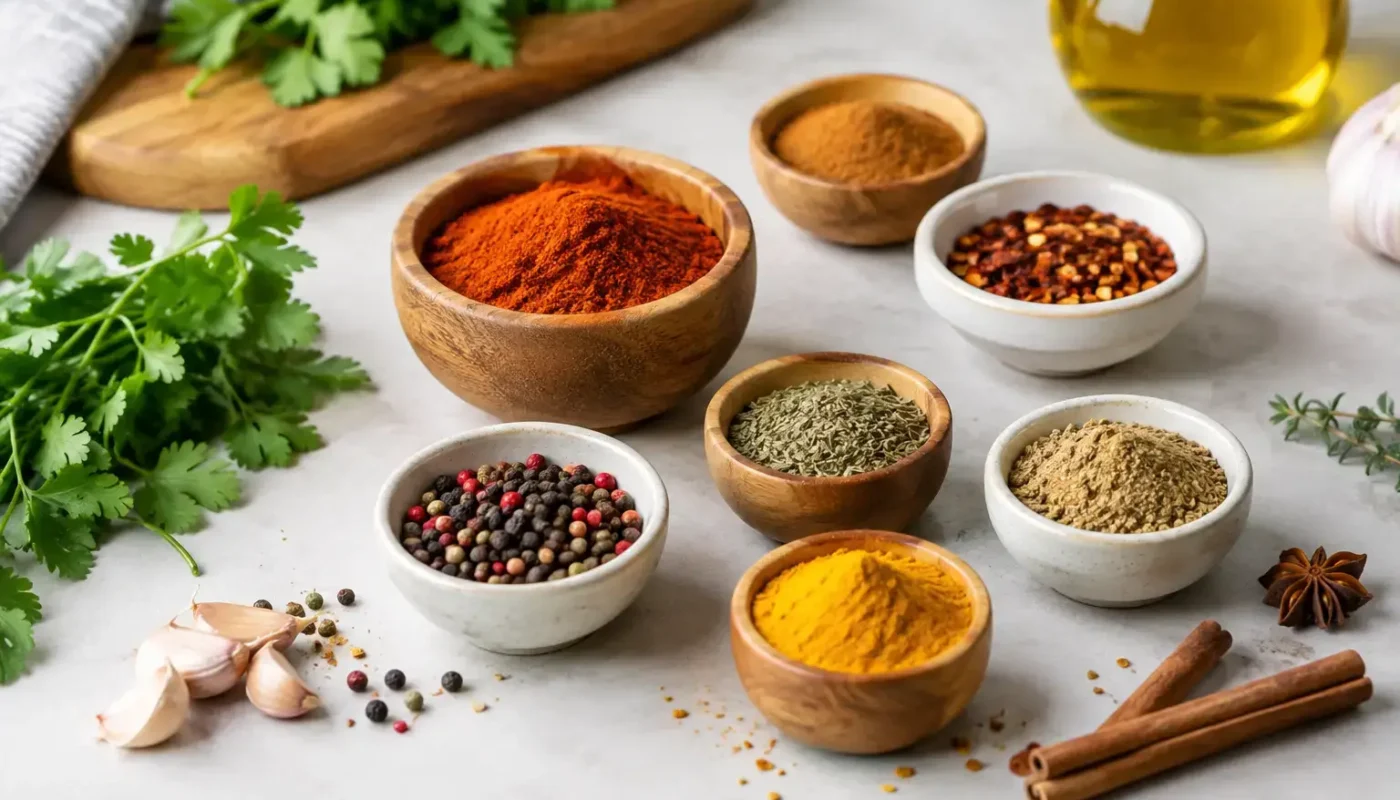
Most blends are easier to understand when you see them as a balance of a few roles. Aromatic spices such as cumin, coriander, fennel, and cardamom provide fragrance. Warm spices such as cinnamon, allspice, and cloves add depth, though a little goes a long way in savory cooking. Paprika and chile bring color and heat. Herbs such as oregano, thyme, rosemary, and basil offer a familiar green, savory character. Garlic, onion, mustard, celery seed, and black pepper build a dependable backbone.
The best place to begin is with two or three complementary flavors. Add more only when each ingredient has a reason to be there. A blend with twelve spices may sound impressive, but it can become muddy quickly, especially on delicate fish, fresh tomatoes, or tender spring vegetables.
A Spice Blend Guide to Building Layers
Layering flavor means considering when a seasoning enters the pan, not just how much you use. Dried spices need heat and fat to fully bloom. When the recipe allows, warm your spices briefly in olive oil over low to medium heat before adding vegetables, grains, or liquids. Thirty seconds is often enough. You are looking for a fuller aroma, not a darkened or burnt pan.
Extra virgin olive oil is particularly lovely here because its fruitiness can carry spice across a dish. A peppery oil makes a natural partner for rosemary, garlic, smoked paprika, and black pepper. A softer, buttery oil can be beautiful with fennel, lemony herbs, or mild curry-inspired blends. The goal is not to make the oil disappear. It is to let the oil and seasoning create a more complete flavor together.
Salt deserves its own moment. Many packaged blends contain salt, which can make seasoning difficult to control. Salt-free or low-salt blends give you more flexibility, especially when cooking with salty cheese, broth, olives, cured meats, or a reduced balsamic glaze. Season in stages, taste near the end, and remember that acidity often makes a dish taste more seasoned without adding another pinch of salt.
Five Blend Styles Worth Keeping Nearby
You do not need a crowded spice cabinet to cook with confidence. A small collection of well-chosen blends covers a remarkable range of meals.
- Italian herb blend: Oregano, basil, thyme, rosemary, garlic, and black pepper bring instant familiarity to roasted chicken, tomato sauces, white beans, focaccia, and grilled vegetables. Pair it with a classic extra virgin olive oil and a dark balsamic for a dependable, generous flavor.
- Mediterranean blend: Try oregano, marjoram, lemon peel, garlic, coriander, and a touch of red pepper. It is excellent on salmon, chickpeas, potatoes, and chopped salads. A bright white balsamic can lift these savory, herbal notes without weighing them down.
- Smoky barbecue blend: Smoked paprika, sweet paprika, garlic, onion, mustard, black pepper, and chile create color and depth for ribs, burgers, mushrooms, sweet potatoes, and grilled corn. Since smoke and sweetness can intensify during cooking, use a restrained hand with any additional sugary sauce.
- Warm curry-style blend: Turmeric, cumin, coriander, ginger, fenugreek, and mild chile offer an aromatic starting point for lentils, cauliflower, chicken, and coconut-based soups. There is no single correct curry blend. Regional styles vary widely, and that is part of the pleasure of exploring them.
- Everything-style seasoning: Sesame seeds, poppy seeds, garlic, onion, and salt add crunch as well as flavor. Use it as a finishing touch on avocado toast, eggs, roasted carrots, grain bowls, or a dip made with olive oil and creamy cheese. It is less suited to long cooking, where the seeds can lose their texture.
Match the Blend to the Cooking Method
The same blend behaves differently in a skillet, oven, grill, or salad bowl. For roasting, toss vegetables or proteins with enough olive oil to lightly coat every surface, then add the blend and salt. Oil helps spices adhere and encourages even browning. Delicate leafy vegetables need only a light coating, while potatoes, carrots, squash, and cauliflower can handle more generous seasoning.
For grilling, use dry spices as a rub with olive oil, but avoid blends heavy in sugar until the final minutes. Sugar can char before thicker cuts are cooked through. For a more controlled finish, brush on a fruit-forward balsamic or sweet glaze after the food has developed a good sear.
In soups, braises, and sauces, bloom spices first, then let them mellow in the liquid. This works especially well with cumin, coriander, paprika, and curry blends. Dried herbs, on the other hand, benefit from a little time to hydrate. Add them early enough that they can soften and perfume the dish.
For cold preparations, seasoning needs a different approach. A vinaigrette with olive oil, balsamic, mustard, and a pinch of an herb blend can taste sharper at first than it will after ten minutes. Let it rest, then taste again. Finishing spices such as flaky salt, cracked pepper, sumac, toasted sesame, or a pinch of chile are best added just before serving, when their color and aroma stay lively.
Freshness Is the Difference You Can Taste
Spices do not necessarily become unsafe when they age, but they do lose their character. The jar may still look colorful while its aroma has faded, leaving you to add more and more without getting the result you wanted. That is how a dish becomes dusty rather than flavorful.
Buy amounts you can use within several months, particularly for ground spices and blends. Store them in tightly closed containers away from the stove, dishwasher steam, sunlight, and heat. A cool, dark cabinet is better than a decorative rack beside the range. Whole spices generally stay vibrant longer and can be ground as needed, but a carefully made blend is a practical luxury when dinner needs to come together quickly.
Give a seasoning a quick smell before using it. If it is faint, flat, or vaguely stale, it will not suddenly become vivid in the pan. Replace it, or reserve it for a recipe where it plays only a small role.
Pair Spice With Acid, Not Just Heat
When food tastes heavy, many cooks add more salt or more spice. Often, what it really needs is acid. A measured splash of balsamic vinegar can brighten roasted vegetables, deepen a lentil soup, or wake up a grilled chicken dish seasoned with warm spices. White balsamic is especially useful when you want brightness without changing the color of a creamy sauce, pale vegetable, or seafood dish.
There is a trade-off: Bold, aged dark balsamic can compete with subtle spices and tender ingredients. Save it for dishes with enough richness or sweetness to meet it halfway, such as roasted beets, pork, berries, squash, and caramelized onions. With a delicate herb blend, a lighter white balsamic or a simple squeeze of citrus may be the better choice.
At Weyira Olive Oil & Vinegar, we encourage tasting combinations before committing to a whole recipe. Dip a piece of bread in an olive oil with a pinch of seasoning, then add a few drops of vinegar. That small tasting can reveal whether the blend needs more warmth, more herb character, or a brighter finish.
Make Blends Part of Your Cooking Memory
The most useful spice blends are not the ones you save for special occasions. They are the ones that become part of your rhythm: the herby mix for Sunday chicken, the smoky blend for weeknight beans, the warm seasoning for roasted cauliflower, the finishing salt that makes a tomato salad feel complete.
Keep a few fresh blends within reach, use them with intention, and trust your palate. A well-seasoned meal is not about following a formula. It is about noticing when good ingredients need a little more fragrance, a little more contrast, and one last pour of something delicious.
