
Ultra Premium Olive Oil
What Are Truffle Oil Ingredients, Really?
Sep
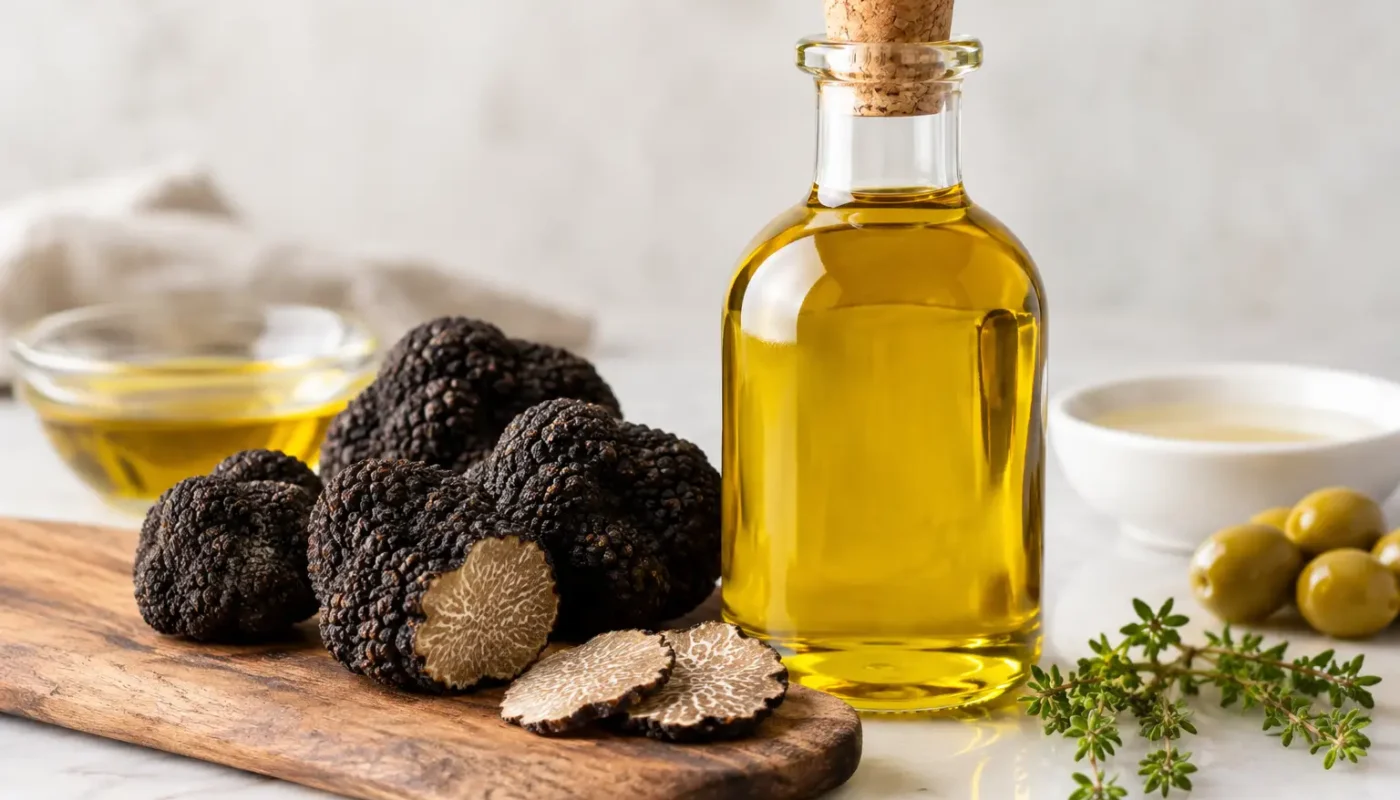
A drizzle of truffle oil can make a bowl of popcorn, a plate of roasted potatoes, or a simple mushroom risotto smell downright restaurant-worthy. But truffle oil ingredients can be surprisingly different from one bottle to the next. Some are built around a beautiful olive oil and real truffle, while others rely primarily on flavor compounds designed to recreate truffle’s famously earthy aroma.
Neither approach automatically tells you whether a bottle will taste good. The details on the label, the quality of the base oil, and how you plan to use it all matter. Knowing what is in the bottle makes it much easier to choose an oil that belongs in your pantry.
The Core Truffle Oil Ingredients
At its simplest, truffle oil has two components: an edible oil and truffle flavor. The base may be extra virgin olive oil, refined olive oil, sunflower oil, grapeseed oil, or another neutral cooking oil. The truffle character may come from real truffles, natural flavoring, synthetic flavoring, or a combination of these ingredients.
Most commercial truffle oils list some variation of oil and truffle flavoring. A premium bottle may also include dried truffle pieces or truffle extract. Those visible flecks can be appealing, but they are not the only measure of quality. Truffles are delicate, expensive, and seasonal. Their aroma fades quickly, so even oils made with real truffle often use additional flavoring to deliver a consistent experience.
The ingredient list is worth reading because the base oil influences both flavor and use. An extra virgin olive oil base brings its own fruitiness, peppery finish, and fresh character. A neutral oil creates a cleaner stage for the truffle aroma, which some cooks prefer in dishes where they want the truffle note to stand alone.
The Oil Base Matters More Than You Might Think
Olive oil-based truffle oil is especially appealing for finishing foods. It can add richness along with the truffle aroma, making it a natural partner for pasta, eggs, creamy soups, grilled vegetables, and crusty bread. If the olive oil is fresh and well-made, the final dish has more dimension than it would with a flat, generic oil.
A neutral base can be useful, too. It may let the truffle profile come through more directly in butter sauces, vinaigrettes, or popcorn. The trade-off is that the oil itself contributes less flavor and may feel less distinctive when tasted on its own.
For shoppers who value purity and an elevated pantry experience, an olive oil base is often the more satisfying choice. Look for a product that identifies the oil rather than simply saying “vegetable oil.” Clear labeling is a good sign that the producer wants you to understand what you are buying.
Why Truffle Flavoring Is So Common
The aroma most people associate with truffle oil is intense, savory, earthy, and slightly garlicky. It is often created with aroma compounds that occur naturally in truffles but can also be produced for food use. One commonly discussed compound is 2,4-dithiapentane, which has a powerful sulfurous, truffle-like scent.
That may sound technical, but it is not automatically a reason to put a bottle back on the shelf. Flavor compounds are widely used in specialty foods because they provide consistency, stability, and a recognizable aroma that fresh truffles alone cannot always maintain in oil.
The distinction is really about expectations. If you want an unmistakable, bold truffle aroma every time you open the bottle, a flavored truffle oil may deliver exactly that. If you are seeking the subtle, changing complexity of freshly shaved truffle, oil will not fully duplicate that experience, no matter what the label says.
“Natural truffle flavor” also deserves a careful read. In the United States, natural flavoring generally means the flavor source is derived from natural materials, but it does not necessarily mean the flavor came exclusively from the truffle variety pictured on the bottle. A label that says “truffle-infused” or “made with real truffle” can be meaningful, yet it is still smart to look at the complete ingredient statement.
Real Truffle Pieces, Extracts, and Infusions
Some truffle oils include dried pieces of black or white truffle. Others are made with truffle extracts, which capture certain aromatic elements from the truffle. These additions can offer visual appeal and a more direct connection to the ingredient, but they do not guarantee that the oil will taste stronger or more nuanced.
Real truffle varieties have distinct personalities. Black truffles tend toward deep earthiness, cocoa-like richness, and a savory mushroom quality. White truffles are often more aromatic, with notes people describe as garlic, shallot, cheese, or forest floor. A white truffle oil may therefore smell more assertive before it even reaches the food.
There is also a practical reason many producers blend real truffle with flavoring. Fresh truffle intensity varies by harvest, origin, storage, and season. A blended approach can preserve the character of the truffle while keeping each bottle enjoyable and reliable.
How to Read a Truffle Oil Label
You do not need a food science degree to shop thoughtfully. Start with the first ingredient, since ingredients are generally listed by weight. If extra virgin olive oil is first, you know it is the primary base. If the label lists sunflower oil or another neutral oil, expect a lighter, less olive-forward foundation.
Then look for how the truffle component is described. You may see truffle flavor, natural flavor, artificial flavor, truffle extract, dried truffle, or a specific truffle species. Specificity is useful, especially when you are spending more for a specialty product.
Also check for salt, preservatives, or additional seasonings. These are not necessarily undesirable, but they affect how flexible the oil will be in your cooking. A straightforward truffle oil gives you more control over seasoning, while a blended product with garlic or herbs may be designed for a particular flavor profile.
If you have food allergies or dietary restrictions, read every label rather than assuming truffle oil is universally simple. Truffles and oil are naturally gluten-free and vegan, but manufacturing practices and added flavor systems vary by producer.
Choosing the Right Bottle for Your Kitchen
Think about the foods you make most often. For finishing roasted potatoes, mushroom dishes, risotto, pasta, or scrambled eggs, choose a truffle oil with a flavorful olive oil base and an aroma you enjoy right from the cap. For popcorn, fries, or a rich mac and cheese, a bolder truffle flavor can be wonderfully dramatic.
White truffle oil is often the choice when you want a bright, fragrant finish. A few drops over warm pasta, pizza, or creamy polenta can be enough. Black truffle oil generally feels deeper and more grounded, making it an excellent match for steak, mushrooms, lentils, roasted root vegetables, and hearty sauces.
Price can offer a clue, but it is not a complete answer. A higher price may reflect real truffle content, a superior olive oil base, more careful sourcing, or simply packaging. Taste and transparency matter more than a romantic-looking label. The best bottle is one that smells appetizing, lists its ingredients clearly, and suits the way you cook.
Use Truffle Oil as a Finishing Ingredient
Heat is the enemy of many delicate truffle aromas. Rather than using truffle oil as your everyday sautéing oil, add it near the end of cooking or directly at the table. This preserves the fragrant notes you paid for and keeps the flavor from becoming dull or harsh.
Start with less than you think you need. Truffle oil is an accent, not the whole dish. A teaspoon can transform a serving of mashed potatoes; a few drops can lift a bowl of tomato soup or a simple vinaigrette. Taste before adding more, particularly with white truffle oil, which can take over quickly.
Store the bottle tightly capped in a cool, dark cupboard, away from the stove and direct sunlight. As with all culinary oils, freshness matters. Use it while its aroma is lively rather than saving it indefinitely for a special occasion.
The most rewarding truffle oil is not defined by one magic ingredient. It is the bottle whose base oil, truffle profile, and intensity make everyday cooking feel a little more considered – whether you are finishing a weeknight pasta or setting out a memorable appetizer for guests.
