
Ultra Premium Olive Oil
How to Choose the Best Gourmet Honey for Cheese
Oct
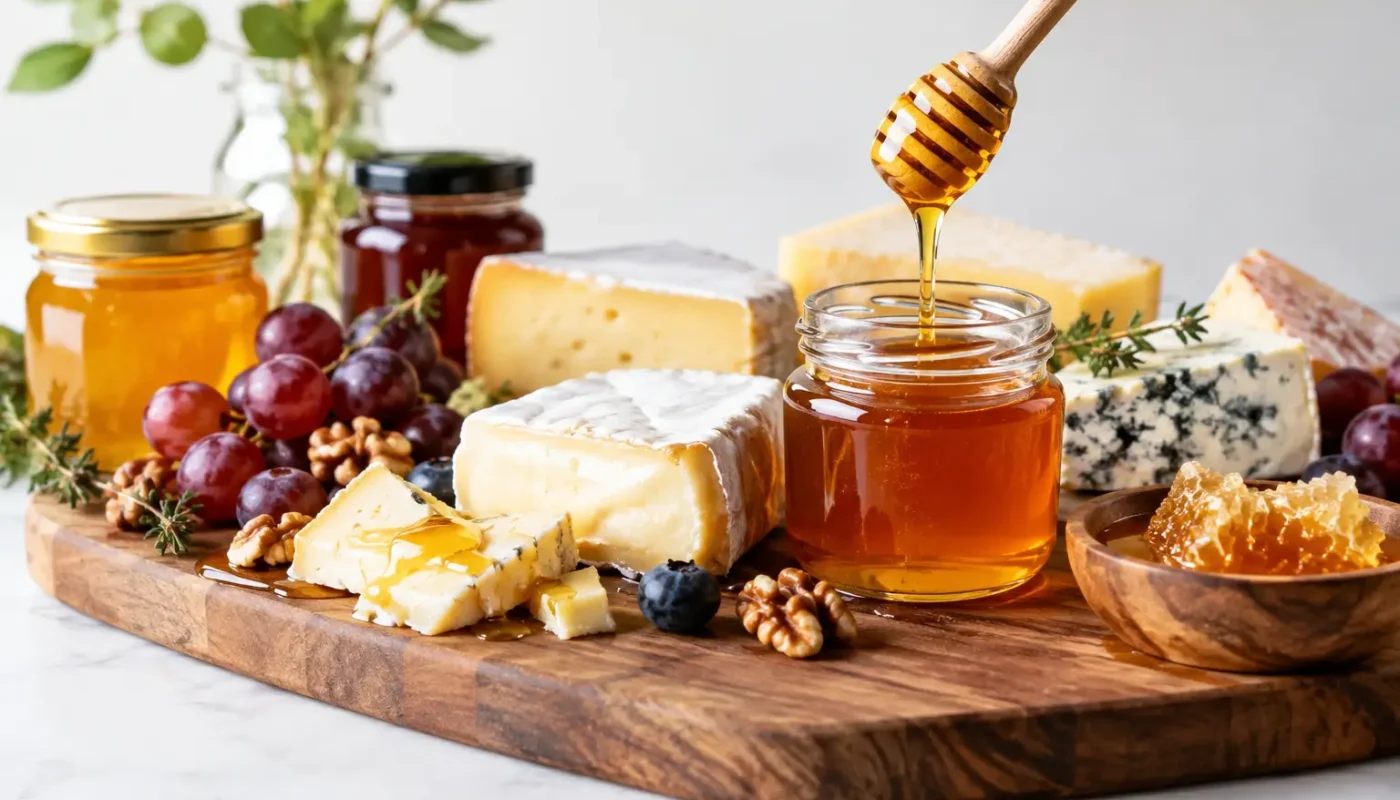
A cheese board can have flawless fruit, warm crackers, and a beautiful wedge of cheese, yet still taste a little flat. The best gourmet honey for cheese changes that in one spoonful. Its sweetness does more than soften salty or tangy notes: it can pull forward floral aromas, tame blue cheese’s bite, and make a familiar brie feel like a special-occasion course.
The key is choosing honey for its character, not simply reaching for the nearest jar. Like extra virgin olive oil or balsamic vinegar, honey carries the imprint of its source. The flowers visited by bees affect its aroma, color, texture, and finish. A pale, delicately floral honey behaves very differently beside cheese than a dark, malty wildflower honey. Once you start tasting those differences, honey becomes one of the most rewarding ingredients on the board.
What Makes a Honey Worth Pairing With Cheese?
A gourmet honey should offer clarity of flavor. It may be bright and citrusy, soft and buttery, herbaceous, caramel-like, or pleasantly earthy, but it should taste purposeful rather than one-note sugary. Varietal honeys, made primarily from the nectar of a particular blossom, make pairing especially enjoyable because their flavor profiles are more distinctive.
Texture matters, too. Liquid honey is easy to drizzle over a wedge or pool in a small dish. Creamed honey has a smooth, spreadable texture that is lovely with toast and soft cheeses. Honeycomb brings visual appeal and a gentle waxy chew, making it a memorable centerpiece for a board. None is automatically better. Choose the form that suits how you want guests to eat.
Quality also shows up in freshness and handling. Look for honey with a clean aroma and a flavor that lingers without tasting scorched or overly processed. Crystallization is natural, not a defect. In fact, it is often a sign that honey has not been aggressively heated. If a favorite jar becomes firm, set it in warm water and let it slowly loosen rather than overheating it.
The Best Gourmet Honey for Cheese by Style
There is no single jar that belongs beside every cheese. A successful pairing creates balance, whether that means echoing a flavor already present or bringing contrast to the bite.
Acacia honey for fresh and tangy cheeses
Acacia honey is light in color, gently floral, and clean on the palate. It is a beautiful choice for fresh goat cheese, ricotta, burrata, and young sheep’s milk cheeses because it adds sweetness without covering their milky delicacy. Try it with goat cheese, cracked black pepper, and a few toasted walnuts. The honey rounds out the tang while the walnuts add needed depth.
Its mildness is also useful when your board includes several subtle cheeses. A darker honey might dominate them; acacia keeps the arrangement elegant and measured.
Orange blossom honey for creamy cheeses
Orange blossom honey brings sunny citrus-floral perfume and a soft, fragrant finish. It pairs especially well with brie, triple-cream cheeses, and mild camembert. These cheeses are rich enough to carry the honey’s aroma, while the honey’s brightness keeps each bite from feeling heavy.
For an easy warm appetizer, place a wheel of brie in a small baking dish, warm it just until supple, then finish with orange blossom honey and toasted almonds. A few thyme leaves work nicely, but use them sparingly. The cheese and honey should remain the focus.
Wildflower honey for washed-rind and alpine cheeses
Wildflower honey is wonderfully variable. Depending on the season and region, it may taste floral, herbal, spicy, or lightly caramelized. That range makes it one of the most versatile options for a cheese board, particularly with nutty alpine cheeses such as Gruyere or Comte and aromatic washed-rind cheeses.
The savory, sometimes earthy character of a good wildflower honey can meet these more assertive cheeses in the middle. Serve it with roasted hazelnuts or sliced pear, and you have a combination that feels abundant without becoming overly sweet.
Buckwheat or dark forest honey for blue cheese
Blue cheese needs honey with presence. Buckwheat honey, forest honey, and other dark varieties tend to have deeper notes of molasses, malt, dried fruit, or cocoa. Their bass notes stand up to Stilton, Gorgonzola, Roquefort, and other blue cheeses better than a very delicate honey can.
This is contrast at its best: the honey calms salt and pungency, while the cheese keeps the sweetness from becoming cloying. Add toasted pecans or dark rye crisps, and keep fruit simple. Fresh pear, fig, or a few grapes are enough.
Chestnut honey for aged, savory cheeses
Chestnut honey is not for every palate, which is exactly why cheese lovers appreciate it. It can be darker, less sweet, and slightly bitter, with woodsy or tannic notes. Those qualities make it a smart companion for Parmigiano Reggiano, pecorino, aged gouda, and other firm cheeses with savory crystals and concentrated flavor.
If you enjoy the savory edge of an aged balsamic vinegar, chestnut honey may be your next discovery. Use only a little at first. Its complexity is the point, and a modest drizzle lets the cheese retain its voice.
Build a Better Honey and Cheese Board
For a small board, choose two or three cheeses with different milk types and textures rather than piling on many similar options. A fresh goat cheese, a creamy bloomy-rind cheese, and an aged firm cheese create a useful tasting progression. Add one or two honeys that offer contrast.
Serve honey in small bowls with separate spoons. Drizzling directly over an entire wedge is beautiful, but it commits every guest to the pairing and can make wrapping leftovers difficult. A bowl lets people taste plain cheese first, then add honey gradually.
Temperature changes everything. Take cheese out of the refrigerator 30 to 60 minutes before serving, depending on its size and softness. Cold cheese mutes aroma and makes even excellent honey seem sweeter than it is. Honey is easiest to appreciate at room temperature, where its floral notes can open up.
Keep the supporting ingredients restrained. Toasted nuts, ripe pear, fresh apple, grapes, and thin slices of crusty bread are usually enough. If you add jam, cured meat, olives, spicy mustard, and multiple flavored crackers all at once, the honey’s nuance can get lost. A thoughtful board leaves room for each ingredient to be tasted.
When Spiced Honey Is the Better Choice
Plain varietal honey is often the best starting point, especially when you want to learn how a cheese tastes. But infused or spiced honey can be excellent when used with intention. Chili honey is a natural partner for pizza-style flatbreads with mozzarella, creamy feta, or young pecorino. Rosemary honey suits sheep’s milk cheese and roasted grapes. Truffle honey can be luxurious with brie or taleggio, though its aroma is powerful enough to overwhelm a delicate cheese.
The trade-off is flexibility. A beautiful raw wildflower honey can move from breakfast toast to tea to a cheese course. A hot honey is more specific. Keep one versatile floral honey in the pantry, then add a flavored option when you are building a board around a particular meal or gathering.
Taste Before You Commit
The most reliable pairing method is also the simplest. Taste the cheese alone. Taste the honey alone. Then try a tiny amount of honey with the cheese and notice what changes. Does the cheese become creamier? Does the honey become more floral? Or does one flavor erase the other?
If the pairing feels too sweet, add a salty nut or a savory cracker. If it feels too sharp, try a milder honey or add ripe fruit. There is no need to follow rules rigidly. Your favorite blue cheese may shine with a light clover honey if that clean sweetness is what you enjoy.
At Weyira Olive Oil & Vinegar, we believe the best pantry pairings reward curiosity. Set out a beautiful cheese, choose a honey with a clear sense of place, and give yourself permission to taste slowly. One excellent drizzle can turn an ordinary evening snack into a small tasting experience worth sharing.
