
Ultra Premium Olive Oil
Gourmet Salts That Make Everyday Cooking Better
Nov
A ripe summer tomato, a warm slice of sourdough, a perfectly grilled steak – each can become more memorable with a small pinch of the right salt. Gourmet salts are not simply a prettier alternative to the shaker on the table. Their crystal size, mineral character, aroma, and infusion ingredients can change how food tastes and feels, often with more impact than another spoonful of seasoning.
For cooks who keep quality olive oil and balsamic vinegar within reach, salt is a natural next step. It brings contrast to rich oils, sharpens the fruit in a balsamic glaze, and gives simple ingredients the kind of finish that makes guests pause for another bite.
What Makes Gourmet Salts Different?
All salt is primarily sodium chloride, but that fact does not make every salt interchangeable. The experience changes with where the salt comes from, how it is harvested, its moisture level, and the shape of its crystals. A delicate flake dissolves quickly on the tongue and gives a gentle crunch. A dense, coarse crystal takes longer to dissolve and is better suited to a salt grinder, roasting, or seasoning foods that need time in the oven.
Some gourmet salts are prized for their clean, briny flavor and hand-harvested character. Others are blended with real herbs, citrus, chile, garlic, truffle, wine, or smoke. These flavored varieties offer a convenient way to layer seasoning without opening several jars, but quality matters. The best blends taste like the ingredient named on the label, not an aggressive cloud of artificial flavoring.
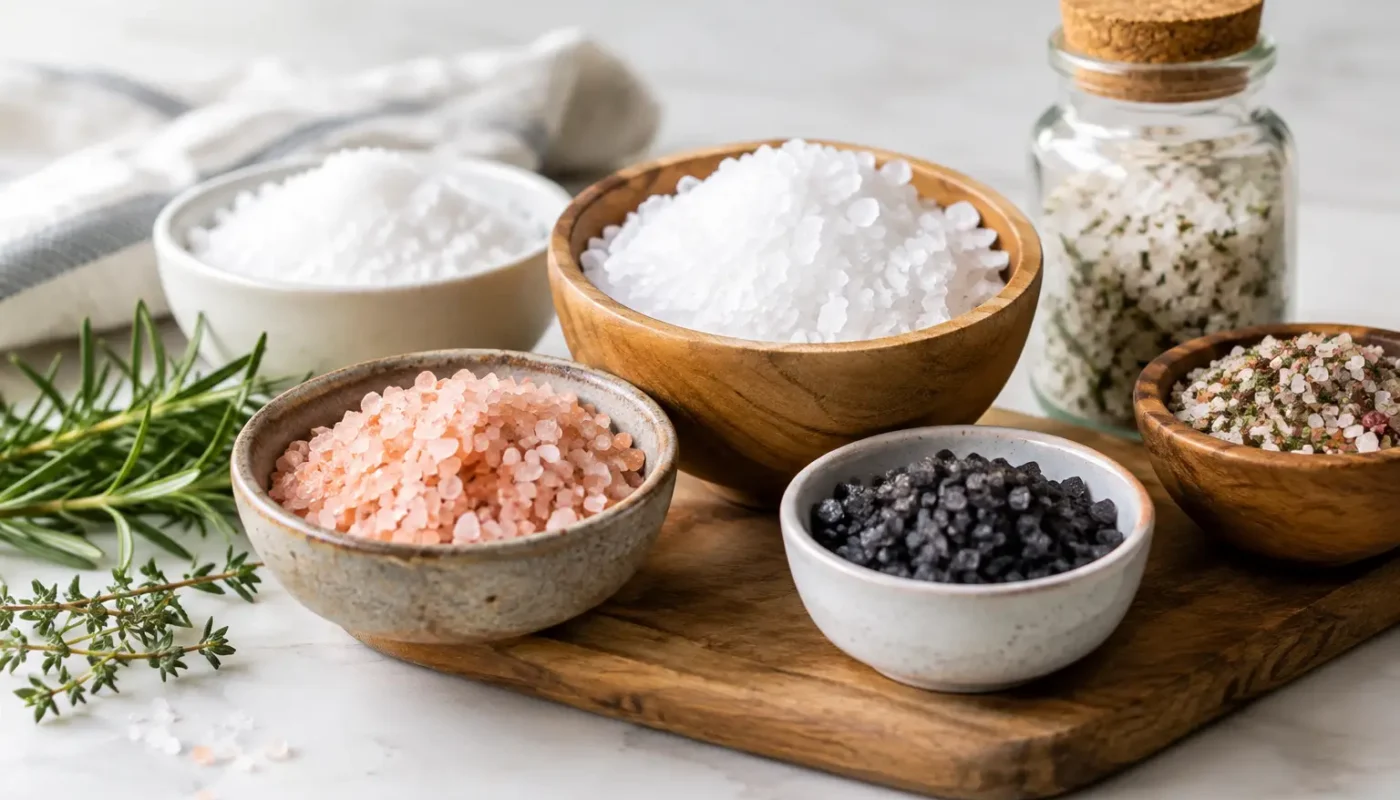
Color can be appealing, too, but it should not be the only reason to choose a salt. Pink, gray, black, and red salts may contain trace minerals or natural clay, volcanic, or botanical influences. Those details can contribute subtle flavor and visual interest, though they do not turn salt into a major source of nutrition. Think of them as culinary tools first: distinctive, beautiful, and meant to be used.
Choosing Gourmet Salts for How You Cook
A well-stocked salt collection does not need to be large. Start with one dependable everyday salt and one or two finishing salts that match the foods you love to make. The goal is not to complicate dinner. It is to give yourself a few purposeful options.
For everyday seasoning
Fine sea salt is a practical workhorse for soups, sauces, marinades, salad dressings, and baking. Its smaller crystals distribute evenly, so you can season throughout cooking with confidence. Because brands vary in crystal density, measure by taste whenever possible. A teaspoon of one salt may be noticeably saltier than a teaspoon of another.
Kosher-style salt is another useful choice for seasoning proteins and vegetables before cooking. Its larger grains are easy to pinch and control, especially when dry-brining chicken, rubbing a roast, or salting eggplant before roasting. It is less suited to a delicate finish because its crystals can feel harsh if they do not dissolve.
For the final pinch
Flake salt earns its place at the table. Its thin, irregular crystals give a clean burst of salinity and a satisfying texture just before serving. Sprinkle it over grilled fish, roasted asparagus, avocado toast, brownies, caramel, or a bowl of fresh strawberries. Use a light hand. With a finishing salt, the point is contrast, not a blanket of saltiness.
Gray sea salt, often slightly moist, has a more pronounced mineral and oceanic profile. It is lovely on roasted potatoes, rustic bread with extra virgin olive oil, lentils, and hearty vegetable dishes. Its flavor can be too assertive for every dessert or delicate white fish, so let the dish guide you.
For flavor-forward cooking
Infused and smoked salts are small jars with big personalities. Lemon salt can brighten roasted chicken, grilled shrimp, or a simple cucumber salad. Garlic herb salt brings instant character to vegetables, popcorn, and vinaigrettes. A restrained smoked salt adds a fireside note to burgers, beans, roasted mushrooms, or a plant-based barbecue spread.
Truffle salt is best treated as a finishing ingredient, not an all-purpose seasoning. Add it after cooking to scrambled eggs, risotto, creamy pasta, fries, or popcorn. Heat can dull its aroma, and too much can overwhelm the rest of the plate. The same restraint applies to chile salts: finish grilled corn, mango, tacos, or chocolate desserts with a pinch rather than making every bite fiery.
Pair Salt With Olive Oil and Vinegar
Salt becomes especially useful when you think of it as part of a trio: oil for richness, vinegar for brightness, and salt for definition. Taste a good extra virgin olive oil with a piece of bread, then add a few flakes of sea salt. The salt can make peppery, grassy, buttery, or fruity notes more vivid without changing the oil itself.
For a quick dipping dish, pour fresh extra virgin olive oil into a shallow bowl, add a small splash of balsamic vinegar, and finish with a pinch of flaky salt. A traditional dark balsamic works beautifully with a simple sea salt. With a fruit-forward white balsamic, consider a citrus or herb salt only if it supports the pairing. The flavors should feel connected, not crowded.
Salts also help balance vinaigrettes. If a dressing tastes flat, another pour of vinegar is not always the answer. A tiny pinch of fine salt can round out acidity and help the oil, vinegar, mustard, honey, and herbs taste more complete. Whisk, taste on the ingredient you are dressing, then adjust. Lettuce, grains, tomatoes, and roasted vegetables all carry seasoning differently.
A Few Smart Ways to Use Gourmet Salts
Keep finishing salts away from high heat whenever possible. Their texture and aroma are their value, and long cooking can erase both. Add them at the table or in the final minute of cooking. Fine salts, on the other hand, are better for building flavor in sauces, braises, and doughs where even distribution matters.
Use flavored salt to simplify, not disguise. A rosemary salt can make sheet-pan potatoes feel finished with little else. A citrus salt can wake up scallops with olive oil and fresh herbs. But if you are serving an exceptional aged balsamic, a carefully selected cheese, or beautifully ripe produce, plain flaky sea salt may be the more thoughtful choice.
Salt can also elevate sweet dishes. A few flakes on olive oil cake, chocolate cookies, shortbread, or vanilla ice cream create contrast and keep sweetness from becoming one-dimensional. Smoked salt and dark chocolate can be compelling, while citrus salt works well with fruit crisps and lemon bars. As always, start with less than you think you need.
Storage and Freshness Matter
Plain salt is naturally shelf-stable, but flavored gourmet salts deserve a little more care. Store them tightly sealed in a cool, dry cabinet, away from steam and direct sunlight. Humidity causes clumping, while heat and light can soften the aroma of herbs, citrus, truffle, and smoke.
Avoid shaking salt directly over a steaming pot. Moisture can travel back into the container and shorten the life of infused blends. Instead, pour a small amount into your hand or a clean pinch bowl. If a flavored salt has lost its fragrance, it may still be safe to eat, but it will not deliver the flavor you bought it for.
A thoughtful salt collection makes everyday food feel considered without asking you to cook a complicated meal. Keep one by the stove, one on the table, and one special jar for the dishes you want people to remember. The next time you pour a favorite olive oil or drizzle balsamic over warm vegetables, reach for the finishing salt and let that last pinch do its quiet, delicious work.
