
Ultra Premium Olive Oil
Finishing Salt vs Sea Salt: What’s the Difference?
Jul
A warm tomato still glistening with extra virgin olive oil needs only one more thing: a few bright, crisp salt crystals added just before the first bite. That small moment captures the real difference in finishing salt vs sea salt. One describes how salt is used, while the other usually describes where it comes from. Sometimes they are the very same salt. Often, they are not.
For cooks who care about good ingredients, understanding the distinction makes it easier to season with intention. The right salt can deepen the fruitiness of olive oil, sharpen the contrast in a sweet balsamic drizzle, and give a simple dish the texture that makes it feel restaurant-worthy.
Finishing Salt vs Sea Salt: The Essential Difference
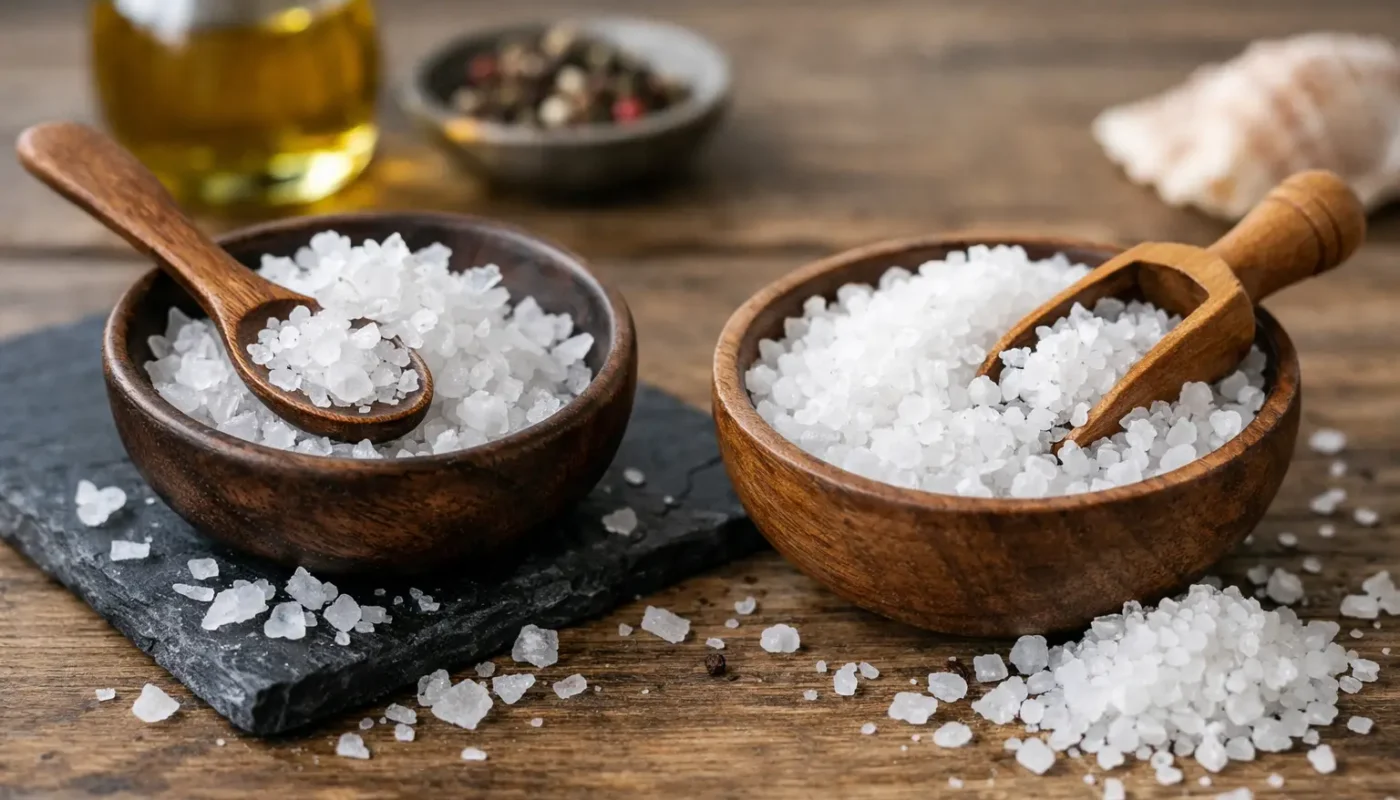
Sea salt is made by evaporating seawater. It can come from the Mediterranean, the Pacific, the Atlantic, or other coastal salt-producing regions, and its crystals may be fine, coarse, moist, flaky, gray, white, or lightly tinted depending on its origin and processing. Sea salt is a broad category, not a single texture or quality level.
Finishing salt is salt selected for the final moment of cooking or plating. It is sprinkled over food after cooking, or just before serving, so its crystals remain visible and deliver a noticeable burst of salinity and crunch. A finishing salt might be harvested from seawater, mined from ancient underground deposits, or smoked, flavored, or blended with spices.
That means many finishing salts are sea salts, but not every sea salt is a finishing salt. A fine sea salt that dissolves quickly into soup or bread dough is useful during cooking, but it will not create the delicate crackle people expect from a finishing salt. Conversely, a coarse mineral salt may be wonderful over grilled vegetables even if it did not begin as seawater.
The most useful question is not simply, “Is this sea salt?” Ask instead: “What will this crystal do on the food?”
Texture Is What You Taste First
The defining feature of most finishing salts is crystal structure. Flaky salts form thin, fragile shards that break easily between your fingers and melt gently on the tongue. They bring a crisp, clean pop without making each bite aggressively salty. Their irregular shape also catches the light, which is why they make roasted vegetables, chocolate desserts, and a platter of sliced tomatoes look especially inviting.
Coarse sea salt has larger, sturdier grains. It can be excellent for seasoning meat before grilling, salting pasta water, or adding a more substantial crunch to a focaccia crust. But it may be too hard or too large to scatter generously over delicate foods. Used as a finish, a dense coarse grain can surprise the palate with a sharp hit of salt rather than a pleasant, even finish.
Fine sea salt is the practical workhorse. Because it dissolves quickly and measures more consistently than large flakes, it is a smart choice for sauces, marinades, vinaigrettes, baking, and everyday stovetop cooking. It seasons from within. Finishing salt seasons from the surface.
This difference also affects quantity. A teaspoon of fine salt contains far more salt by volume than a teaspoon of airy flakes. If a recipe calls for fine sea salt and you substitute a flaky finishing salt measure for measure, the dish may be underseasoned. If you reverse the swap, it can become too salty very quickly. Taste and adjust rather than relying on a direct conversion.
Flavor Depends on Purity, Origin, and Additions
Most salt tastes salty, of course, but the experience can still vary. Unrefined sea salts may carry subtle mineral notes and a hint of moisture. These qualities can be appealing, particularly on fresh foods where there are few ingredients competing for attention. A moist gray sea salt, for example, can bring earthy complexity to potatoes, eggs, or a simple buttered radish.
Flaky finishing salts are often prized for a clean, bright flavor and a graceful melt. They are less about adding dramatic mineral character and more about giving food contrast. Think of a few flakes over ripe melon with a drizzle of aged balsamic, or over grilled peaches finished with a peppery olive oil.
Then there are flavored finishing salts. Smoked salt lends savory depth to grilled corn, burgers, roasted mushrooms, and bean dishes. Citrus salt can wake up seafood, avocado, and summer salads. Herb and garlic blends make an easy final touch for chicken, popcorn, or warm flatbread served with olive oil for dipping.
These salts are best treated as accents, not replacements for proper seasoning during cooking. If you rely on a smoked or herb-infused salt too early in the process, some of its more delicate aromatic character can disappear under heat. Save it for the final layer, where it can be tasted clearly.
When to Use Sea Salt During Cooking
Use fine or medium-grain sea salt when you want salt to dissolve, distribute, and build flavor throughout a dish. Add it in stages instead of waiting until the end. Salt onions as they soften, season a vinaigrette before tossing greens, and taste a soup after it has reduced. This approach brings balance without leaving random salty spots.
Sea salt is also an excellent choice for a pantry brine, pasta water, roasted vegetables, and marinades. For baking, fine sea salt is generally more dependable because it integrates easily into doughs and batters. If the recipe is written by weight, follow that measurement. If it is written by volume, pay close attention to the specified salt type.
For a simple olive oil and vinegar dressing, dissolve fine sea salt into the vinegar first, then whisk in the olive oil. Salt does not dissolve in oil, so beginning with the vinegar helps the seasoning spread more evenly through the dressing. A fruity extra virgin olive oil paired with a bright white balsamic or a rich dark balsamic becomes more expressive when the salt is properly incorporated.
When a Finishing Salt Earns Its Place
Finishing salt belongs where texture and contrast are part of the pleasure. Add it to food that is already cooked and seasoned, ideally just before it reaches the table. Heat, steam, and time can dissolve delicate flakes, so there is little reason to apply them early.
It shines on grilled steak, roasted chicken, salmon, fried eggs, avocado toast, and crispy potatoes. It is equally at home on foods that lean sweet: brownies, cookies, caramel, ice cream, fresh berries, and dark chocolate. A tiny amount does not make dessert taste salty. It makes cocoa taste deeper, fruit taste brighter, and caramel taste less one-dimensional.
Finishing salt is especially rewarding with simple ingredients because there is nowhere for it to hide. Try a plate of sliced summer tomatoes with premium extra virgin olive oil, a splash of balsamic, fresh basil, and flaky salt. Or serve warm crusty bread with olive oil for dipping, then add a pinch of finishing salt to the oil just before serving. The crystals bring a gentle sparkle to a familiar appetizer.
The trade-off is cost and consistency. Specialty finishing salts are usually more expensive than everyday salt, and their hand-harvested or delicate crystals can vary in size. That is exactly what makes them special, but it also means they should be used with a light hand. You do not need much to make a dish feel considered.
Choosing the Right Salt for Your Pantry
A well-stocked kitchen does not need a dozen salts. For most home cooks, two or three thoughtful choices cover nearly everything: a fine sea salt for everyday cooking, a flaky finishing salt for the table, and perhaps one expressive option such as smoked salt or a citrus-herb blend.
Look for salt with a texture that suits how you cook. If you frequently make sauces, soups, dressings, and baked goods, prioritize fine sea salt. If you love entertaining, grilled foods, simple seasonal produce, and beautiful finishing touches, choose a flaky salt with clean flavor and delicate crystals.
Avoid assuming that a salt labeled “natural” or “sea salt” is automatically better for every purpose. Trace minerals can influence flavor and appearance, but all salt is still high in sodium. For anyone managing sodium intake, the best strategy is mindful use: build flavor with excellent olive oil, vinegar, herbs, citrus, garlic, and spices, then use salt precisely where it will have the greatest impact.
Store Salt So It Stays Useful
Salt does not spoil, but it can absorb moisture, odors, and kitchen humidity. Keep it in a tightly sealed container away from the stove and dishwasher. Flaky finishing salt is particularly worth protecting, since humidity can soften the crystals and reduce the crisp texture you paid for.
Use a small pinch bowl for serving or cooking, but refill it often rather than leaving salt exposed for weeks. A dry spoon matters, especially for moist sea salts and flavored blends.
The next time a dish tastes almost right but not quite memorable, reach for salt with a purpose. Let fine sea salt do the quiet work during cooking, then let a few finishing crystals make the final bite sing.
