
Balsamic Vinegar, Dark Balsamic Vinegar, White balsamic vinegar
Best Olive Oil and Balsamic Pairing Ideas
Jul
Some pairings make a dish taste finished before you add a single extra seasoning. A peppery olive oil with the right balsamic can turn tomatoes into dinner, bread into an appetizer, and strawberries into dessert. If you have ever stood in front of a beautiful lineup of bottles and wondered what actually goes together, the best olive oil and balsamic pairing usually comes down to one simple question: do you want contrast, or do you want harmony?
That is the real starting point. A bold, grassy extra virgin olive oil can either be softened by a sweet, syrupy dark balsamic or pushed even further with a sharp, fruit-forward vinegar. Neither choice is wrong. The better choice depends on the ingredients on your plate and the kind of finish you want – bright, rich, sweet, savory, or gently complex.
How to think about the best olive oil and balsamic pairing
Olive oil and balsamic do not pair by color alone. Dark balsamic is not automatically better with every robust oil, and white balsamic is not only for delicate salads. The more useful way to pair them is by flavor intensity, aroma, and purpose.
A mild olive oil, especially one with buttery or ripe fruit notes, works beautifully when you want the balsamic to speak first. This is ideal for caprese salads, simple greens, or drizzling over fresh mozzarella. A stronger extra virgin olive oil with bitterness and pepper can carry richer balsamics and stand up to grilled vegetables, steak, lentils, or crusty bread.
Texture matters too. A dense, aged balsamic brings sweetness and body. It clings to ingredients and creates a finishing effect. A brighter balsamic, especially white balsamic with citrus or herbal notes, keeps dishes lighter and cleaner. If you are serving seafood, spring vegetables, or fruit, that lighter touch often gives a better result.
Match intensity first, then flavor family
The easiest way to avoid a disappointing pairing is to match the weight of the oil and vinegar before worrying about specific flavor notes. Delicate with delicate. Bold with bold. Then refine from there.
If your olive oil is smooth, buttery, and low in bitterness, pair it with balsamics that are fresh and softly sweet. Traditional dark balsamic, white balsamic, peach white balsamic, or even a gentle strawberry balsamic can all work, depending on the dish. These combinations keep everything rounded and approachable.
If your olive oil is herbaceous, green, and peppery, look for balsamics with enough personality to hold their own. Fig balsamic, pomegranate balsamic, blackberry ginger balsamic, or a richer traditional dark balsamic all make sense here. The goal is not to overpower the oil but to keep it from tasting disconnected.
Flavor family is the next layer. Herbal oils pair naturally with balsamics that lean fruity, because fruit balances bitterness. Citrus oils work well with white balsamics and cleaner dark balsamics because they share brightness. Garlic, basil, and rosemary olive oils often pair best with balsamics that have sweetness or fruit, which helps round out savory intensity.
Best olive oil and balsamic pairing ideas by use
The best pairing for bread is not always the best pairing for salad. What you are making changes the answer.
For bread dipping
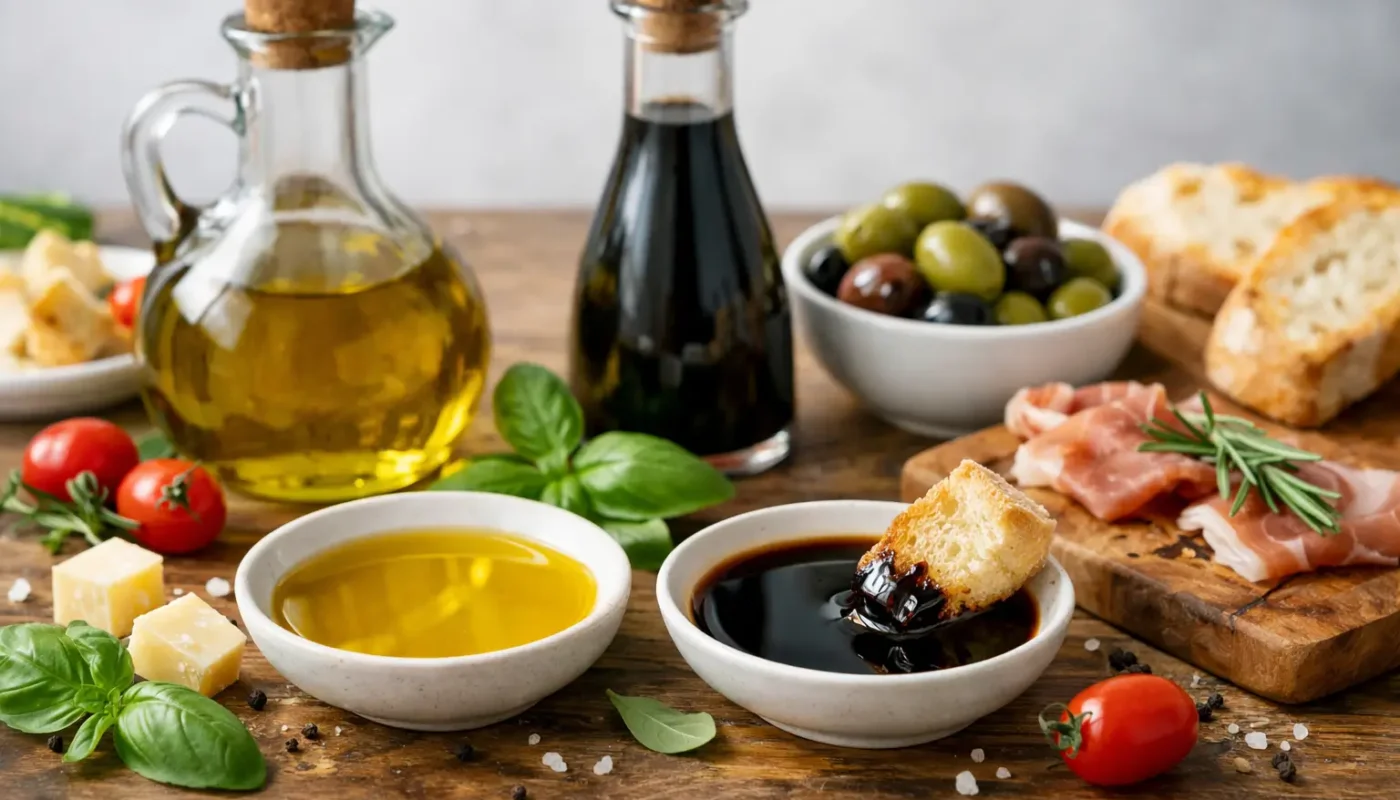
Bread wants contrast. A peppery extra virgin olive oil with a rich traditional dark balsamic is a classic because the oil gives structure and the balsamic adds sweet acidity. If you want a little more personality, a Tuscan herb olive oil paired with fig balsamic feels generous and restaurant-worthy without being fussy.
For a lighter dipping plate, use a lemon olive oil with white balsamic. This is especially good when bread is served alongside olives, cheese, or seafood appetizers, because it keeps the palate fresh instead of heavy.
For salads
Salads reward balance more than drama. Mixed greens, cucumber, goat cheese, and berries tend to shine with a mild extra virgin olive oil and a fruit-forward balsamic. Think blueberry, raspberry, or strawberry with a soft oil that lets the produce stay center stage.
Heartier salads can take more intensity. Arugula, shaved Parmesan, grilled chicken, roasted beets, or farro all welcome a grassy extra virgin olive oil and a deeper balsamic such as pomegranate or fig. The bitterness in the greens and the sweetness in the balsamic create the kind of tension that makes a salad memorable.
For tomatoes and caprese
Tomatoes are naturally sweet and acidic, so they do not need a heavy hand. A fresh, high-quality extra virgin olive oil with a clean traditional balsamic is often enough. If you want a brighter variation, basil olive oil with white balsamic brings out the garden flavor without darkening the dish.
This is one of those cases where restraint matters. If both the oil and balsamic are too assertive, the tomato disappears.
For grilled vegetables
Grilling adds bitterness, smoke, and sweetness all at once, so you have more room to play. Robust extra virgin olive oil with traditional dark balsamic works beautifully on eggplant, zucchini, mushrooms, and onions. Garlic olive oil with fig balsamic is another strong option, especially for roasted root vegetables and peppers.
If asparagus, green beans, or squash are on the menu, a lighter herb or lemon olive oil with white balsamic can feel cleaner and more spring-like.
For cheese boards
Cheese pairing is where olive oil and balsamic can feel especially luxurious. Creamy cheeses such as burrata, chèvre, and fresh ricotta usually do best with a delicate olive oil and either white balsamic or a softly sweet fruit balsamic. A stronger pairing can flatten their texture.
Aged cheeses like Parmesan, Manchego, and sharp cheddar can handle more. Peppery extra virgin olive oil with a dense traditional balsamic or fig balsamic gives you salt, fat, acid, and sweetness in one bite. Add fruit or toasted nuts and the whole board comes together.
For fruit and dessert
This surprises people until they taste it. Olive oil and balsamic can be excellent with fruit, especially when the oil is mild and the balsamic is bright or sweet. Strawberry balsamic with a smooth extra virgin olive oil over berries is easy and elegant. Peach white balsamic with lemon olive oil over melon or stone fruit tastes polished without much effort.
Vanilla ice cream with a restrained drizzle of dark balsamic and a fruity extra virgin olive oil also works if the products are high quality. Here, quality shows immediately. There is nowhere for harshness to hide.
A few reliable flavor combinations
Some pairings are consistent crowd-pleasers because the flavors naturally support each other. Basil olive oil and traditional balsamic is one. Garlic olive oil and fig balsamic is another. Lemon olive oil and white balsamic is a dependable choice for seafood, chicken, and spring salads.
For home cooks who enjoy bolder flavors, rosemary olive oil with pomegranate balsamic or robust extra virgin olive oil with blackberry ginger balsamic can make roasted meats and grilled vegetables taste more layered. These combinations feel a little more adventurous, but still grounded.
The trade-off is versatility. A classic extra virgin olive oil and traditional balsamic may work across half your weekly meals. A more flavored pairing can be stunning in the right dish and less useful elsewhere. That does not make it a worse buy. It just means you are choosing for personality rather than range.
Common pairing mistakes
The most common mistake is pairing two aggressive products and expecting balance. A very bitter, high-polyphenol olive oil and a heavily sweet, intensely reduced balsamic can compete instead of complement. Each may be excellent on its own, but together they can feel loud.
Another mistake is using flavored balsamics and oils without considering the main ingredient. If your salad already includes strawberries, candied pecans, and goat cheese, adding both a berry balsamic and a flavored oil can push things too far. Sometimes one expressive bottle is enough.
Temperature and freshness also matter. Olive oil tastes flatter when old, and balsamic loses charm when used carelessly as a generic acidic splash. Tasting before serving makes a difference. A pairing that felt perfect in January may need a lighter hand in July.
How to build your own pairing confidence
The best way to find your own best olive oil and balsamic pairing is to taste with a small piece of bread or a plain spoon before dressing the full dish. Start with the oil, then taste the balsamic, then combine them. Notice whether the finish feels sharp, sweet, grassy, peppery, or heavy. You will learn quickly what you like.
A good rule is this: use contrast when a dish feels rich or flat, and use harmony when the ingredients are already delicate and you want to support them. Keep one classic extra virgin olive oil and one traditional balsamic on hand, then add one citrus or herb oil and one fruit or white balsamic for flexibility.
That small pantry shift changes the way everyday cooking tastes. A simple plate of tomatoes, a bowl of greens, roasted carrots, or fresh bread suddenly feels chosen rather than assembled. And that is where these pairings really earn their place – not as extras, but as the finishing touch that makes good ingredients taste like you meant every bit of them.
