
Ultra Premium Olive Oil
How to Preserve Herbs in Olive Oil Safely
Nov
A handful of basil, rosemary, or thyme can make a bottle of olive oil smell like the best part of a summer garden. But before you preserve herbs in olive oil, there is one detail that matters more than presentation: fresh herbs and oil require careful handling. Done well, herb oil is a beautiful, flavorful ingredient for finishing dishes, building vinaigrettes, and adding personality to everyday cooking. Done casually and stored too long, it can create a food-safety risk.
The good news is that safe herb-infused olive oil is simple to make when you choose the right method and treat freshness as part of the recipe. Think of it as a small-batch kitchen condiment, not a shelf-stable pantry project.
Why fresh herbs in oil need special care
Olive oil is an extraordinary carrier of flavor. Its gentle fruitiness draws out aromatic compounds from herbs, while its richness rounds out sharp, green, peppery notes. Yet oil also creates a low-oxygen environment. Fresh herbs can bring in moisture and naturally occurring spores, including Clostridium botulinum. In the wrong conditions, those spores may grow and produce a toxin without changing the oil’s smell, taste, or appearance.
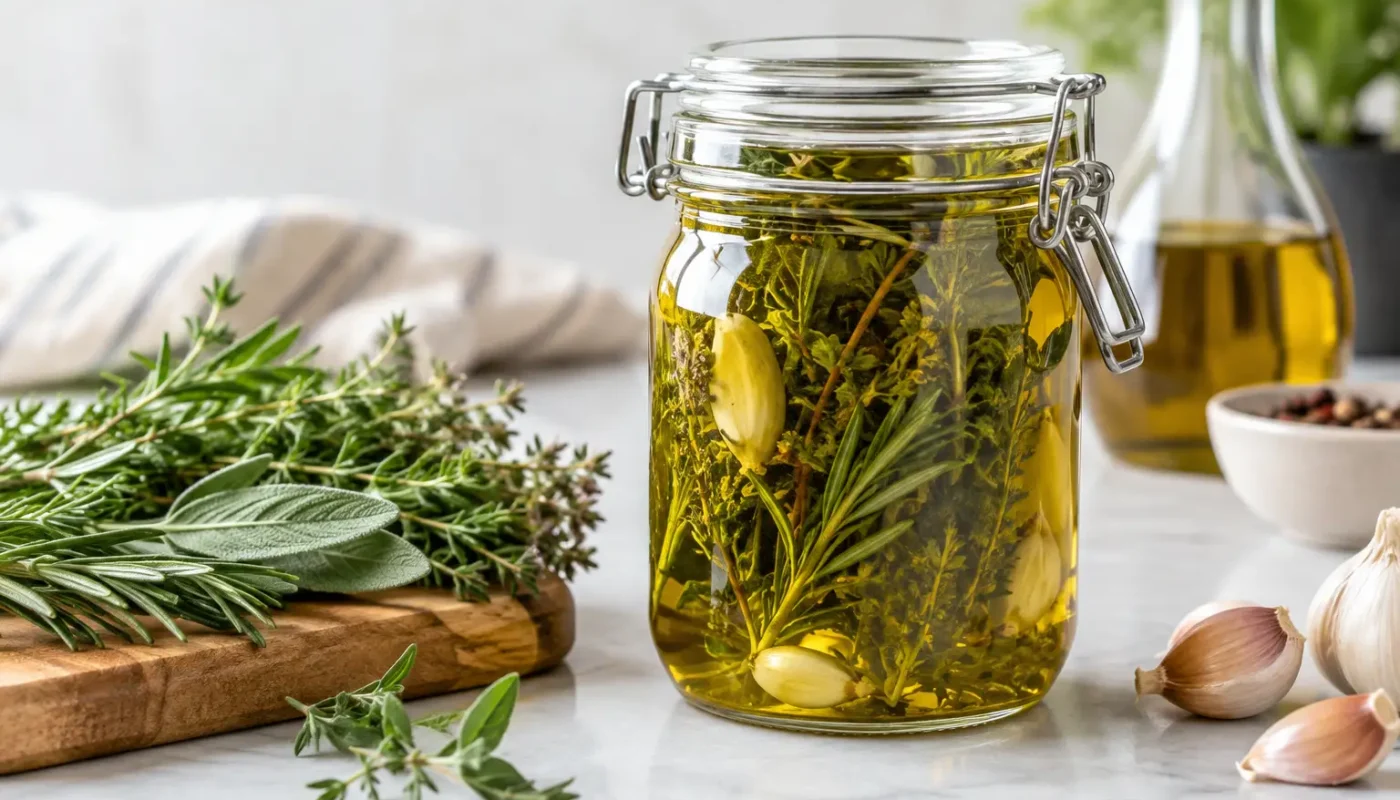
That is why a decorative countertop bottle filled with fresh garlic, basil, or rosemary is not a good idea. Quality olive oil deserves better treatment, and so do the people around your table.
Commercial herb oils are made with controlled acidification, processing, and packaging methods that are difficult to reproduce reliably at home. A homemade version should be refrigerated promptly and used quickly, or frozen for longer storage. Do not rely on a splash of vinegar or lemon juice to make fresh herbs in oil shelf-stable. The acidity must be measured and controlled, not guessed.
The best ways to preserve herbs in olive oil
For home cooks, there are two dependable paths: make a refrigerated fresh-herb oil for near-term use, or use thoroughly dried herbs for a more pantry-friendly infusion. The first captures the bright personality of fresh herbs. The second offers convenience and a longer shelf life when made and stored properly.
Make a fresh-herb oil for immediate cooking
Fresh basil, parsley, cilantro, tarragon, dill, rosemary, oregano, sage, and thyme all work beautifully. Select herbs that look lively and fragrant, without dark spots or wilted leaves. Rinse them well if needed, then dry them exceptionally well. A salad spinner followed by clean kitchen towels is useful here. Water is the enemy of both texture and storage quality.
For a vivid green finishing oil, blanch tender herbs such as basil, parsley, or cilantro in boiling water for about 10 seconds, then move them immediately to ice water. Dry them thoroughly before blending with olive oil. Blanching preserves the color and softens the raw edge of the herbs, producing a silky oil that is particularly good over tomato soup, grilled fish, eggs, or fresh mozzarella.
For woody herbs such as rosemary, thyme, and sage, gently warming the oil with the herbs is often more suitable. Keep the heat low and avoid frying the herbs. You want a soft release of aroma, not browned leaves or a cooked, bitter flavor. Once the oil is fragrant, strain it through a fine sieve or coffee filter and cool it promptly.
Whether you blend or gently warm, transfer fresh-herb oil to a clean container, refrigerate it immediately, and use it within four days. If the oil develops an off aroma, bubbles, cloudiness that seems unusual, or any sign of spoilage, discard it. More importantly, do not taste questionable oil to decide whether it is safe.
Freeze herb oil for longer enjoyment
Freezing is the most practical answer when your garden or market haul is generous. Blend clean, very dry herbs with extra virgin olive oil, then portion the mixture into an ice cube tray. Once solid, move the cubes to a freezer-safe container, label them, and use them within a few months for the best flavor.
A basil-olive-oil cube can become the foundation for pasta sauce. A rosemary cube can start a roast chicken pan sauce. Parsley and lemon zest frozen with a mild, buttery extra virgin olive oil can bring quick freshness to white beans or sautéed shrimp. Freezing turns seasonal herbs into ready-to-use flavor rather than a race against the refrigerator clock.
Use dried herbs for a shelf-stable-style infusion
If you want a bottle that can sit in a cool, dark pantry, choose completely dried herbs rather than fresh ones. The herbs must be truly dry and brittle, not merely air-dried for an afternoon. Any remaining moisture changes the equation.
Add dried rosemary, oregano, thyme, sage, chiles, or lavender sparingly to olive oil, then let the flavor develop in a sealed bottle away from heat and light. Taste after several days and strain when the flavor is where you want it. Dried herbs tend to give a warmer, more rounded result than fresh herbs, which makes them lovely for roasted vegetables, focaccia, pizza, beans, and marinades.
Even with dried herbs, start with a fresh, high-quality extra virgin olive oil and keep the bottle protected from light and heat. The more delicate the oil, the more quickly a strong herb can cover its character. A bold rosemary infusion can stand up to a peppery, robust oil, while floral basil or dill is often better with a milder, fruit-forward selection.
Choosing olive oil for herb infusions
The best olive oil for an infusion depends on how you plan to use it. There is no need to hide a beautiful extra virgin olive oil under an aggressive amount of herbs. Instead, let the pairing make sense.
For basil, parsley, chive, or tarragon oil, choose an extra virgin olive oil with a soft, ripe-fruit profile. These herbs are delicate, and a mild oil lets their fresh, green notes stay in focus. For rosemary, sage, oregano, and chile, look for an oil with more pepper, herbaceousness, or a pleasantly bitter finish. Those sturdy flavors create a more balanced partnership.
Freshness also matters. Olive oil is not a neutral cooking medium. It brings its own aroma, fruitiness, bitterness, and peppery finish to the jar. Starting with a well-kept, flavorful oil is the difference between an infusion that tastes intentional and one that tastes flat.
Flavor combinations worth keeping on hand
A small collection of herb oils can make weeknight cooking feel more considered without making it complicated. Basil oil brightens pizza, burrata, grilled peaches, and tomato salads. Rosemary oil loves roasted potatoes, lamb, mushrooms, and warm white beans. Dill oil is exceptional with salmon, cucumbers, potatoes, and yogurt-based sauces.
Try thyme with lemon zest for chicken and vegetables, or parsley with a little garlic for a quick finishing oil. If adding garlic to fresh oil, follow the same strict refrigerated four-day rule. Garlic has the same safety concern as fresh herbs and should never be kept at room temperature in oil.
Use herb oil as a finishing touch rather than a replacement for all your cooking oil. A drizzle just before serving preserves its aroma and gives your meal the polished flavor of a tasting-gallery pairing. Stir it into soup, spoon it over ricotta, brush it on warm flatbread, or fold it into a simple vinaigrette with a complementary balsamic vinegar.
A few mistakes to avoid
Do not store fresh herb oil on the counter, even if the herbs look pretty in the bottle. Do not assume refrigeration makes it last for weeks. Do not add water, fresh citrus juice, or fresh garlic and expect the oil to remain safe longer. And do not make a large batch unless you plan to freeze most of it.
Small batches are the luxury here. They keep the flavors bright, give you an excuse to experiment, and respect the quality of the oil you chose. A four-ounce jar of chilled basil oil used over a few dinners is often more satisfying than a large bottle that loses its sparkle in the back of the refrigerator.
When herbs are abundant, preserve their flavor with intention: refrigerate fresh-herb oil for quick use, freeze it in convenient portions, and reserve dried-herb infusions for the pantry. That little bit of care lets every drizzle taste as fresh and generous as the meal it finishes.
