Ultra Premium Olive Oil
Season Cast Iron With Olive Oil the Right Way
Sep
A well-seasoned cast iron skillet should release a fried egg with barely a nudge, turn cornbread edges deeply crisp, and bring a quiet confidence to weeknight cooking. If you want to season cast iron with olive oil, the good news is that you can. The key is not a thick, glossy coating. It is a nearly invisible layer of oil, applied with patience and baked until it becomes part of the pan.
Olive oil has a deserved place in a flavor-forward kitchen, from a peppery finish over grilled vegetables to a mellow base for sautéing. It can also help build a useful cast iron surface. Understanding the process will help you choose the right oil, avoid a sticky skillet, and keep your pan ready for the meals you love to cook.
What Cast Iron Seasoning Actually Is
Seasoning is not leftover oil sitting on the metal. When a thin film of oil is heated, its fats bond to the iron and form a dark, hard layer called polymerized oil. With repeated cooking and care, that layer becomes more even, more naturally nonstick, and better at protecting the pan from rust.
Olive oil contains the unsaturated fats that can participate in this process. Still, it behaves differently from some highly refined cooking oils. Extra virgin olive oil has more natural flavor compounds and fine particles, which make it especially rewarding for dressings, dipping, and finishing dishes, but can also make a heavy seasoning coat smoke or turn tacky more easily.
That does not mean you need to ban olive oil from cast iron. It means the application matters. A mild or refined olive oil is often the most forgiving choice for a first oven seasoning. If your pantry holds only extra virgin olive oil, use it sparingly, keep the oven temperature moderate, and wipe the skillet more thoroughly than seems necessary.
How to Season Cast Iron With Olive Oil
Start with a clean, completely dry skillet. New pans may arrive with a factory coating that simply needs regular use, while vintage or rusted pans can require more preparation. If you have scrubbed a pan with soap or removed rust, dry it over low heat on the stove for several minutes so moisture does not hide in the pores of the iron.
Preheat your oven to 375°F to 400°F. This range gives olive oil enough heat to cure into a protective layer without pushing a delicate extra virgin oil toward excessive smoke. Place a sheet of foil or a baking pan on the lower rack to catch any drips.
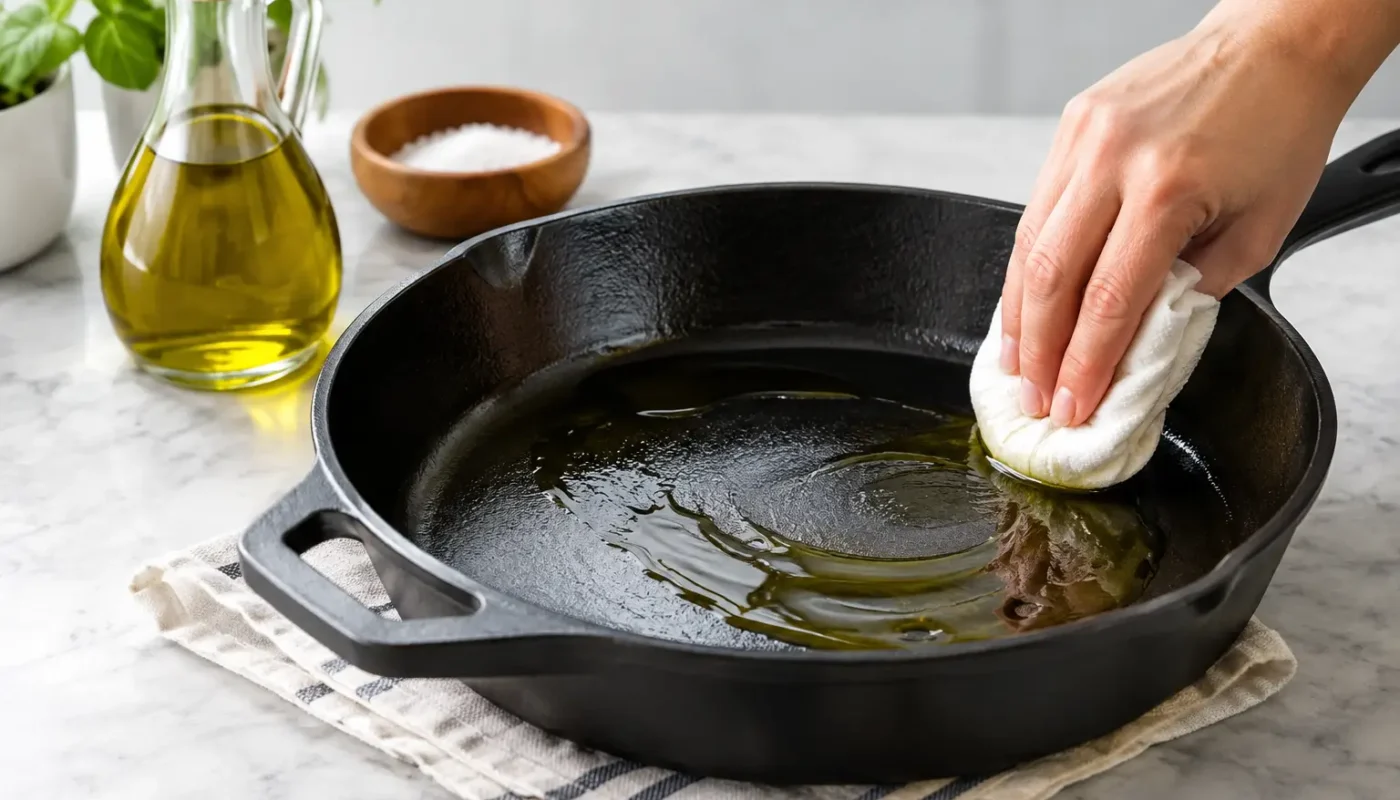
Pour a small amount of olive oil into the warm, dry skillet. A teaspoon is plenty for a standard 10- to 12-inch pan. Using a lint-free cloth or paper towel, rub the oil across the cooking surface, up the sides, around the handle, and over the outside. Then take a clean, dry towel and wipe the pan again until it looks almost dry.
That second wipe is the detail that separates a satin-smooth surface from a sticky one. If you can see shiny pools, streaks, or beads of oil, there is too much on the skillet. Seasoning should be built in whisper-thin coats, not poured on like a marinade.
Place the skillet upside down on the center oven rack and bake it for one hour. Let it cool gradually in the oven, then inspect the surface. It may look slightly darker and more even rather than dramatically black after one round. For a bare or newly restored pan, repeat the process two or three times. For a pan that already has decent seasoning, one light coat is usually enough.
Which olive oil should you use?
For oven seasoning, a mild olive oil or refined olive oil offers an easy starting point because it tends to have a higher smoke point and fewer suspended solids. It is practical, neutral enough for repeated layers, and still fits naturally into an olive-oil-centered kitchen.
Fresh extra virgin olive oil can work, especially for maintaining a pan through everyday cooking. Yet a vivid, early-harvest EVOO with grassy or peppery character is often better appreciated where its aroma and flavor can shine: in vinaigrettes, soups, roasted vegetables, warm beans, and a final pour over bread. Think of your best bottle as a finishing ingredient first. The oil you choose for seasoning does not need to be your most prized tasting oil.
Why a Cast Iron Pan Turns Sticky
A tacky surface nearly always points to excess oil or insufficient heat. The oil may have softened and darkened without fully setting into a durable film. It can feel disappointing after an hour of oven time, but it is fixable.
Put the skillet back into a 400°F oven upside down for another 30 to 60 minutes. If it remains gummy after cooling, scrub it with hot water and a stiff brush, dry it thoroughly, and apply a much thinner coat. You do not necessarily need to strip the pan to bare metal unless the buildup is thick, flaky, or uneven.
Avoid chasing a mirror-like finish right away. Cast iron seasoning develops through use, and a pan that looks imperfect can still cook beautifully. Sautéed onions, crispy potatoes, grilled sandwiches, and shallow-fried cutlets all contribute to the surface over time.
Everyday Care Keeps the Seasoning Going
After cooking, clean the skillet while it is still warm enough to handle. Hot water, a brush, and a little gentle scrubbing usually do the job. A small amount of dish soap is fine when needed, particularly after greasy foods. Modern soap does not contain the harsh lye that once made it a serious concern for cast iron.
Dry the pan immediately. Set it over low heat for a minute or two, just until all moisture has evaporated. If the surface looks dull, wipe on a drop or two of olive oil and buff it until no visible oil remains before storing. This brief habit is more useful than adding a heavy oven seasoning after every meal.
Acidic foods deserve a little judgment. A quick pan sauce with wine, lemon, or tomatoes is usually fine in a well-seasoned skillet. A long-simmering tomato sauce, however, can weaken a young seasoning layer and pick up a metallic taste. For lengthy acidic cooking, reach for stainless steel or enameled cast iron instead.
Cook Your Way to Better Seasoning
The most delicious way to maintain cast iron is to use it often. Olive oil is excellent for sautéing peppers, searing chicken thighs, cooking eggs over gentle heat, or roasting vegetables in the oven. Start with enough oil to support the food, not a skimpy amount that encourages sticking, especially while your pan is still developing its surface.
High-heat steak searing is a different situation. Extra virgin olive oil may smoke before the pan reaches the intense temperature you want for a strong crust. Use an oil suited to higher heat for the sear, then finish the steak with a generous pour of fine EVOO after it rests. You get the best of both worlds: serious heat in the pan and fresh olive flavor on the plate.
A cast iron skillet does not need to be treated like a museum piece. It needs thin coats, complete drying, and meals worth making. At Weyira Olive Oil & Vinegar, we believe a good oil earns its place through flavor and versatility. Let your everyday olive oil help care for your skillet, and save a beautiful extra virgin olive oil for the final drizzle that makes dinner memorable.
