
Ultra Premium Olive Oil
How to Gift Gourmet Food With Real Thought
Oct
A memorable food gift does not need to be extravagant. It needs to feel chosen. When you know how to gift gourmet food thoughtfully, a bottle of fresh extra virgin olive oil or a bright, fruit-forward balsamic becomes more than a pantry item. It becomes an invitation to make a better salad, linger over a cheese board, or turn an ordinary Tuesday dinner into something worth sharing.
The best gourmet gifts balance pleasure and usefulness. They give the recipient something beautiful to taste now, while also earning a place in the kitchen long after the wrapping comes off.
Start With the Way They Like to Eat
Before choosing flavors, picture the recipient at the table. Are they the friend who grills year-round, the neighbor who hosts impromptu dinners, or the family member learning to cook with more confidence? Gourmet food lands best when it supports the food they already love rather than asking them to become someone else.
For a confident home cook, choose ingredients with range and character. A peppery, fresh extra virgin olive oil can bring life to grilled vegetables, soup, pasta, and warm bread. A rich dark balsamic offers depth for dressings, marinades, roasted fruit, and a final drizzle over a well-aged cheese.
For someone newer to specialty ingredients, start with familiar flavors. A garlic-infused olive oil, basil olive oil, or traditional balsamic vinegar feels immediately approachable because the recipient can imagine using it. Include a simple pairing suggestion on a card: basil olive oil with tomato and mozzarella, or traditional balsamic with strawberries and vanilla ice cream.
Wellness-minded recipients often appreciate gifts centered on purity and everyday use. Fresh extra virgin olive oil is a flavorful way to cook and finish foods with naturally occurring antioxidants and beneficial fats. The key is not to turn the gift into a lecture. Let the quality speak through its aroma, freshness, and the small pleasure of reaching for it every day.
How to Gift Gourmet Food by Occasion
The occasion should guide the size and style of the gift, but it should not dictate a generic box. A host gift, a holiday present, and a thank-you for a teacher all call for slightly different choices.
For a dinner host, bring a pairing they can open that evening or enjoy later: a finishing olive oil and balsamic vinegar, perhaps accompanied by a small jar of honey, a sea salt, or a spice blend. The gift is generous without taking over the host’s menu.
For holidays and major celebrations, build a more abundant pantry collection. Choose two contrasting olive oils, such as a robust extra virgin olive oil and a citrus fused olive oil, then add a dark and white balsamic. This creates a tasting experience and gives the recipient several easy paths into cooking. A beautiful bottle matters here, but variety matters more.
For housewarmings, think of the first meals someone will make in a new kitchen. A versatile olive oil, classic balsamic, finishing salt, and a serving accessory feel practical and welcoming. For corporate or client gifts, favor polished presentation and broadly appealing flavors. Traditional balsamic, lemon olive oil, and quality sea salt are sophisticated choices that do not require adventurous tastes.
A smaller gift can be just as meaningful for birthdays, thank-yous, and care packages. One exceptional bottle with a personal note often feels more intentional than a crowded assortment of items the recipient may never use.
Choose Flavor Contrast, Not Random Variety
A gourmet gift should feel curated, not assembled from whatever happened to fit in a basket. Start with one foundation item, then add flavors that create contrast.
If the foundation is a grassy, peppery extra virgin olive oil, pair it with a sweet-tart balsamic or a fragrant citrus vinegar. If you begin with a berry balsamic, balance it with a mellow olive oil and a savory seasoning. The recipient should be able to taste the difference between the products and understand how each one has a role.
Avoid stacking too many intensely flavored items together. A gift filled with hot pepper oil, garlic oil, smoky salt, and chipotle seasoning may delight one serious spice lover, but it can feel limiting for most households. One bold note beside two versatile choices is usually the better formula.
Make Quality Part of the Gift
Not every bottle of olive oil is a gourmet gift. Freshness, provenance, and handling shape what is inside the bottle far more than a pretty label does. Quality extra virgin olive oil should offer aroma and flavor that feel alive: fresh-cut grass, green tomato, herbs, ripe fruit, or a welcome peppery finish, depending on the variety and harvest.
For olive oil, look for clear information about origin and harvest rather than vague promises. Oils from respected growing regions can be excellent, but freshness remains essential. Olive oil is fruit juice, not an endlessly stable pantry product. It is at its best when stored away from heat and light and enjoyed while its flavor is vibrant.
Balsamic vinegars deserve the same attention. A fine balsamic can be tangy, silky, fruity, and balanced, adding complexity without needing much else. Dark balsamics often bring notes of fig, berry, caramel, or spice, while white balsamics tend to be lighter and brighter for chicken, seafood, vinaigrettes, and fresh fruit.
At Weyira Olive Oil & Vinegar, the joy of gifting comes from this kind of discovery: tasting-gallery quality oils and vinegars that let a recipient find new favorite combinations in their own kitchen.
Give Them a First Use, Not Just a Bottle
The difference between a nice gift and a used gift is often one sentence of guidance. Specialty ingredients can intimidate people if they are not sure where to begin. A handwritten tag removes that hesitation.
You might write, “Try this lemon olive oil over roasted asparagus,” or, “Whisk this raspberry balsamic with olive oil for a dressing over spinach, goat cheese, and walnuts.” Keep it simple, specific, and tied to food they are likely to make.
If you are giving several items, suggest one easy tasting ritual. Set out bread, sliced apples, a few cheeses, and small bowls for dipping. This turns the present into an experience, especially during the holidays or at a gathering. It also helps the recipient notice how one oil differs from another and how a vinegar changes with food.
A recipe card is helpful, but it does not need to be elaborate. A three-ingredient dressing, roasted vegetable method, or olive-oil cake suggestion is enough. The purpose is confidence, not homework.
Presentation Should Protect the Products
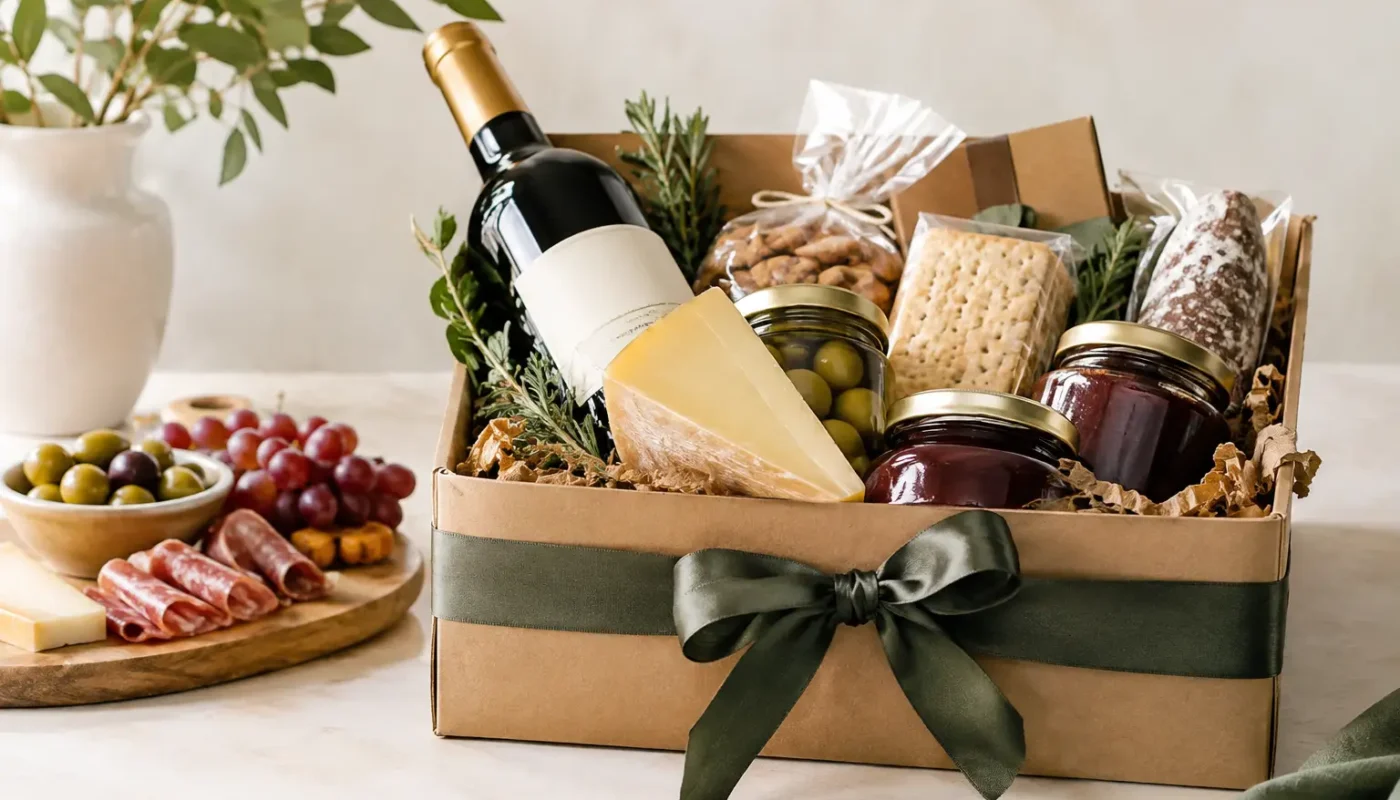
Gourmet food has a sensory appeal before the first taste, so presentation counts. Use a sturdy box, basket, or reusable tote that holds bottles upright. Add tissue, a kitchen towel, or crinkle paper for cushioning, especially if the gift will travel. A dark, cool shipping carton is better than decorative packaging that leaves glass exposed or lets bottles rattle.
Keep the arrangement useful. Place taller bottles at the back, smaller pantry items toward the front, and include a note where it will be seen first. If you are building a larger basket, leave a little breathing room. Overfilling can make premium products look cluttered and raises the risk of breakage.
Seasonal timing matters, too. In very hot or very cold weather, avoid leaving food gifts on a porch for long periods. If shipping, send early enough to avoid rushed delivery and choose a delivery date when the recipient is likely to be home. Premium ingredients deserve better than spending a weekend in the sun.
A Few Gift Combinations That Rarely Miss
For the everyday cook, pair a fresh extra virgin olive oil with traditional balsamic and a flaky finishing salt. For the entertainer, combine a citrus olive oil, a fig or blackberry balsamic, and a small honey or seasoning blend. For the grill enthusiast, try a robust olive oil, a smoky or herb-forward seasoning, and a balsamic suited to marinades. For the baker or brunch lover, a blood orange olive oil with a berry balsamic offers an unexpected and delicious direction.
These combinations work because they are flexible. The recipient can follow a pairing suggestion or make the flavors their own.
The most generous gourmet gift is not the one with the most items. It is the one that says, with every well-chosen bottle and flavor, “I thought about what you would enjoy making next.”
