
Ultra Premium Olive Oil
Dipping Spices List for Bread, Oil, and More
Oct
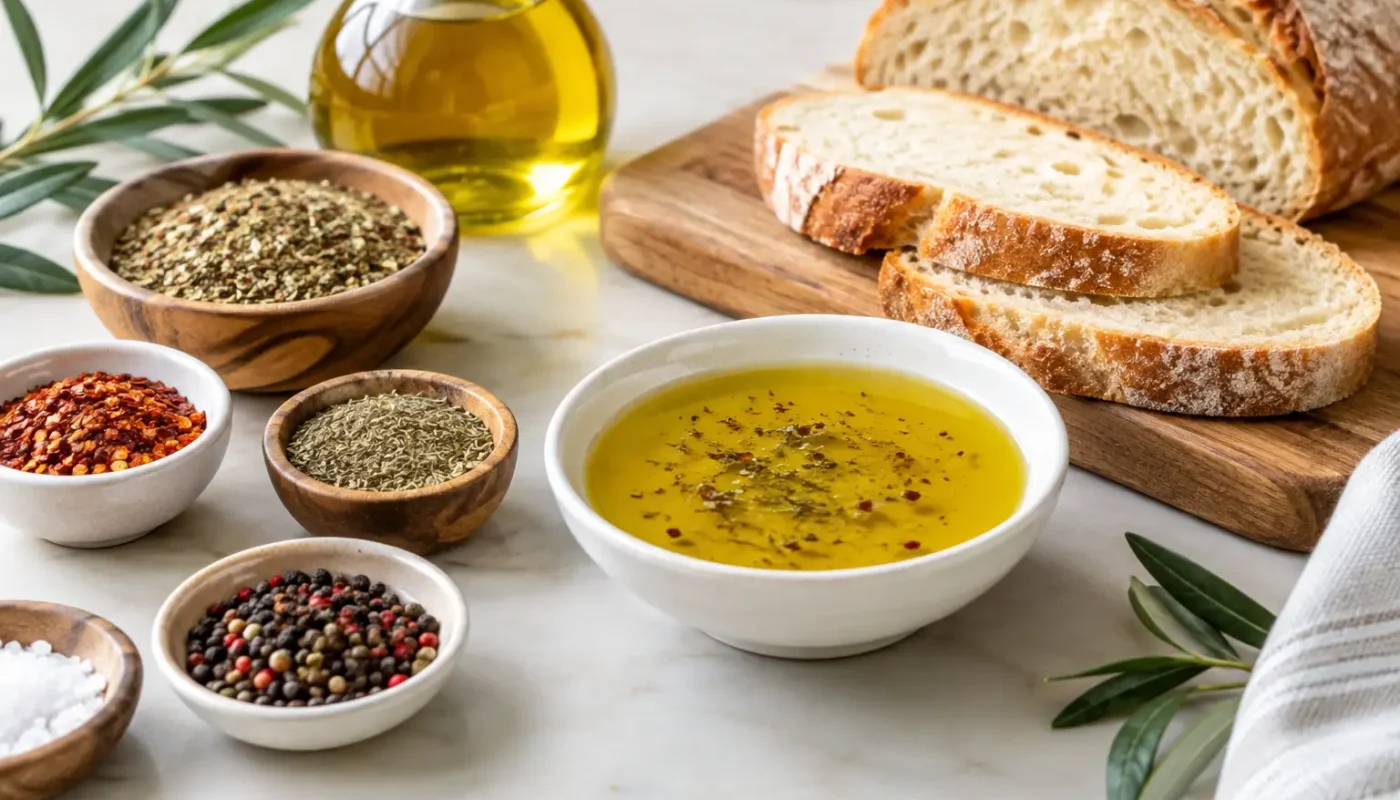
A good bread dip should make you pause before the first bite. The peppery lift of fresh extra virgin olive oil, the fragrance of toasted herbs, and a small bright edge from citrus or vinegar can turn a warm loaf into the best part of the table. This dipping spices list is designed to help you create that experience at home, whether you prefer classic Italian herbs, smoky heat, or a blend that leans bright and Mediterranean.
The secret is not piling every spice in the cabinet into one bowl. Great dipping blends have contrast: savory herbs, aromatic alliums, a little warmth, and enough salt or acid to keep the olive oil from tasting flat. Start with a quality olive oil you would happily taste on its own. Then build around the food you are serving and the occasion you have in mind.
How to Use This Dipping Spices List
Most dry seasoning blends work best when sprinkled into a shallow dish and covered with extra virgin olive oil just before serving. Give the mixture five to ten minutes to bloom. The dried herbs soften, the garlic and onion become more rounded, and the oil carries those aromas beautifully.
For a more layered dip, finish with a few drops of balsamic vinegar. Dark balsamic brings caramel-like richness to rosemary, garlic, and black pepper. White balsamic is especially lovely with citrusy herbs, chili, or a fruit-forward olive oil. Use a light hand at first. You want a glossy, scoopable dip, not a sharp vinaigrette.
Salt matters, but it should support rather than dominate. Flaky sea salt adds pleasant texture at the table, while a fine salt disperses quickly through the oil. If you are serving cured meats, cheese, or salty crackers alongside the bread, season the dip more gently.
Essential Dipping Spices and Herbs
A well-stocked pantry gives you plenty of room to experiment without making every blend complicated. These are the spices and dried herbs worth reaching for most often:
- Garlic granules or garlic powder: Garlic granules offer a little more texture, while powder dissolves quickly. Either gives olive oil a familiar, savory foundation.
- Onion flakes or onion powder: Onion adds gentle sweetness and depth. It is particularly good in blends with parsley, oregano, and smoked paprika.
- Dried oregano: Earthy, slightly bitter, and unmistakably Mediterranean, oregano pairs naturally with tomato-based meals, feta, and dark balsamic.
- Dried basil: Softer and sweeter than oregano, basil works well with garlic, lemon zest, and a mild or herb-infused olive oil.
- Rosemary: Piney rosemary has a bold personality. Crush it between your fingers before adding it, especially if the leaves are large.
- Thyme: Thyme brings a subtle woodsy note that pairs well with roasted vegetables, mushrooms, and aged cheese.
- Parsley: Dried parsley contributes fresh-looking color and a clean herbal flavor that makes stronger spices feel more balanced.
- Red pepper flakes: Choose these for straightforward heat. A pinch is enough for most small dishes, since the heat intensifies as the spices sit in oil.
- Aleppo pepper or mild chili flakes: These offer gentle warmth with a slightly fruity flavor, ideal when you want heat without overwhelming the olive oil.
- Smoked paprika: A small amount gives a blend warmth and a grill-kissed character. It is excellent with roasted garlic, cumin, and hearty country bread.
- Black pepper: Freshly cracked pepper adds lively bite and aroma. Use it generously with simple herb blends, especially if your oil has a grassy, peppery finish.
- Lemon or orange zest: Not a dried spice in the traditional sense, but fresh zest is one of the easiest ways to brighten an oil dip. Add it immediately before serving.
Five Dipping Spice Blends to Keep on Hand
Classic Herb and Garlic
Combine dried oregano, basil, parsley, garlic granules, onion flakes, black pepper, and a pinch of red pepper flakes. This is the dependable blend for crusty sourdough, focaccia, or a casual pasta dinner. Pour in a medium-intensity extra virgin olive oil and add a few drops of traditional dark balsamic if you enjoy a deeper finish.
This blend is forgiving, but do not overdo the oregano. Too much can make the dip taste medicinal rather than fresh. If that happens, soften it with more parsley and a little basil.
Rosemary Parmesan Pepper
Mix crushed dried rosemary, garlic, coarse black pepper, parsley, and a little grated Parmesan. The cheese adds salt and savory richness, so taste before adding more. This is especially satisfying with warm ciabatta, roasted potatoes, or grilled steak.
Choose a robust olive oil here. Rosemary and Parmesan can stand up to a more assertive oil with green, peppery notes. A drizzle of fig or blackberry balsamic beside the dip makes a beautiful sweet-savory contrast for an appetizer board.
Warm Smoky Mediterranean
Stir together smoked paprika, cumin, coriander, garlic, oregano, Aleppo pepper, and sea salt. This blend has enough warmth to feel distinctive, yet it remains versatile with pita, roasted cauliflower, grilled chicken, or chickpeas.
A delicate oil can disappear beneath smoked paprika, so select one with presence. If the blend feels too earthy, brighten it with lemon zest or a splash of white balsamic. That small acidic note keeps the spices from becoming heavy.
Lemon Herb and Chili
Use dried basil, parsley, thyme, garlic, lemon zest, black pepper, and a pinch of chili flakes. This is a fresh, lively choice for spring and summer meals, seafood dinners, or a platter of grilled vegetables.
Because lemon zest is perishable, make this blend just before serving rather than storing it. A citrus-infused olive oil can deepen the effect, but reduce the fresh zest so the flavor stays balanced instead of perfumy.
Za’atar-Inspired Sesame Dip
Combine thyme, oregano, toasted sesame seeds, sumac, garlic, and a pinch of salt. Sumac provides a tart, berry-like tang that gives the blend a bright character even without vinegar. Serve it with flatbread, cucumbers, olives, and creamy cheeses.
This is one of the few blends where sesame texture is part of the appeal. Add the seeds at the last minute so they remain crisp. If you cannot find sumac, use lemon zest and a tiny splash of white balsamic, though the flavor will be less tangy and less traditional.
Pair the Blend With the Right Olive Oil
The olive oil is not merely a carrier for spices. Its flavor determines whether the final dip feels delicate, grassy, buttery, peppery, or pleasantly bold. Mild oils are ideal for basil, parsley, lemon, and softer breads. Medium oils are the everyday choice for garlic-herb blends. Robust oils shine with rosemary, smoked paprika, chili, and aged cheeses.
Taste before you season. Pour a teaspoon of oil into a small cup and notice whether it is fruity, herbaceous, or peppery at the back of the throat. That peppery sensation is common in fresh, quality extra virgin olive oil and can be a wonderful match for bread, but it may call for gentler spices if your guests are sensitive to heat.
At Weyira Olive Oil & Vinegar, a tasting-gallery approach makes this kind of pairing especially enjoyable: compare two oils with the same spice blend, and you will quickly see how much the oil changes the result.
Make Ahead, Store Smartly, and Serve Safely
Dry spice blends can be mixed ahead and stored in an airtight jar away from heat and sunlight for a few months. Make small batches, especially with ground spices, because their aroma fades over time. Label the jar with the date and use clean, dry measuring spoons to protect the blend from moisture.
Do not store a room-temperature mixture of oil and fresh garlic or fresh herbs for later use. Fresh ingredients introduce moisture and require careful refrigeration and prompt use. For easy entertaining, keep your dry blend ready, then add olive oil, fresh zest, garlic, or herbs only when you are about to serve.
Bread is the natural partner, but it is not the only one. Spoon seasoned oil over grilled vegetables, use it to finish a bowl of white beans, or set it beside warm flatbread and a simple cheese plate. The best dipping spices are the ones that make ordinary ingredients taste more intentional.
Keep one dependable herb blend in the pantry, then let the season, the meal, and the olive oil guide the rest. A small dish of fragrant oil is an invitation to linger at the table – and often the simplest way to make a meal feel generously prepared.
