Ultra Premium Olive Oil
How to Cook With Infused Oils: Heat, Pair, Finish
Jul
A spoonful of fresh garlic oil can turn a plain pan of green beans into a side dish people reach for first. A bright lemon olive oil can make roasted chicken taste more complete before it ever reaches the table. Learning how to cook with infused oils is less about following rigid rules and more about knowing when a flavor should lead, when it should support, and when it deserves the final pour.
Premium infused olive oils bring concentrated, clean flavor to everyday cooking without requiring a drawer full of specialty ingredients. Keep a few well-chosen bottles in your pantry and weeknight meals gain the character of something thoughtfully prepared.
Start With the Flavor, Not Just the Recipe
An infused oil is olive oil flavored with ingredients such as garlic, lemon, basil, rosemary, chipotle, blood orange, or truffle. The oil carries both richness and aroma, so it can replace plain olive oil while adding a distinct culinary direction.
Before cooking, think about the flavor family of the dish. Garlic, rosemary, and herb oils feel at home with savory foods such as potatoes, roasted vegetables, poultry, beans, and pasta. Citrus oils lift seafood, salad dressings, grain bowls, and baked goods. Peppery or smoky oils bring welcome depth to grilled meats, chili, pizza, and hearty soups.
The best pairing does not always mean matching obvious flavors. Basil olive oil with strawberries, blood orange olive oil with roasted carrots, or lemon olive oil in a simple cake can create the kind of contrast that makes a dish memorable. Start with a familiar recipe, then use the oil to add one thoughtful twist.
How to Cook With Infused Oils at Different Temperatures
Heat changes flavor. Some infused oils hold up beautifully in a skillet or roasting pan, while delicate herbal and citrus notes are most vivid when added near the end. The right approach depends on the oil, the intensity of its flavor, and what you want the finished dish to taste like.
For sautéing and gentle pan cooking
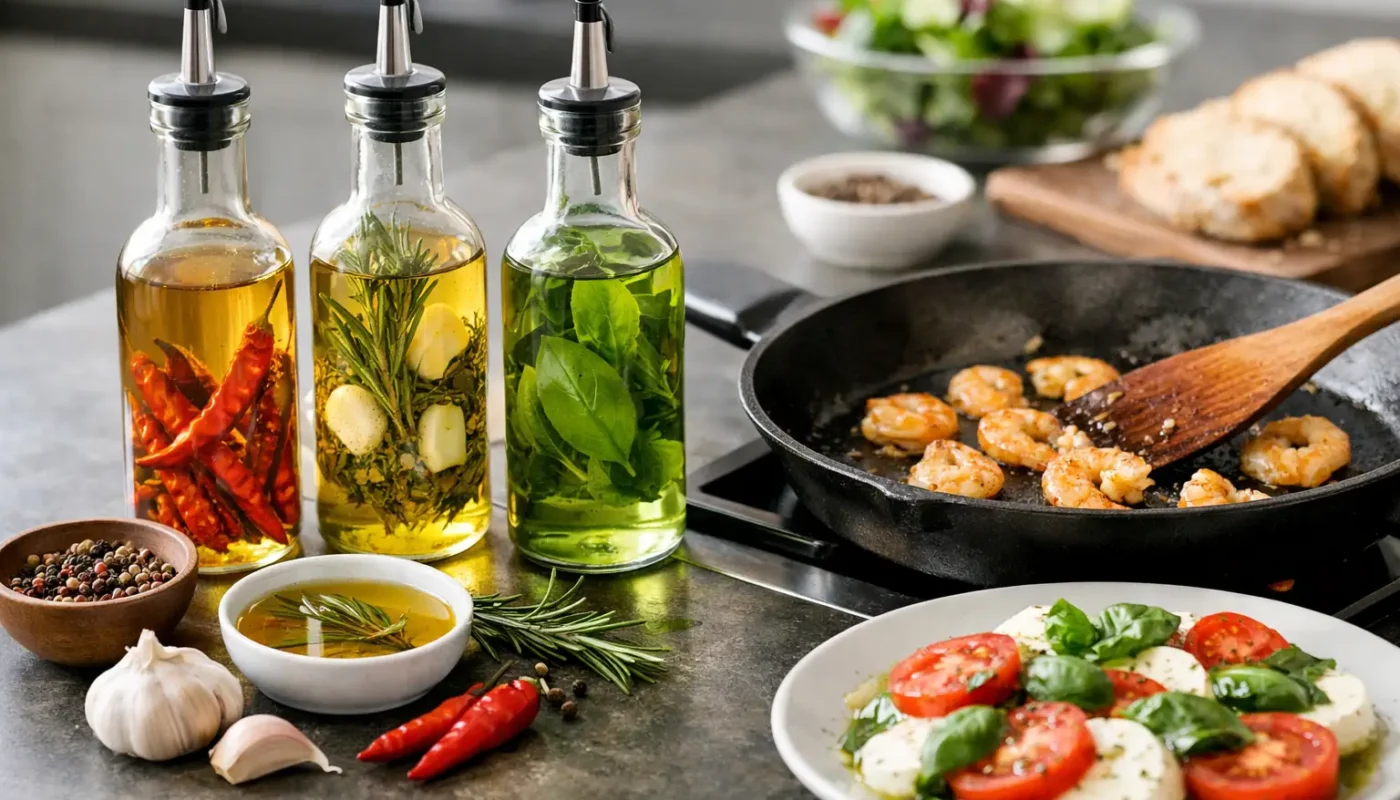
Use savory infused oils for medium-heat cooking when you want the flavor to become part of the foundation of a dish. Garlic olive oil is excellent for sautéing onions, mushrooms, spinach, shrimp, or white beans. Tuscan herb or rosemary olive oil adds an easy starting point for chicken, vegetables, and tomato sauces.
Avoid blasting strongly flavored oils over very high heat for long periods. You may not ruin the dish, but the nuanced aroma that made you choose the oil can fade. If your recipe calls for searing at high heat, use a suitable plain extra virgin olive oil first, then add a small pour of infused oil after lowering the heat or just before serving.
For roasting and grilling
Roasting is one of the easiest ways to use infused oils because vegetables and proteins have time to absorb their character. Toss cauliflower with garlic oil and sea salt, sweet potatoes with chipotle oil, or asparagus with lemon oil before roasting. The oil helps browning while seasoning every surface.
For grilling, brush oil onto foods shortly before they go over the heat, rather than soaking them far in advance. Rosemary olive oil gives lamb, pork chops, and mushrooms a savory perfume. A citrus oil works especially well on salmon, scallops, chicken thighs, or grilled peaches.
Watch for flare-ups whenever oil meets an open flame. A light coating is usually enough. Save an additional teaspoon for the platter, where the fragrance will be more noticeable than it would be after several minutes over high heat.
For finishing, where infused oils shine
Finishing is the simplest answer to how to cook with infused oils when you are new to them. Drizzle the oil onto warm food just before serving. This protects the aroma and gives each bite a polished, restaurant-worthy finish.
Try basil olive oil over tomato soup, garlic oil over a bowl of pasta, lemon olive oil on grilled fish, or a spicy pepper oil over eggs and avocado toast. A small pour over risotto, mashed potatoes, pizza, or a creamy white bean dip can replace the need for extra butter or heavy sauces.
Taste first, then add more. Premium oils have presence, and a teaspoon can be enough to transform a single serving.
Build Pairings With Acid, Salt, and Texture
Infused olive oil becomes even more expressive when paired with a complementary balsamic vinegar, bright citrus, flaky salt, or a crunchy element. Oil brings richness; acid brings balance. This is why a simple plate of bread, oil, and balsamic vinegar can taste so satisfying when the ingredients are fresh and well chosen.
For salad dressings, begin with three parts infused oil to one part vinegar, then adjust to taste. Lemon olive oil with a white balsamic vinegar suits arugula, shaved fennel, and Parmesan. Garlic oil with a dark balsamic vinegar makes a fuller dressing for roasted vegetables, lentils, and kale. Blood orange olive oil paired with a berry-forward balsamic can turn spinach, goat cheese, and toasted pecans into a special-occasion salad.
Salt matters, too. A finishing salt makes citrus, herb, and garlic notes feel clearer rather than heavier. Texture is equally useful: toasted nuts, crisp breadcrumbs, seeds, or grated hard cheese give the oil something to cling to and make its flavor linger.
A Few Reliable Ways to Use Each Style
You do not need a separate recipe for every bottle. Think of each oil as a flavorful shortcut with a few dependable jobs in the kitchen.
- Garlic and herb oils: Use for sautéed greens, roasted potatoes, pasta, focaccia, marinades, and bean dishes.
- Citrus oils: Use in vinaigrettes, seafood, chicken, roasted carrots, yogurt sauces, fruit salads, and simple cakes.
- Chile or chipotle oils: Use on tacos, grilled corn, eggs, pizza, black beans, roasted squash, and chocolate desserts that benefit from a touch of heat.
- Truffle oils: Use sparingly as a finishing oil for fries, popcorn, mushrooms, scrambled eggs, risotto, and creamy pasta.
Truffle oil deserves special restraint. Its aroma is powerful, so add it after cooking and begin with a few drops. It should make a dish more enticing, not make every other ingredient disappear.
Common Mistakes That Mute Great Flavor
The most common mistake is treating every infused oil like a neutral cooking fat. A premium olive oil flavored with lemon or basil has a point of view. If it is paired with a sauce that is already aggressively seasoned, its character may get lost.
Another mistake is using too much. More oil does not necessarily mean more flavor, especially when the dish is delicate. Start with a measured drizzle, toss or taste, and build from there. This also keeps the finished food balanced rather than greasy.
Finally, do not overlook freshness and storage. Keep bottles tightly capped in a cool, dark cupboard, away from the stove and direct sunlight. Heat, light, and air gradually dull both olive oil quality and the vibrant flavor of an infusion. Buy quantities you will enjoy regularly, and make your favorite bottles part of your cooking routine rather than saving them indefinitely.
Let the Oil Give You the First Idea
When dinner feels predictable, choose the infused oil before choosing the recipe. Let rosemary olive oil suggest roasted chicken and potatoes. Let a bright citrus oil point you toward salmon, greens, and a crisp white balsamic dressing. Let garlic oil turn a can of beans, a handful of greens, and a piece of good bread into a satisfying meal.
That is the pleasure of a well-stocked pantry: a single pour can provide the spark, while the rest of the meal stays wonderfully simple.
