Ultra Premium Olive Oil
Can You Cook With Balsamic? Yes, and Here’s How
Jul
A spoonful of balsamic can turn a plain pan of roasted vegetables into something deeply savory, glossy, and memorable. But can you cook with balsamic without losing the bright complexity that makes it special? Absolutely. The key is knowing whether you want balsamic vinegar to bring acidity, sweetness, caramelized depth, or a finishing flourish – because each calls for a slightly different approach.
A quality balsamic is not merely a salad dressing ingredient. It belongs beside the stovetop, near the roasting pan, and on the table for that final, flavorful touch. Used thoughtfully, it can balance rich meats, wake up slow-cooked beans, deepen sauces, and make fruit desserts taste more vibrant.
What Heat Does to Balsamic Vinegar
Balsamic vinegar has a naturally balanced character: tartness from vinegar, sweetness from grape must, and, in many dark balsamics, notes that can suggest dried fruit, wood, caramel, or cocoa. Heat changes that balance.
As balsamic cooks, its water content evaporates. The flavor concentrates, the sugars become more pronounced, and the vinegar develops a thicker, more syrupy texture. That is why a balsamic reduction can be so delicious over grilled chicken, roasted squash, strawberries, or a well-aged cheese.
There is a trade-off. Long, aggressive heat can soften the most delicate aromas and make a sweet balsamic taste overly heavy. A premium vinegar with nuanced fruit or barrel-aged character often shines brightest when it is added toward the end of cooking or used as a finishing drizzle. Think of it as seasoning, not simply a liquid to pour in at the beginning.
Can You Cook With Balsamic in a Hot Pan?
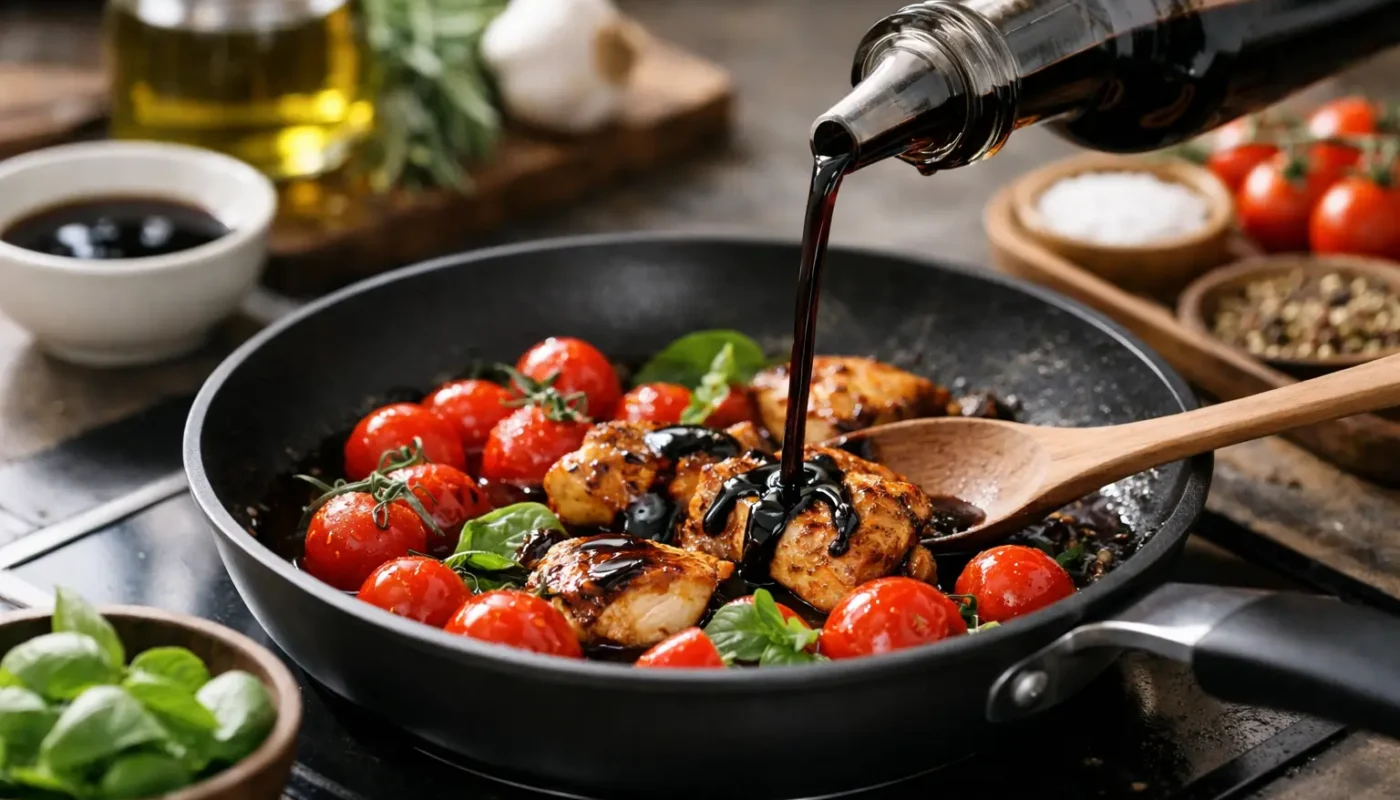
Yes, but use a light hand. When balsamic hits a hot skillet, it can deglaze the flavorful browned bits left by chicken, pork, mushrooms, or onions. Add a small splash after the main ingredient has cooked, then stir for a minute or two with stock, butter, olive oil, or a little honey if desired. The result is a quick pan sauce with welcome tang and body.
Avoid letting a sugary balsamic sit alone in a dry, scorching-hot pan. It can burn quickly, especially if it is already thick or flavored. If the vinegar begins to smell sharp, bitter, or like scorched sugar, pull the pan off the heat and add another liquid. Medium heat gives you far more control than high heat.
Balsamic is particularly good with ingredients that benefit from contrast. Rich cuts of pork, duck, salmon, and beef gain lift from its acidity. Earthy vegetables such as mushrooms, beets, Brussels sprouts, carrots, and lentils take on a fuller, rounder flavor. Even a simple onion sauté becomes more compelling with a teaspoon of balsamic stirred in just before serving.
When to Add Balsamic During Cooking
The best timing depends on the dish and the style of balsamic in your pantry.
Add it early for savory depth
In braises, soups, stews, and tomato sauces, a modest amount of balsamic can go in early enough to mellow and blend into the dish. It will not taste distinctly like vinegar after an hour of simmering. Instead, it lends a subtle sweetness and a layered, almost slow-cooked quality.
This works especially well when a recipe tastes flat but does not need more salt. A teaspoon of balsamic can provide dimension without making the dish noticeably acidic. Start small. You can always add more at the end, while too much can push a sauce toward sweet and tangy.
Add it late for brightness and aroma
For sautéed greens, roasted vegetables, grain bowls, pasta, grilled meats, and seafood, finish with balsamic after the heat is off or in the last minute of cooking. This preserves more of its fresh character and gives the finished dish a polished, restaurant-worthy edge.
A late drizzle also makes sense when you are working with a special balsamic. Its flavor should be tasted, not buried. Pair a bright white balsamic with shrimp, chicken, cucumbers, or summer fruit. Use a rich dark balsamic on roasted root vegetables, steak, aged cheese, or vanilla ice cream.
Roasting With Balsamic: The Sweet Spot
Roasting is one of the easiest ways to cook with balsamic, though timing matters here, too. Toss vegetables in extra virgin olive oil, salt, and spices before they go into the oven. Add balsamic during the final 10 to 15 minutes, or drizzle it on after roasting, so its sugars do not burn before the vegetables are tender.
Brussels sprouts are a fine example. Roast them until their edges are crisp and their centers are tender, then toss with a dark balsamic and a little fresh olive oil. The vinegar catches in the browned leaves and balances their natural bitterness. A touch of maple balsamic can be wonderful here, but it needs even more attention because of its sweetness.
For chicken thighs or pork tenderloin, balsamic can be part of a glaze. Brush it on near the end, turning the meat once or twice so the glaze clings without blackening. If you are cooking over direct flame, wait until the final minutes. Sugar and fire can become bitter companions in a hurry.
How to Make a Balsamic Reduction
A balsamic reduction is simply balsamic vinegar simmered until it becomes thicker and more concentrated. It is useful when you want an elegant drizzle rather than a thin, sharp splash of vinegar.
Pour balsamic into a small nonreactive saucepan and bring it to a gentle simmer over medium-low heat. Let it reduce slowly, stirring occasionally, until it coats the back of a spoon. It will continue to thicken as it cools, so remove it from the heat while it is still a bit looser than you want.
The amount of reduction varies by vinegar. A thicker, sweeter balsamic will reduce faster than a lighter, more acidic one. There is no need to add sugar to a well-made balsamic unless you are deliberately creating a sweeter dessert sauce. Taste as you go. A good reduction should retain enough acidity to keep the finish lively.
Drizzle the cooled reduction over caprese-style salads, grilled peaches, seared scallops, roasted cauliflower, or a cheese board. It also pairs beautifully with a fruity extra virgin olive oil, where the oil brings peppery freshness and the balsamic supplies sweet-tart depth.
Cooking With Flavored Balsamics
Flavored balsamics make everyday cooking feel more creative, but they deserve the same attention to heat. Fruit-forward varieties such as raspberry, pomegranate, blueberry, or black cherry are excellent in sauces for duck, pork, and roasted fruit. They are usually most expressive when stirred in near the end.
Herbal or savory styles can play a different role. A garlic, fig, or black truffle balsamic may bring welcome complexity to mushrooms, risotto, steak, or a warm farro salad. White balsamics, often lighter in color and fruitier in profile, are especially useful when you want acidity without darkening a cream sauce, a chicken dish, or pale vegetables.
When pairing flavored balsamic with heat, keep the rest of the recipe simple. Let the vinegar be the accent rather than competing with several sweet sauces, strong spices, and heavy marinades at once. Quality ingredients taste clearer when each has room to speak.
A Few Common Mistakes to Avoid
The most common mistake is treating balsamic like a neutral cooking wine. It is more concentrated and often sweeter, so a quarter cup can be overpowering where a tablespoon would have been perfect. Taste before adding more.
Another is using a prized, complex balsamic in a long simmer where its finest details disappear. Save your most distinctive bottle for finishing, vinaigrettes, cheese pairings, and short pan sauces. For long cooking, choose a balsamic you enjoy but do not mind blending into the background.
Finally, do not forget salt and fat. Balsamic tastes more integrated when it has something to balance it. A finishing pinch of flaky salt, a spoonful of pan juices, or a generous pour of fresh extra virgin olive oil can transform a sharp drizzle into a complete bite.
The best way to learn how balsamic behaves in your kitchen is to taste it at each stage: straight from the bottle, warmed gently, reduced, and drizzled over the finished dish. One bottle can offer several expressions, and each one is an invitation to cook with more confidence and a little more pleasure.
