Ultra Premium Olive Oil
Olive Oil Smoke Point Guide for Better Cooking
Jul
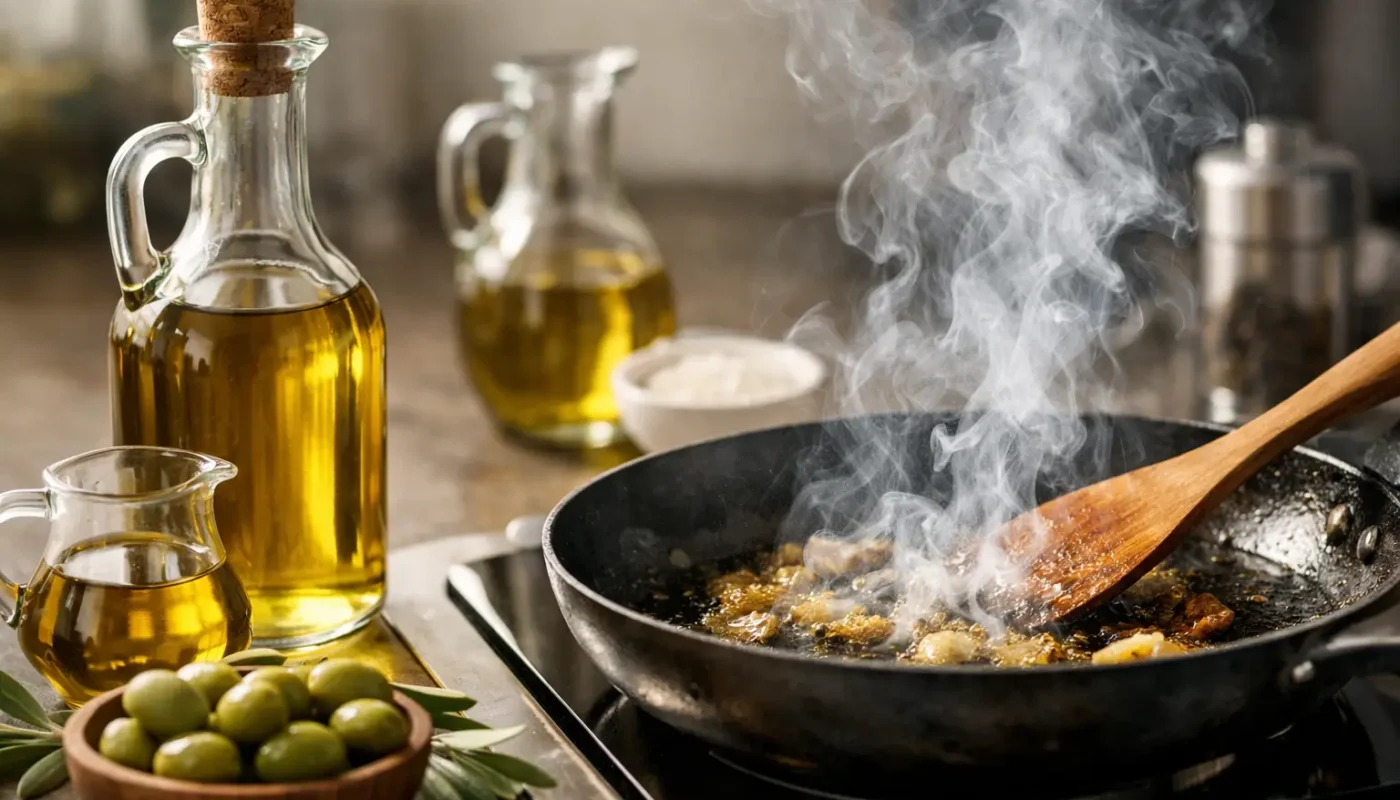
A wisp of smoke rising from a skillet can make even a confident home cook reach for another bottle. But the right response is not always to abandon olive oil. This olive oil smoke point guide explains what that smoke means, how different olive oils behave under heat, and how to choose an oil that lets beautiful ingredients taste like themselves.
For most everyday cooking, fresh extra virgin olive oil is not merely suitable. It is a flavorful, dependable choice. The key is matching the oil, the pan, and the cooking method rather than treating every olive oil as though it has one fixed temperature limit.
What a Smoke Point Actually Tells You
An oil’s smoke point is the temperature at which it begins to produce visible smoke. At that point, the oil is breaking down more quickly, and its flavor can turn sharp or burnt. Let it continue heating, and the pan may develop residue while your food picks up an unpleasant bitterness.
Smoke point is useful, but it is not a complete scorecard for cooking performance. Oxidative stability matters, too. That is an oil’s ability to resist degradation while exposed to heat, air, and time. Fresh extra virgin olive oil contains naturally occurring antioxidants, including polyphenols, that can support its stability in cooking. Its monounsaturated fat profile also makes it a strong choice for many heated applications.
In other words, a bottle with a higher published smoke point is not automatically the better oil for every recipe. Freshness, quality, and the temperature you actually use all matter.
Olive Oil Smoke Point Guide by Type
Published smoke-point ranges vary because olive oil is an agricultural product, not a laboratory-made commodity. Variety, harvest conditions, age, processing, and free fatty acid levels can all affect the result. Still, these practical ranges are helpful for the home kitchen.
Extra virgin olive oil
A fresh, quality extra virgin olive oil commonly falls around 350 to 410°F. That makes it well suited to sautéing, pan-searing at moderate heat, roasting, baking, grilling, and many shallow-frying jobs.
Extra virgin olive oil is unrefined and made by mechanical extraction. It retains the aroma and character of the fruit, from buttery and mild to grassy, peppery, and herbaceous. Those qualities are the reason to use it when the oil will be part of the finished flavor, such as roasted vegetables, golden chicken cutlets, tomato sauces, or a skillet of garlic and greens.
A peppery, high-polyphenol EVOO may feel especially lively at the back of the throat when tasted straight. Heat softens some of that edge and can turn it into a welcome savory note in cooking. A delicate EVOO, on the other hand, may be the better choice for eggs, white fish, tender greens, or a cake where you want a softer fruitiness.
Refined olive oil and light olive oil
Refined olive oil generally has a higher smoke point, often in the neighborhood of 390 to 470°F. Bottles labeled “light olive oil” usually refer to a lighter flavor and color, not fewer calories. They are typically refined and neutral in character.
This style can be practical for high-heat cooking when you want olive oil’s useful fat profile without a pronounced olive flavor. Think crisp-edged potatoes, high-heat stir-frying, or a recipe where a clean, neutral oil is preferred. The trade-off is flavor and naturally occurring olive compounds: refined oils are less expressive than extra virgin olive oil.
Fused and infused olive oils
Fused oils are made by crushing fresh produce, such as lemons or chiles, together with olives. Infused oils are flavored after the oil has been produced. Both can bring remarkable ease to a dish, but their heat tolerance depends on the base oil and the specific product.
Use them confidently for moderate sautéing, roasting, and finishing unless the producer provides a different recommendation. For very high heat, choose a fresh plain EVOO or refined olive oil instead. If an oil contains visible herbs, spices, or other particles, keep the heat lower because those solids can scorch before the oil reaches its own smoke point.
Why Freshness Changes the Equation
A bottle of olive oil does not improve with age. Exposure to oxygen, light, and heat gradually dulls its flavor and reduces its resistance to cooking stress. An old oil can smoke sooner than a fresh one, even if both began as the same style.
Look for a harvest date when available, and buy an amount you can enjoy while it still tastes lively. Store olive oil tightly sealed in a cool, dark cabinet, away from the stove and direct sunlight. A clear decorative bottle may look lovely on the counter, but it offers little protection from light.
Taste is also a useful clue. Fresh extra virgin olive oil should smell and taste clean. Fruitiness can range from green banana and fresh-cut grass to ripe almond and tomato leaf. Pleasant bitterness and pepperiness are often signs of fresh olive character, especially in more robust oils. Waxy, stale-nut, crayon-like, or musty notes suggest the oil is past its best.
Match the Heat to the Job
Most home cooking does not require the extreme temperatures people imagine. Sautéing onions, browning mushrooms, cooking pancakes, and roasting vegetables usually happen comfortably within extra virgin olive oil’s working range. A 425°F oven does not mean the oil itself immediately reaches 425°F, especially when it is coating food that contains water.
For a weeknight sheet pan of squash, broccoli, or potatoes, toss the vegetables with EVOO, salt, and your preferred seasonings. The oil helps conduct heat, encourages browning, and carries flavor into every crevice. A citrus fused olive oil can be especially good with carrots or salmon, while a garlic-infused oil gives simple roasted cauliflower a savory head start.
For stovetop searing, preheat the pan first, then add enough oil to create a thin, shimmering layer. Add the food before the oil smokes. If smoke appears, remove the pan from the burner briefly and lower the heat. Smoke can also come from leftover bits of food or residue in the pan, so do not assume the oil alone is the culprit.
Deep-frying is where temperature control becomes more consequential. If you use olive oil, maintain the oil around 350 to 375°F and avoid overheating it between batches. A fresh refined olive oil is often the more forgiving choice for repeated high-heat frying, while a fresh EVOO can work well for shallow frying and occasional batches. Do not use an oil that has become dark, thick, foamy, or acrid, and do not keep reusing it indefinitely.
Flavor Matters as Much as the Number
The most satisfying olive oil choice begins with the dish. A robust, peppery EVOO brings confidence to steak, beans, lentils, grilled vegetables, and rustic tomato sauces. A medium-fruitiness oil is wonderfully versatile for roasting, sautéing, vinaigrettes, and baking. A mild, creamy oil suits delicate seafood, mayonnaise, cakes, and dishes where subtlety matters.
Consider the final moment, too. Heat can build flavor, but a finishing drizzle restores aroma. Roast chicken or vegetables in an EVOO that suits the cooking method, then add a small pour of a fresh, fragrant oil at the table. That final gloss delivers the grassy, buttery, or peppery notes that prolonged heat may soften.
At Weyira Olive Oil & Vinegar, we encourage tasting oils side by side because labels can only tell part of the story. Once you recognize whether you enjoy a bold peppery finish or a gentle ripe-fruit profile, choosing an oil for the skillet becomes far more intuitive.
A Few Common Missteps to Avoid
Do not wait for olive oil to billow before adding food. Shimmering is the signal you want; heavy smoke is a sign to reduce the heat. Avoid heating an empty pan with oil for a long time, particularly in cast iron or carbon steel, which can retain intense heat.
Also, do not reserve extra virgin olive oil only for cold dishes out of fear. That habit leaves a great deal of flavor and versatility on the table. Use a fresh EVOO for the broad middle of cooking – sautéing, roasting, baking, sauces, and shallow frying – then reach for refined olive oil when you truly need a more neutral, higher-heat option.
The best bottle for your kitchen is the one that tastes fresh, fits the recipe, and is used generously enough to make the meal memorable. Let the pan shimmer, not smoke, and let a final taste guide your next pour.
