
Ultra Premium Olive Oil
Best Oil for Grilled Seafood at Every Heat
Sep
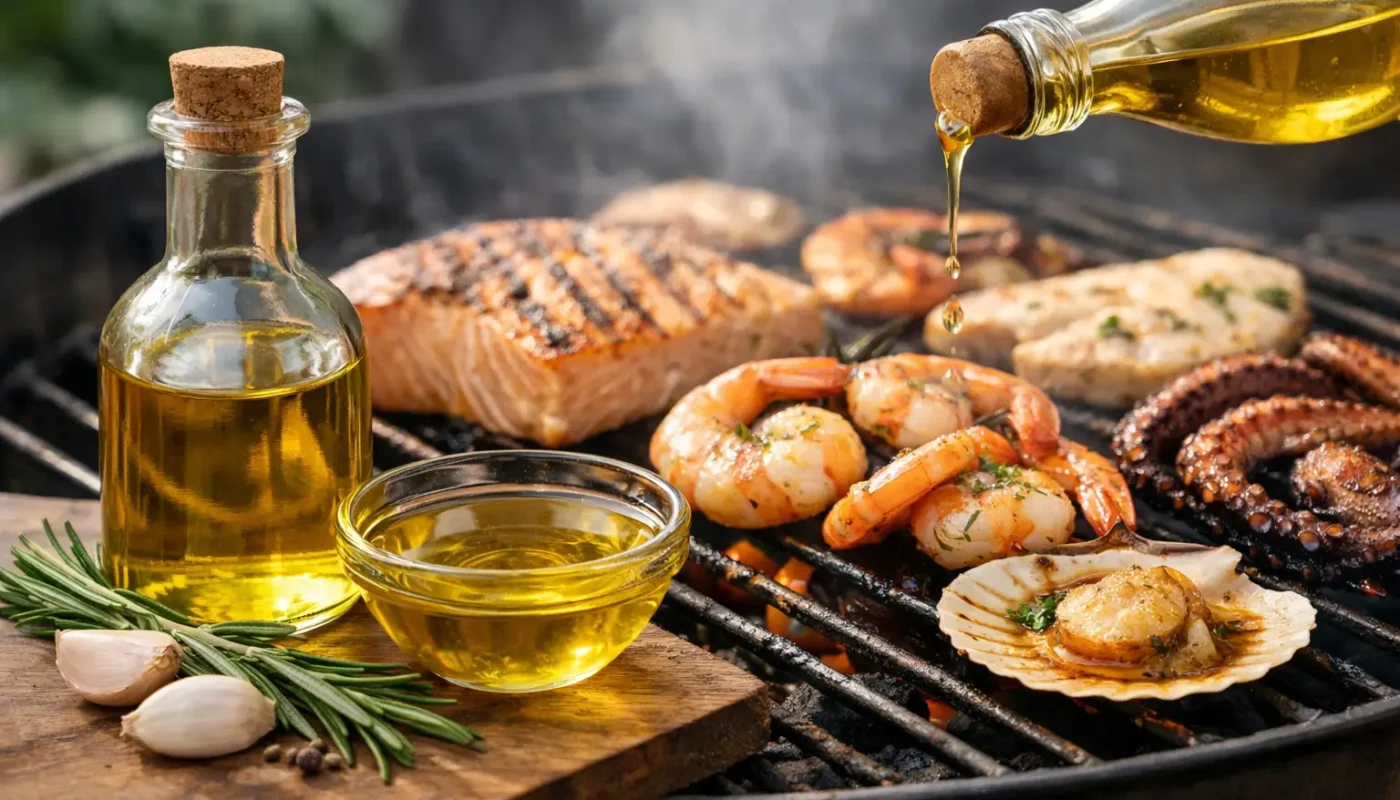
A clean grill, properly dried seafood, and a thin coat of the right oil can be the difference between beautifully marked fish and a fillet left behind on the grates. The best oil for grilled seafood depends on what you are grilling, how hot the fire is, and whether you want the oil to disappear into the background or bring its own character to the plate.
For most home cooks, extra virgin olive oil is the most flavorful and versatile starting point. Its fresh, grassy, buttery, or peppery notes can make simple grilled shrimp, salmon, or halibut taste more intentional before a sauce ever reaches the table. But high-heat grilling has a few exceptions, especially with very delicate seafood and aggressively hot grates.
What Makes an Oil Good for Grilled Seafood?
Choosing an oil is not simply about finding the highest smoke point. Smoke point matters, but so do flavor, freshness, and how the oil behaves on food. Seafood is naturally tender and quick-cooking, which means it benefits from a light coating rather than a heavy bath of oil.
The right oil should help prevent sticking, encourage browning, and complement the seafood without masking its sweetness or briny character. It should also fit the cooking method. A thick salmon fillet cooked over medium-high heat has different needs than soft sea scallops seared on a screaming-hot grill pan.
Freshness is especially important. Rancid or tired oil can make pristine fish taste flat, waxy, or unpleasantly bitter. A quality olive oil has a lively aroma and a clean finish. When you can taste the oil before cooking, you can make a much better decision about where it belongs on the grill.
Best Oil for Grilled Seafood: Extra Virgin Olive Oil
For grilled seafood cooked over moderate to medium-high heat, quality extra virgin olive oil is our first choice. It brings flavor as well as function, and seafood is one of the clearest ways to appreciate the difference between a fresh, well-made EVOO and a generic bottle that has lingered in a pantry.
Use a mild, buttery EVOO with delicate white fish, scallops, crab, or lobster. It adds richness without covering the seafood’s subtle flavor. A more robust, peppery extra virgin olive oil is excellent with salmon, tuna steaks, swordfish, mackerel, and charred octopus. Those richer fish can stand up to an oil with green, herbaceous personality.
Extra virgin olive oil is often misunderstood as unsuitable for heat. In practical home grilling, it performs very well when you manage the fire and avoid letting the oil smoke for long periods. The key is to coat the seafood, not flood the grill grates. Seafood cooks quickly, so the oil has little time to break down when the grill is properly preheated and the food is turned with care.
For a clean, bright finish, brush fish with EVOO just before grilling, then add another small drizzle after it comes off the heat. That final touch preserves the oil’s fresh aroma and gives the dish a tasting-gallery quality you can notice immediately.
When a Refined Olive Oil Is the Better Choice
If you are cooking directly over a very hot fire or using a cast-iron grill pan at high heat, refined olive oil, sometimes labeled light olive oil, is a practical option. It has a more neutral flavor and a higher smoke point than extra virgin olive oil.
This is useful when your goal is a hard sear on tuna, scallops, or skin-on fish. You can cook with refined olive oil, then finish with a premium EVOO once the seafood is plated. It is a simple two-oil approach that gives you heat tolerance and fresh olive flavor.
Other Oils That Work Well on the Grill
Avocado oil is a strong choice for high-heat seafood grilling. Its mild flavor lets the fish remain the center of attention, and its high smoke point makes it forgiving when the grill runs hotter than expected. Choose it for blackened shrimp, tuna steaks, or firm fish cooked over direct heat.
Grapeseed oil is also mild and commonly used for high-heat cooking, though it does not offer the flavor or naturally occurring olive compounds that make extra virgin olive oil so appealing. It works best when you are relying on a bold rub, spice blend, or finishing sauce and do not want the oil to add a distinct note.
Sesame oil deserves a more limited role. Toasted sesame oil is usually better as a finishing ingredient than a grilling oil because its flavor is powerful and its smoke point is lower. A few drops over grilled shrimp with ginger, lime, and scallions can be wonderful. Brushing it on before grilling, however, can lead to bitterness and overpower the seafood.
Butter is not an oil, but it belongs in the conversation. Butter burns quickly over direct heat, so save it for basting seafood after it has been moved to a cooler area of the grill or for spooning over grilled lobster, shrimp, or fish at the table. A little olive oil blended with melted butter can add flavor while making the mixture more manageable.
Match the Oil to the Seafood
Delicate fish such as flounder, sole, cod, and tilapia need a gentle hand. Choose mild extra virgin olive oil or avocado oil, apply a thin layer, and consider using a grill basket, cedar plank, or a piece of well-oiled foil. The goal is to protect tender flesh, not force dramatic grill marks.
Shrimp, scallops, and lobster are naturally sweet and pair beautifully with a fresh, fruity EVOO. Lemon, garlic, parsley, and a white balsamic glaze can take that combination in a bright, elegant direction. For scallops, dry them exceptionally well before oiling so they can caramelize rather than steam.
Salmon welcomes more assertive flavors. A medium or robust extra virgin olive oil stands up to its richness, especially alongside herbs, Dijon, citrus, or a dark balsamic reduction. Leave the skin on when possible, oil it lightly, and begin skin-side down. It protects the flesh and makes turning easier.
Tuna, swordfish, mahi-mahi, and halibut are firm enough for direct grilling. Use EVOO over medium-high heat for a flavor-forward result, or avocado oil if you are pursuing a fast, intense sear. Because these fish are hearty, they also pair well with chili-infused olive oil or a finishing drizzle of garlic oil after cooking.
Octopus and squid benefit from a little more oil than lean fish because their surfaces can dry out quickly. Olive oil, lemon, oregano, and a pinch of smoked salt create a classic, satisfying combination. Grill until lightly charred, not until tough.
How to Oil Seafood Without Causing Flare-Ups
The common mistake is brushing oil onto blazing grill grates until flames leap up. Oil the seafood instead, using only enough to lightly coat the surface. For skin-on fish, oil both the fish and a clean, hot grate just before the fillet goes down, but keep the application restrained.
Pat seafood dry first. Moisture is the enemy of browning and one of the biggest reasons fish sticks. Season after oiling with salt, pepper, and any dry spices. If using a sugary glaze or balsamic reduction, wait until the final minutes of cooking. Sugar can scorch quickly over open flame.
Give fish time to release naturally. If it resists when you try to turn it, it probably needs another minute. A thin, flexible fish spatula is worth having for fragile fillets, while skewers or a grill basket make shrimp and small pieces far easier to manage.
Flavorful Olive Oil Pairings for the Grill
Plain EVOO is never a compromise, but infused and fused olive oils can make a weeknight grill feel like a special occasion. Lemon olive oil is a natural match for shrimp, scallops, and flaky white fish. Garlic olive oil brings savory depth to lobster tails and grilled clams. Basil olive oil is lovely with swordfish, tomatoes, and a finishing splash of white balsamic vinegar.
For salmon, try a peppery EVOO with a touch of citrus and fresh dill. For tuna, a citrus-forward olive oil with cracked coriander and sesame makes a vibrant contrast. Weyira Olive Oil & Vinegar’s tasting-gallery approach is especially helpful here: taste the oil first, then choose a seafood pairing that lets its character show.
The best grilled seafood does not need to be complicated. Start with fresh fish, a clean grill, and an oil you would be happy to taste from a spoon. Let the heat do its work, then finish with a final drizzle that makes every bite taste a little more alive.
