Ultra Premium Olive Oil
How the Balsamic Vinegar Aging Process Works
Sep
A spoonful of well-aged balsamic should never taste simply sour. It should open with a bright, grape-driven tang, then settle into a gentle sweetness with notes that may suggest dried cherry, fig, wood, or caramel. That balance is the reward of the balsamic vinegar aging process – and it is also why two bottles labeled “balsamic” can taste dramatically different.
For home cooks who enjoy building a better pantry, aging is one of the most useful clues to flavor, texture, and how a balsamic will perform in a recipe. But the number on a label does not always tell the complete story. The starting ingredient, production method, barrel time, and use of cooked grape must all matter.
What Starts the Balsamic Vinegar Aging Process
True traditional balsamic begins with grape must, the freshly pressed juice, skins, seeds, and pulp of grapes. The must is slowly cooked down in open vessels, concentrating its natural sugars and deepening its flavor. This is a meaningful distinction: traditional balsamic gets much of its lush sweetness from grapes, not from a last-minute addition of sweetener.
Once reduced, the cooked must begins a long transformation. Yeasts convert some sugars into alcohol. Acetic bacteria then convert alcohol into acetic acid, producing vinegar’s familiar brightness. Meanwhile, evaporation and contact with wood steadily concentrate the liquid and add layers of aroma.
The result is not meant to be sharply acidic in the way a basic wine vinegar can be. A beautiful balsamic carries acidity, certainly, but it is rounded by fruit, sweetness, and time. Think of it as seasoning with dimension: a few drops can make strawberries taste more vivid, give roasted vegetables a glossy finish, or bring a steak salad into focus.
Time, Barrels, and the Flavor of Wood
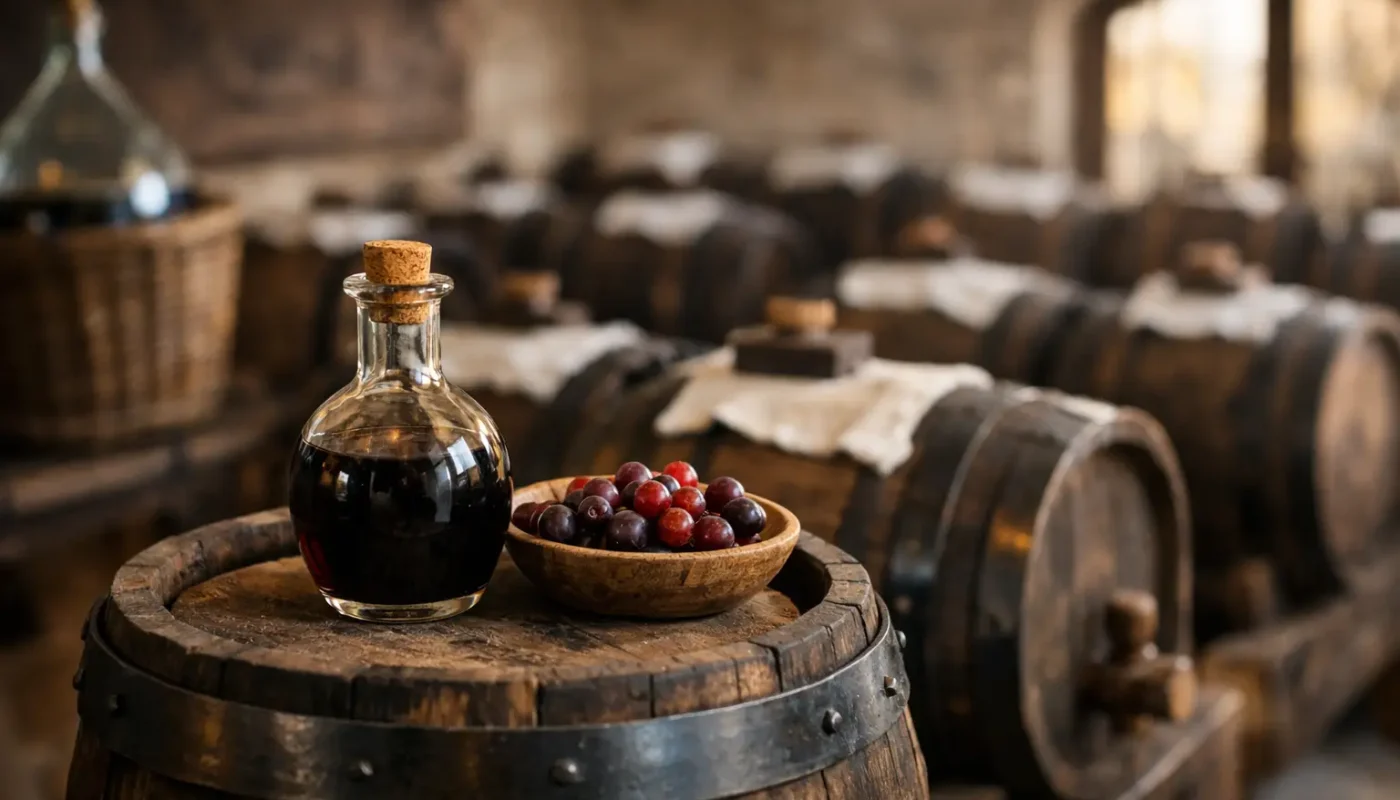
The classic balsamic vinegar aging process takes place in a series of wooden casks, often called a battery. The barrels are progressively smaller, allowing for controlled evaporation as the balsamic matures. Each year, a portion is drawn from the smallest barrel for bottling, then replenished with liquid from the next barrel, and so on back through the sequence.
This gradual movement means that a finished traditional balsamic contains the character of many previous vintages. It is not identical to a single-barrel whiskey with one fixed age statement. Instead, it is an evolving blend shaped by generations of liquid and careful topping up.
Wood matters, but it should not overwhelm the grapes. Producers may use casks made from oak, cherry, chestnut, juniper, ash, mulberry, or acacia. Oak can lend structure and gentle spice. Cherry may bring a fruitier impression, while chestnut can contribute tannic depth. As the balsamic travels through different barrels, it picks up subtle accents while becoming denser and more polished.
Evaporation is part of the magic and part of the expense. Over many years, water slowly escapes through the wood, leaving less liquid behind. What remains becomes thicker, darker, and more concentrated. A small amount of truly old balsamic represents a substantial amount of grape must, barrel space, patience, and skilled stewardship.
Traditional, IGP, and Everyday Balsamic: Why the Labels Differ
Not every fine balsamic follows the same rules, and that is not automatically a sign of lower quality. The best choice depends on what you want it to do in your kitchen.
Traditional Balsamic Vinegar of Modena is the most tightly regulated style. It is made from cooked grape must and aged for a minimum period in wood, with much longer aging for more complex expressions. It is typically sold in small bottles because it is concentrated and designed for finishing rather than filling a marinade bowl. Use it where every drop can be noticed: over Parmigiano Reggiano, ripe peaches, grilled mushrooms, vanilla gelato, or a simple plate of sliced tomatoes.
Balsamic Vinegar of Modena IGP is a broader category that can be excellent for everyday cooking. It generally combines wine vinegar with grape must and follows regional production standards. Its flavor may be brighter and more fluid than traditional balsamic, making it especially useful for vinaigrettes, pan sauces, braises, and roasted vegetables.
Then there are balsamic condiments and specialty balsamics. Many premium versions are made from concentrated grape must and aged using thoughtful barrel programs to achieve a rich, balanced style. They can offer the syrupy body and naturally sweet character home cooks love, often at a more practical price and in bottle sizes suited to generous use. A well-chosen aged balsamic condiment is a pleasure to taste, drizzle, and share.
The key is to buy with clarity rather than assuming every dark, thick bottle has spent decades in a barrel. Read the product description and ingredients. Look for grape must or concentrated grape must, wine vinegar where appropriate for the style, and a producer willing to explain how its balsamic is made. If an ingredient list leans heavily on caramel color, thickeners, or added sweeteners, the flavor may be trying to imitate what patient aging naturally creates.
What Aging Changes in Your Glass
Age changes more than thickness. Young balsamic tends to lead with freshness and acidity. It can be lively, clean, and exactly right for a vinaigrette with extra virgin olive oil, Dijon, and a pinch of salt. Its thinner body helps it disperse evenly through greens and grain salads.
With more aging and concentration, the balsamic becomes fuller and softer on the palate. The sharp edges of acidity are less pronounced, while dried-fruit notes, grape sweetness, and wood-derived complexity come forward. This is the style that makes a striking final drizzle over roasted Brussels sprouts, pork tenderloin, or a board of aged cheese.
Older does not always mean better for every use. Pouring a precious, intensely aged balsamic into a long-cooked sauce can mute its most delicate aromas. Conversely, a bright, younger balsamic may disappear when paired with rich duck, blue cheese, or deeply caramelized onions. Match the vinegar’s intensity to the dish, just as you would choose a fresh peppery olive oil or a buttery, mild one.
How to Taste an Aged Balsamic
A small tasting can tell you far more than a label alone. Pour a teaspoon into a spoon or small glass and let it warm slightly. Notice the aroma first. You may find cooked grape, raisin, plum, fig, vanilla, cocoa, or a faint woody note.
Then taste slowly. A quality aged balsamic should move across the palate in stages: fruit first, acidity next, then a lingering sweet-and-tangy finish. It should feel balanced rather than sticky, aggressively sour, or sugary. Thickness can be appealing, but viscosity by itself is not proof of age. Balance is the better measure.
For a simple tasting-gallery pairing at home, try a rich dark balsamic with a fresh, fruity extra virgin olive oil and a piece of crusty bread. The oil brings green, peppery lift; the balsamic adds dark fruit and acidity. Together, they show why these two pantry staples belong on the table, not just in the cupboard.
Storing Balsamic Without Losing Its Character
Balsamic vinegar is more stable than olive oil because its acidity helps preserve it, but it still deserves sensible storage. Keep the bottle tightly capped in a cool, dark cupboard away from heat and direct sunlight. A stove-side shelf may be convenient, yet repeated heat can gradually flatten aroma and encourage unnecessary flavor change.
Refrigeration is not required. If you notice sediment in an unfiltered or artisan bottle, do not assume something is wrong. Natural sediment can occur over time and is usually harmless. Shake gently only if the producer recommends it; otherwise, pour carefully and enjoy.
A good bottle should invite use rather than sit untouched for a special occasion that never arrives. Start with a restrained drizzle over foods you already love, then taste the difference. One aged balsamic can turn a weeknight chicken dish, a bowl of berries, or a wedge of good cheese into the kind of meal people remember.
