
Ultra Premium Olive Oil
How to Store Olive Oil for Peak Freshness
Sep
A beautiful extra virgin olive oil can smell like cut grass, green tomato, fresh herbs, or ripe fruit when it is newly opened. Leave that same bottle beside a warm stove or in a sunlit window, and those lively notes can fade far sooner than they should. Learning how to store olive oil is one of the simplest ways to protect the flavor, freshness, and naturally occurring antioxidants that made you choose a premium bottle in the first place.
How to store olive oil: the three things to avoid
Olive oil has three main enemies: heat, light, and oxygen. Each one speeds oxidation, the natural process that gradually dulls an oil’s aroma and flavor. While every oil will eventually age, proper storage gives a fresh, well-made oil its best chance to shine through the last pour.
Heat is especially hard on olive oil. A cabinet directly above the oven, a shelf next to the range, or a countertop near a sunny window may seem convenient, but these spots expose the bottle to repeated temperature swings. Even if your kitchen feels comfortable, the area around cooking appliances can become surprisingly warm.
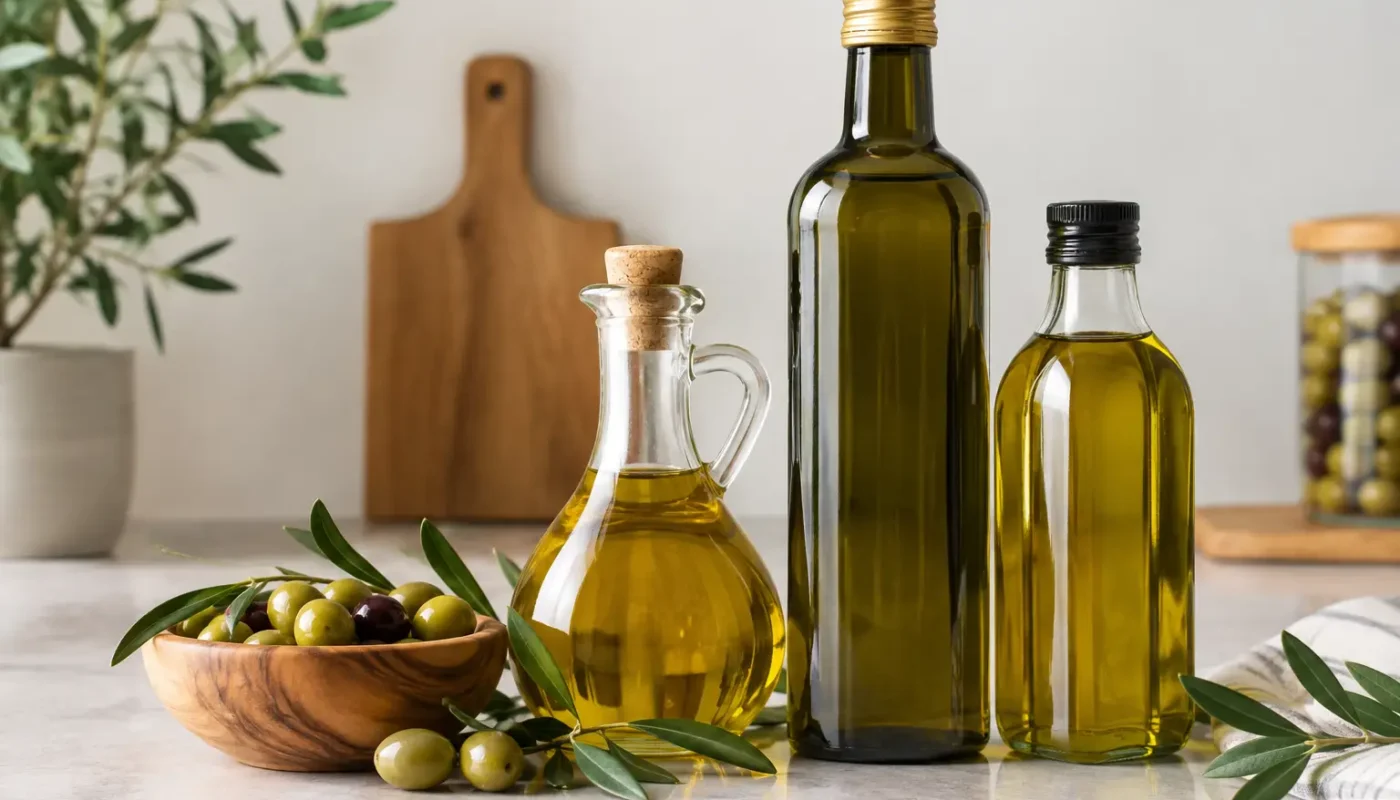
Light is the reason quality olive oil often comes in dark glass, tinted glass, or opaque tins. Clear bottles look lovely on display, but light can degrade oil more quickly. Oxygen enters every time the cap comes off and whenever a bottle is left partly full for weeks. That is why a tightly sealed bottle in a cool, dark place is the ideal everyday home for your oil.
Choose a cool, dark cabinet
For most homes, the best place to store olive oil is a dark pantry or interior kitchen cabinet that stays reasonably cool. Aim for a stable temperature around 57 to 70 degrees Fahrenheit when possible. You do not need a dedicated wine cellar to care for olive oil well. You simply want to keep it away from direct sunlight and sources of heat.
A lower cabinet across the kitchen from the stove is often a better choice than a cabinet near the cooktop. A pantry shelf works beautifully if it is not beside a furnace, radiator, or hot water pipe. If your kitchen gets afternoon sun, avoid leaving bottles on open counters, even in dark glass.
Temperature stability matters as much as chasing a perfect number. A slightly warmer but consistently dark cupboard is generally preferable to a spot that alternates between chilly and hot throughout the day. Treat olive oil more like a fresh pantry ingredient than a decorative countertop accessory.
Is the refrigerator a good idea?
For a large bottle you will use steadily over a few months, refrigeration is usually unnecessary. Chilled olive oil may become cloudy or partially solidify. This is harmless, and the oil will clear as it returns to room temperature, but it can make pouring inconvenient.
Refrigeration can be useful in a very warm home, during a hot summer, or when you have a special oil you will not use for an extended period. If you refrigerate it, keep the cap secure and allow time for the oil to warm gently before serving. Do not judge an oil’s quality by whether it clouds in the refrigerator. The old refrigerator test is not a reliable measure of purity or grade.
Keep the bottle sealed between pours
A cap, cork, or pour spout is not merely a finishing touch. It protects the oil from unnecessary air exposure. Replace the cap promptly after using the bottle, and avoid leaving a pour spout open all day while you cook.
If you use an oil dispenser, choose one with an opaque or dark body and a well-fitting closure. A clear glass cruet is best reserved for short-term use at the table, not for storing your entire supply. Fill it with only what you expect to use within a week or two, then refill from the original dark bottle or tin. This gives you the convenience of a pourer without sacrificing the protection of the original packaging.
Try not to pour oil back into its bottle after it has been on the table or near food. Crumbs, moisture, and kitchen residue can shorten its life. A clean, dry measuring spoon or cup is the better choice when you need a precise amount.
Buy the right size for your kitchen habits
The freshest olive oil is the oil you can enjoy while it is still vibrant. A large tin can be a smart value for a household that cooks with olive oil daily, roasts vegetables often, and reaches for it in marinades, dressings, and baking. For a smaller household or someone exploring a new varietal, a more modest bottle may be the wiser purchase.
There is no single right bottle size. It depends on how quickly you use it, how many people cook in your home, and whether it is your everyday oil or a finishing oil saved for special dishes. Once opened, make a habit of using extra virgin olive oil within a few months for its brightest flavor. It can remain safe beyond that window when stored properly, but its peppery finish, fruitiness, and aroma will gradually soften.
If you buy a larger container, decant a small working amount into a dark, airtight bottle and keep the remaining oil sealed in the pantry. This reduces the number of times you expose the main supply to air. Be sure the smaller bottle is completely clean and dry before filling it.
Read freshness dates with a cook’s eye
A best-by date is helpful, but it does not tell the entire story. When available, look for a harvest date. Olive oil is made from fruit, not from a shelf-stable seed, and its character is at its best when it is fresh. A recent harvest date and thoughtful storage are a better combination than an impressive-looking bottle that has spent too long in bright light.
Once you open a bottle, write the date on the label or keep a small note in your pantry. This is particularly helpful if you keep several oils on hand, such as a bold early-harvest extra virgin olive oil for grilled vegetables and a delicate oil for seafood or baking. You will know which bottle to enjoy first and which one is still waiting for its moment.
Pay attention to aroma as well. Fresh olive oil should smell clean and appealing, with notes that may be grassy, fruity, herbal, peppery, or pleasantly bitter depending on the variety. Oil that smells like crayons, old nuts, putty, or a stale pantry may be rancid. Rancid oil is not likely to make you sick in the way spoiled meat would, but it will not deliver the flavor experience you want from a carefully produced olive oil.
Store infused and fused oils with the same care
Flavored olive oils deserve the same protection from heat, light, and air. Whether your bottle is fused with whole citrus during milling or infused with herbs, garlic, chili, or other flavors, a cool dark cabinet and a tightly closed cap remain the standard.
Commercially prepared flavored oils are formulated and bottled for shelf storage, so follow the label if it gives specific guidance. Homemade garlic or herb oils are different. Because fresh ingredients can introduce moisture, they require food-safety precautions and should not be treated like a shelf-stable bottled oil. Make only small amounts, refrigerate promptly, and use them quickly.
Small habits that preserve every pour
A few kitchen habits make a noticeable difference over time:
- Keep bottles away from the stove, dishwasher vent, windowsill, and sunny countertop.
- Choose dark glass or tins, and store clear bottles inside a closed cabinet.
- Close the cap right after pouring rather than leaving the bottle open while you prep.
- Buy a size you can use while the oil still tastes bright and expressive.
- Use a clean, dry dispenser for short-term convenience, not as long-term storage.
Premium olive oil is made to be tasted, not saved indefinitely. Keep a fresh bottle tucked into a cool cabinet, reach for it generously, and let its flavor bring brightness to the meals you already love.
