
Ultra Premium Olive Oil
Olive Oil Sourcing and the Taste of Freshness
Aug
A bottle of olive oil can look beautiful on a shelf and still disappoint in the pan. The difference often begins long before bottling. Thoughtful olive oil sourcing determines whether an oil arrives with the lively, green flavor that makes grilled vegetables, warm bread, and simple salads feel special – or with the flat, tired taste many shoppers have come to expect from ordinary grocery-store oil.
For home cooks who care about what goes into the pantry, sourcing is more than a romantic story about sunlit groves. It is a practical measure of freshness, purity, flavor, and value. Knowing what happens between harvest and your kitchen makes it easier to choose an oil you will reach for every day.
Why Olive Oil Sourcing Matters
Extra virgin olive oil is made from fruit, not seeds. Like any fresh fruit product, its character changes with time, temperature, handling, and exposure to oxygen. Olives that are bruised, stored too long before milling, or processed under poor conditions can produce oil with defects that no elegant label can hide.
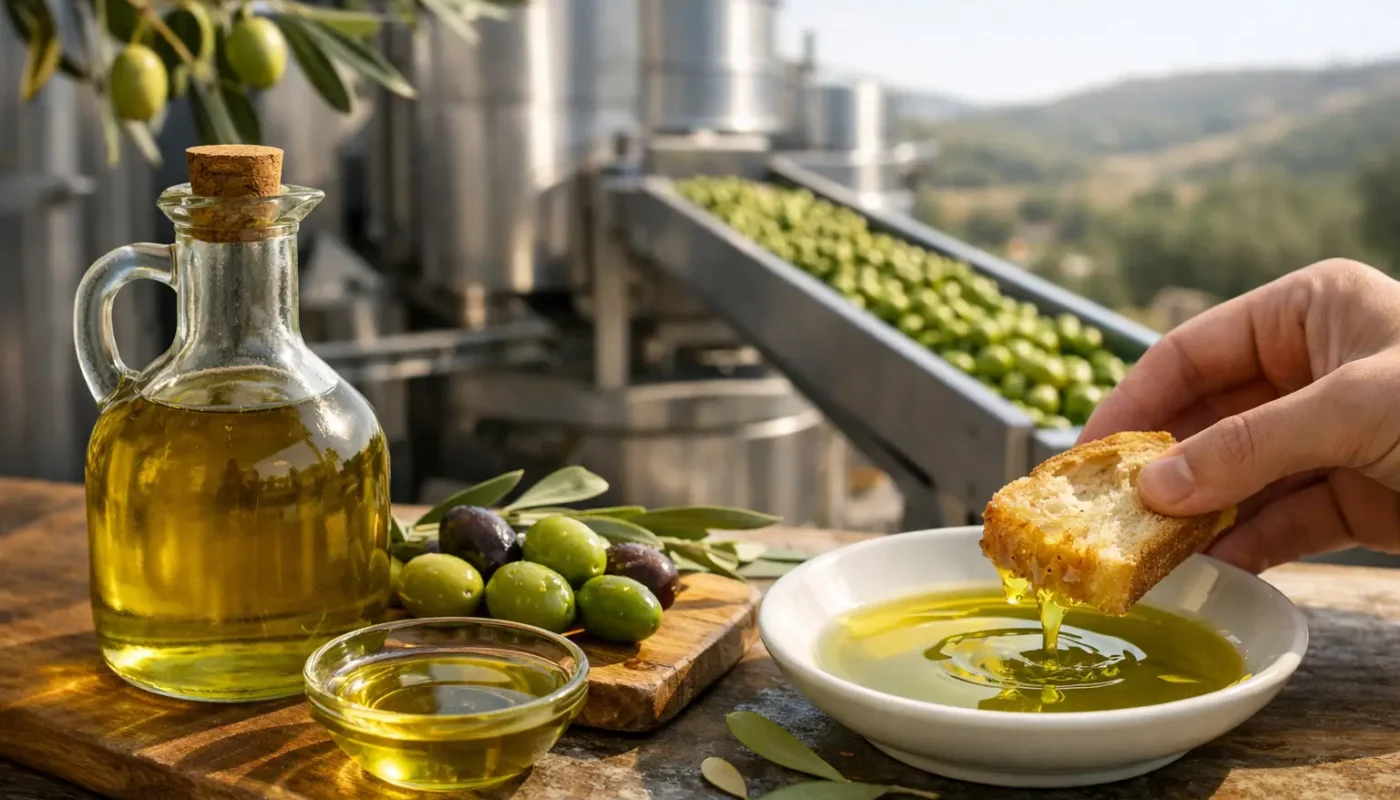
Excellent sourcing starts with growers and mills that treat olives as a perishable crop. The fruit should be harvested at the right maturity, transported quickly, and crushed promptly. From there, careful milling, filtration or settling, protected storage, and efficient shipping help preserve the aromatic compounds and natural antioxidants that give fresh EVOO its peppery finish and pleasing complexity.
That process is why a premium oil may smell like cut grass, tomato leaf, green almond, artichoke, ripe banana, or fresh herbs. Those aromas are not added flavorings. They are signs of a well-made oil expressing its variety, growing conditions, and harvest style.
What Responsible Olive Oil Sourcing Looks Like
A meaningful origin story includes more than the name of a country. Italy, California, Australia, Morocco, Peru, France, and Turkey all produce exceptional oils, but quality can vary widely within any region. The most useful sourcing details connect a bottle to a harvest, a cultivar, a mill, or a clearly defined producing area.
Harvest timing is part of the flavor
Olives harvested earlier in the season generally create greener, more assertive oils. They often have notes of herbs, leafy greens, pepper, and bitter almond. This bitterness is not a flaw when it is clean and balanced. It is frequently associated with beneficial phenolic compounds and can be wonderful with beans, bitter greens, roasted squash, or a hearty steak.
Later-harvest oils tend to be softer, rounder, and fruitier. Think buttery texture, ripe apple, tropical fruit, or a gentler peppery finish. These can be especially lovely for baking, seafood, delicate vegetables, and dishes where you want olive oil to support rather than lead.
Neither style is automatically better. The right choice depends on how you cook and what you enjoy tasting. A well-curated collection offers room for both a bold, early-harvest EVOO and a mild, silky oil.
Freshness should be traceable
A harvest date is one of the most helpful details on an olive oil bottle. A best-by date can offer some guidance, but it does not tell the whole story because different producers set their dates differently. Harvest information gives you a clearer sense of the oil’s age and helps you enjoy it while its flavor is at its best.
Olive oil is harvested seasonally, and the calendar shifts between hemispheres. Northern Hemisphere oils are generally harvested in the fall, while Southern Hemisphere oils are commonly harvested in the spring. A carefully sourced selection can use this rhythm to offer fresher oils at different points in the year rather than relying on old inventory simply because the bottle has not reached its printed expiration date.
Testing adds confidence
Taste is essential, but serious quality programs also rely on analysis. Extra virgin olive oil must meet chemical and sensory standards, and premium producers often pay close attention to measures such as free fatty acidity, peroxide values, and phenolic content. These numbers are not meant to turn dinner into a science experiment. They help verify that an oil has been handled well and retains the qualities associated with freshness.
A low acidity number alone does not guarantee a delicious oil, just as a high price does not guarantee careful production. The best buying decision combines transparent sourcing, current harvest information, sound storage, and your own palate.
Origin Is a Clue, Not a Shortcut
It is natural to gravitate toward famous olive-growing regions. A Tuscan oil, a California estate oil, or a Moroccan Picholine can offer a compelling sense of place. Yet country of origin by itself is not a quality grade. A fresh, expertly made oil from a lesser-known region may be far more exciting than an older bottle from a celebrated name.
Single-origin oils can be wonderful when you want to taste the personality of a place or variety. A Arbequina may bring sweet, delicate fruit; a Koroneiki may offer bright green notes and pepper; a Frantoio can be aromatic and herbaceous. Blends deserve equal respect, though. Skilled producers blend varieties to create balance, consistency, and a wider range of aromas, much like a winemaker builds a finished wine.
The trade-off is simple: a single-varietal or single-estate oil may offer a distinct tasting experience, while a blend may be designed for dependable everyday versatility. Both belong in a well-loved kitchen.
How to Read a Bottle Before You Buy
Start by looking for specific information rather than broad claims. The strongest labels typically identify the oil as extra virgin, provide a harvest date or season, and name an origin with real detail. Dark glass or a tin is also preferable to clear packaging because light speeds oxidation.
Then consider the purpose of the oil. If you want a finishing oil for tomato salad, soup, hummus, or bread, seek a fresh medium or robust EVOO with a noticeable aroma and peppery finish. For sautéing, roasting, and everyday vinaigrettes, a balanced medium oil is a versatile choice. For cakes, citrus desserts, and mayonnaise, a mild oil can add richness without overwhelming other ingredients.
Be cautious about judging oil by color. Green oil is not automatically better, and golden oil is not automatically old. Color can reflect cultivar and harvest maturity, which is why professional tasters use blue glasses that hide the oil’s appearance. Aroma, flavor, and finish tell a more useful story.
Storage Protects the Work Behind the Oil
Even the finest olive oil sourcing cannot overcome poor storage after purchase. Heat, light, and air are the enemies of freshness. Keep your bottle tightly capped in a cool, dark cupboard, away from the stove and direct sun. A decorative bottle beside the range may look inviting, but it is one of the fastest ways to dull an oil’s flavor.
Buy a size you can use within a reasonable time after opening. For a household that cooks often, a larger container may make sense, especially if you refill a smaller dark bottle for daily use. For a finishing oil reserved for special dishes, a smaller bottle helps ensure that every pour is still bright and aromatic.
Do not save a beautiful EVOO indefinitely for the perfect occasion. The best occasion is often a Tuesday night meal that needs a final drizzle over roasted carrots, pasta with garlic and greens, or a bowl of lentil soup.
Taste Before You Settle on a Favorite
Tasting turns sourcing details into something you can actually use. Pour a small amount into a glass, warm it gently in your hands, and take in the aroma. Sip a little, let it move across your mouth, then notice the bitterness and pepperiness that arrive at the end. A pleasant cough after tasting a fresh, robust oil can be part of the experience.
At Weyira, that discovery is part of the pleasure. Comparing a buttery, mild EVOO with a grassy, peppery one helps you find oils that suit your cooking style, while showing how dramatically a simple ingredient can change a dish. Pair a bright oil with a crisp white balsamic for an easy vinaigrette, or let a robust oil stand on its own with flaky salt and good bread.
The most rewarding bottle is not necessarily the rarest or the most expensive. It is the one whose freshness you can taste, whose origin you understand, and whose flavor makes you want to cook something worth sharing tonight.
