Ultra Premium Olive Oil
EVOO Trends Shaping the Modern American Pantry
Aug
A bottle of extra virgin olive oil is no longer just the default fat beside the stove. The most compelling EVOO trends are making home cooks look closer at harvest dates, olive varieties, growing regions, flavor intensity, and the small details that separate a lively oil from a tired one. That is good news for anyone who wants a pantry that tastes as considered as the meals coming out of it.
Premium EVOO is moving from a vague idea of “healthy olive oil” toward something much more enjoyable and specific: a fresh agricultural ingredient with a distinct personality. One bottle may bring soft butter, ripe almond, and a gentle finish. Another may be green, grassy, peppery, and built for grilled vegetables or a bowl of beans. Knowing what to look for makes that variety a pleasure rather than a complication.
EVOO Trends Start With Freshness
The biggest shift in olive oil is also the simplest: freshness is becoming part of the buying decision. Extra virgin olive oil is pressed from fruit, and like any fruit-based product, it does not improve indefinitely on a shelf. A harvest date tells a more useful story than a distant best-by date because it helps shoppers understand how recently the olives were picked and milled.
Fresh oil often has a clean aroma and a bright, energetic finish. Depending on the variety, it may taste of green banana, tomato leaf, artichoke, fresh herbs, apple, or nuts. A peppery tickle at the back of the throat can be a welcome sign of fresh oil rich in naturally occurring phenolic compounds, though it is not the only marker of quality. Delicate oils can be excellent too.
This trend also rewards shoppers who think seasonally. Northern Hemisphere oils are generally harvested in the fall, while Southern Hemisphere oils arrive following their own opposite growing cycle. That gives specialty retailers a useful way to offer fresh selections at different points of the year. Rather than waiting for one “olive oil season,” curious cooks can taste how a new harvest changes the pantry.
Origin Is Becoming a Flavor Conversation
For years, many shoppers treated country of origin as a shortcut for quality. Italy, Greece, Spain, California, Australia, Morocco, Peru, Turkey, and France all produce remarkable oils, but a country name alone cannot tell you what is in the bottle. Today’s better conversation includes region, cultivar, producer practices, milling, and sensory style.
An Italian oil may be robust and herbaceous, or it may be round and mild. California oils can be beautifully green and peppery, while a Moroccan oil may offer a different balance of fruit and bitterness. The point is not to crown one region as best. It is to choose an oil that fits the food in front of you.
Single-varietal EVOOs are gaining interest for the same reason single-origin coffee and wine varieties do: they make flavor easier to explore. An oil made from one olive cultivar can reveal a clear point of view. Blends deserve equal respect, however. A skilled producer can combine varieties to create balance, consistency, and an especially useful all-purpose oil. It depends on whether you want a particular flavor experience or a dependable house pour.
Taste Before You Reserve It for Special Occasions
One of the most welcome EVOO trends is the move away from saving good oil only for guests. A finishing drizzle over soup, eggs, roasted squash, hummus, grilled fish, or vanilla ice cream can transform an ordinary dish in seconds. That does not mean every recipe needs the most intense bottle in the cabinet.
Use a robust, peppery EVOO where its bite has room to shine: lentils, bitter greens, tomato salads, steak, pizza, and crusty bread all welcome it. A milder or more fruit-forward oil is often lovely in baking, mayonnaise, delicate seafood, and simple vinaigrettes. Keeping two styles on hand – one everyday medium oil and one vivid finishing oil – gives most home cooks more range than a single large bottle.
Flavor Pairing Is Expanding Beyond the Salad Bowl
Olive oil and balsamic vinegar remain a classic pairing, but the modern pantry is far more playful. Bright lemon fused olive oil can wake up roasted chicken or couscous. Garlic olive oil brings quick depth to vegetables and pasta. A ripe, fruity EVOO with a dark berry balsamic is a natural match for spinach salad, cheese boards, and summer fruit.
The key is to keep the base ingredient visible. Infused and fused oils are useful when they taste clean and true to their stated flavor, not when they overwhelm every dish. They are a shortcut, not a replacement for a well-made extra virgin olive oil. A small collection lets you cook according to mood while still returning to a pure EVOO for bread dipping, dressings, and finishing.
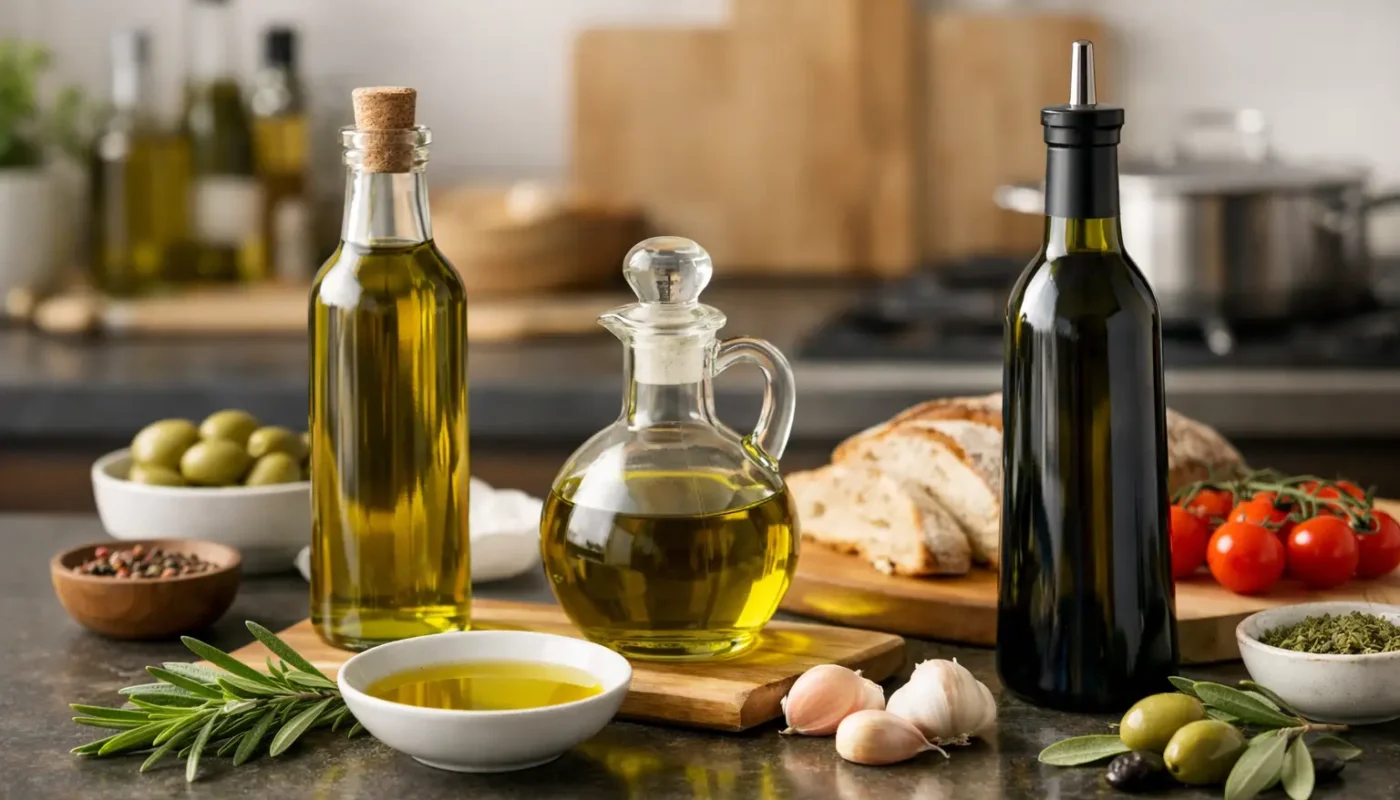
Entertaining is helping drive this trend. A tasting board with warm bread, a few oils, balsamics, flaky salt, and seasonal vegetables gives guests something to discuss before dinner reaches the table. It also makes a thoughtful gift for cooks who already own plenty of kitchen tools but enjoy discovering new flavors.
Wellness Claims Are Getting More Specific
EVOO’s connection to Mediterranean-style eating continues to attract wellness-minded shoppers. Extra virgin olive oil contains mostly monounsaturated fat and naturally occurring antioxidant compounds, and it is often chosen as an alternative to more heavily refined fats. Still, “healthy” should not become a reason to ignore flavor, freshness, or portion size.
The current conversation is more useful when it focuses on everyday habits: dressing vegetables generously enough to make them satisfying, building sauces around olive oil and herbs, or using it as a flavorful cooking fat. For shoppers interested in phenols, pungency and bitterness may be appealing clues, but laboratory-tested phenolic levels can vary by oil, harvest, storage, and time. A label or tasting note should guide the choice, not make medical promises.
Extra virgin olive oil is also more versatile over heat than old kitchen myths suggest. It works beautifully for sautéing, roasting, and many everyday stovetop tasks. Very high-heat cooking may call for another oil depending on the recipe and budget, especially when a delicate premium EVOO would lose the nuance you paid for. Use the oil that serves the dish, then save your most expressive bottle for the moment it can be tasted.
Better Storage Is Part of Better Buying
As shoppers become more selective, they are also buying more realistically. A large bottle can seem like a value, but not if it sits open for months near a hot stove. Light, heat, oxygen, and time are the enemies of fresh olive oil. Dark glass or opaque packaging helps, and a cool cupboard is kinder than a sunny counter.
Choose a size you can use steadily, close the cap promptly, and avoid pouring into a decorative clear bottle that will live in direct light. If you cook with olive oil every day for a family, a larger format may make sense. If you are building a tasting collection or using a vivid finishing oil, a smaller bottle is often the smarter choice.
That same practical mindset is changing gift giving. Premium pantry gifts now feel personal because they invite use, not storage. A balanced EVOO, a favorite balsamic, and a thoughtful salt or spice blend can become the ingredients for a new weeknight ritual.
At Weyira Olive Oil & Vinegar, that sense of discovery is the point: taste with attention, ask what the meal needs, and let a fresh bottle earn its place at the table. Start with one oil that makes you want another piece of bread, then see where the next pour takes dinner.
