
Ultra Premium Olive Oil
Olive Oil Versus Butter Baking Explained
Aug
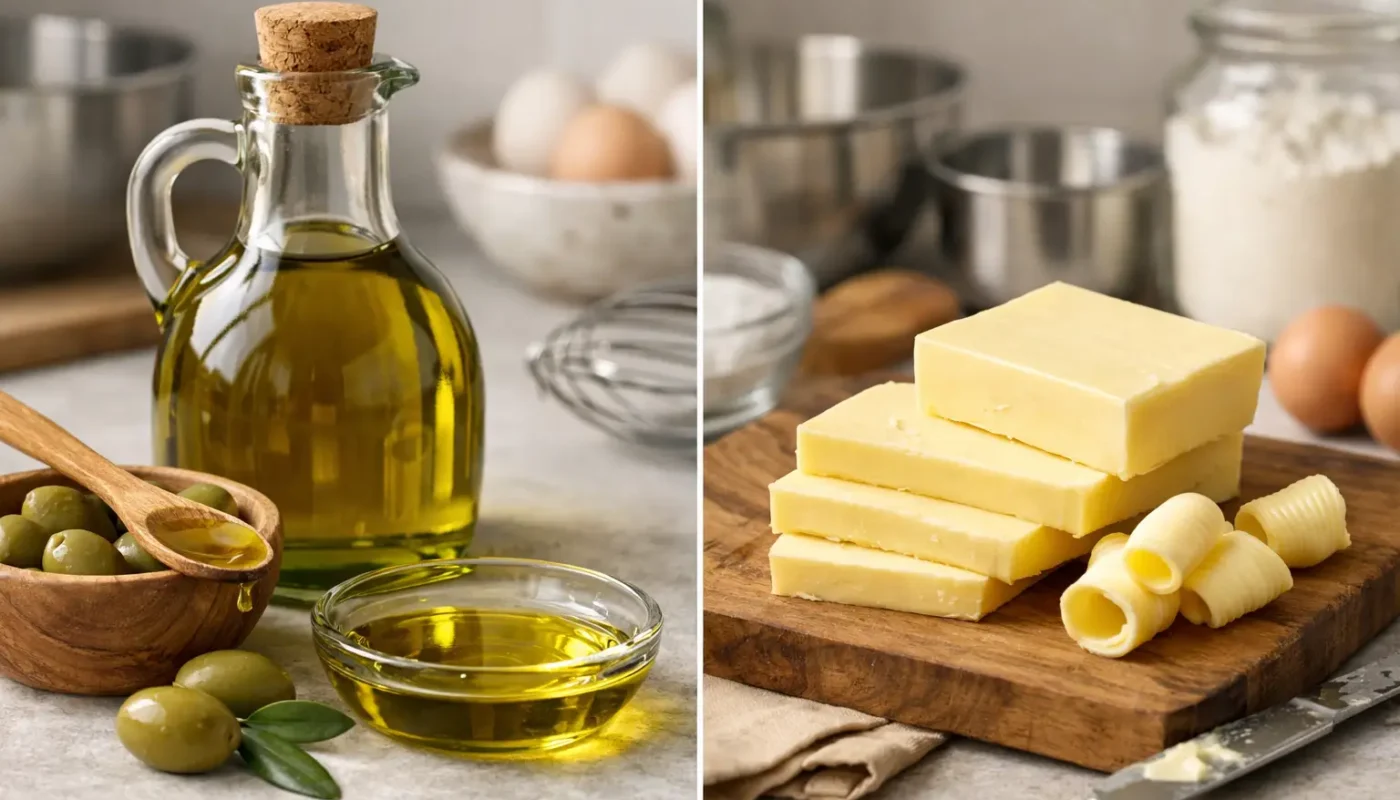
A tender olive oil cake stays wonderfully soft on day three. A buttery pound cake offers a rich, familiar aroma and a firmer, more structured slice. That contrast is the heart of olive oil versus butter baking: neither ingredient simply replaces the other. Each brings its own fat structure, flavor, moisture, and personality to the mixing bowl.
For home bakers who care about ingredient quality, olive oil is far more than a practical substitution. A fresh, well-made extra virgin olive oil can bring fruitiness, peppery lift, or a delicate green note that makes everyday cakes, muffins, and quick breads taste beautifully intentional. Butter still earns its place, especially where its solid texture does important work. The best choice depends on what you are baking and how you want it to eat.
Olive Oil Versus Butter Baking: The Real Difference
Butter is about 80% fat, with the remainder made up largely of water and milk solids. At room temperature, it is solid enough to trap air when creamed with sugar. That air helps create lift in cookies, layer cakes, and butter-based pastries. Its milk solids also contribute a familiar caramelized flavor and attractive browning.
Olive oil is essentially all fat and stays liquid at room temperature. It cannot be creamed with sugar in the same way, so it creates a different kind of crumb: usually moist, plush, and close-textured rather than lofty and airy. Because oil coats flour particles efficiently, baked goods made with olive oil often remain tender longer than their butter-based counterparts.
That is why a straight swap can disappoint in the wrong recipe. Replacing butter with olive oil in a rustic citrus loaf may create a fragrant, moist success. Doing the same in a sugar cookie designed around creamed butter can leave you with a cookie that spreads too much and loses its classic texture.
Flavor matters as much as fat
Butter has a creamy, dairy-forward flavor that many classic American bakes rely on. Think vanilla birthday cake, shortbread, blondies, and cinnamon rolls. Olive oil brings a broader range of flavor, from buttery and mild to grassy, herbaceous, ripe-fruit-forward, or pleasantly peppery.
In a chocolate cake, a medium-intensity extra virgin olive oil can deepen cocoa and make the finish feel more complex. In a lemon cake, a delicate or citrus-fused olive oil can amplify the brightness without competing with it. For an apple spice muffin or carrot cake, a warm, fruit-forward oil complements cinnamon, ginger, toasted nuts, and brown sugar.
The key is freshness. A premium extra virgin olive oil should smell alive, not waxy, stale, or greasy. Taste it before baking. If you would enjoy it drizzled over warm bread, it is a promising candidate for a cake or quick bread.
When Olive Oil Is the Better Choice
Olive oil excels in bakes where moisture and flavor are welcome rather than hidden. Quick breads, muffins, snack cakes, brownies, olive oil cakes, banana bread, carrot cake, and many cupcakes are natural fits. It also performs especially well in dairy-free baking, where butter is not part of the plan.
It is a lovely choice for desserts built around fruit. Orange, lemon, grapefruit, pear, apple, fig, berry, and stone fruit all pair naturally with high-quality olive oil. A little peppery character can be surprisingly good with citrus and dark chocolate, while a softer, buttery oil suits vanilla, almond, and delicate yellow cakes.
Olive oil also offers a practical advantage for busy bakers: no waiting for butter to soften. In many recipes, you can whisk oil directly with eggs, sugar, and other wet ingredients. The method is simple, and the result often stays fresh enough to make ahead for a brunch, dinner party, or thoughtful homemade gift.
When Butter Still Does the Job Best
Some recipes depend on butter being solid. Laminated doughs, pie crusts, scones, biscuits, puff pastry, and traditional shortbread need cold pieces of fat distributed through the dough. As butter melts in the oven, the water it contains creates steam and helps form flaky layers or a tender, craggy interior. Olive oil cannot reproduce that structure.
Butter is also the better starting point for recipes that begin by creaming butter and sugar. The technique builds air, which is useful for certain butter cakes and cookies. You can develop excellent olive oil versions of these desserts, but they should be formulated for oil rather than treated as a last-minute conversion.
For frosting, buttercream, and filled pastries, butter’s ability to firm when chilled is equally valuable. Olive oil has its own place in silky glazes and chocolate ganache-style finishes, but it will not create a stable, pipeable buttercream.
How to Substitute Olive Oil for Butter
For recipes where butter’s structure is not essential, start with 3/4 cup olive oil for every 1 cup of butter. This adjustment accounts for butter’s water content and helps prevent an oily result. If the recipe includes only a small amount of butter, such as a few tablespoons brushed over a finished bread, a closer one-to-one swap may be perfectly pleasant.
Choose the oil with the finished flavor in mind. A mild extra virgin olive oil is the easiest all-purpose option for vanilla cakes, pancakes, and lighter bakes. A more robust oil belongs with cocoa, coffee, citrus zest, rosemary, toasted nuts, and savory cheese breads. Fused oils can be especially fun when the flavor is clearly welcome, such as lemon olive oil in blueberry loaf cake or blood orange olive oil in chocolate brownies.
Because oil-based batters can feel looser, do not judge them by the look of a creamed-butter batter. Follow the recipe’s baking time, but begin checking a few minutes early. A toothpick should emerge with a few moist crumbs for brownies and with no wet batter for cakes. Let the bake cool properly before slicing, since a tender oil-based crumb needs time to set.
Try a partial swap first
If you love the flavor of a familiar butter recipe but want more moisture, replace only half the butter with olive oil. This approach works well in banana bread, coffee cake, and many muffins. You keep a touch of buttery familiarity while gaining the soft texture olive oil provides.
A partial swap can also be useful in chocolate chip cookies, although the outcome will still be different. Expect more spread and a softer center. Chilling the dough helps, but for crisp edges and a classic bakery-style cookie shape, butter remains the more reliable choice.
Choosing an Olive Oil Worth Baking With
Baking does not require your rarest finishing oil, but it does deserve an oil you would happily taste on its own. Old, flat oil will not become better in the oven. Freshness, careful storage, and quality sourcing matter because flavor carries through, particularly in simple recipes.
Keep olive oil away from heat, light, and air, and use it while it is vibrant. A tasting-gallery experience can be useful here: sampling a few styles side by side reveals how different an oil’s fruitiness and peppery finish can be. At Weyira Olive Oil & Vinegar, that kind of flavor discovery is part of the pleasure – and it makes matching an oil to a recipe far more intuitive.
A Few Pairings to Keep in Your Apron Pocket
Use a mild, buttery extra virgin olive oil for vanilla bean cake, almond loaf, or peach muffins. Reach for a fresh, green, medium-intensity oil with lemon, orange, rosemary, or pistachio. Choose a fuller-bodied oil for flourless chocolate cake, espresso brownies, or a spiced loaf with walnuts and dates.
Balsamic can join the conversation, too. A small amount of dark balsamic in chocolate cake, berry compote, or roasted-fruit filling adds depth without making dessert taste like vinegar. White balsamic is particularly appealing in glazes for lemon cake, strawberries, or stone fruit. Add it with restraint, then taste as you go.
The most rewarding way to bake with olive oil is not to ask it to impersonate butter. Let butter create the flaky crust, the lofty creamed cake, and the crisp shortbread when that is what the recipe needs. Then let a fresh olive oil bring its own gift: a tender crumb, lingering moisture, and a flavor that makes one more slice feel like a very good idea.
