
Ultra Premium Olive Oil
12 Best Spices for Lamb and How to Use Them
Aug
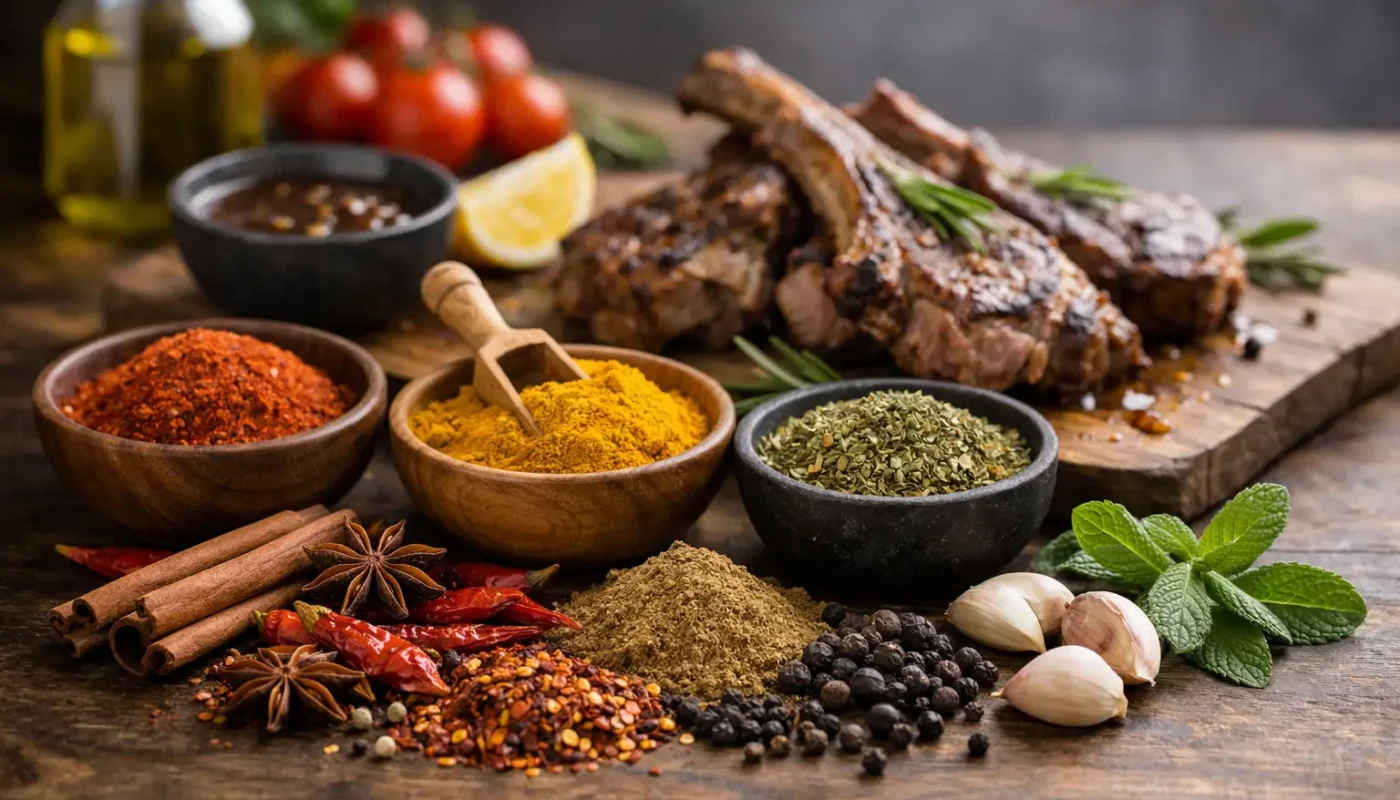
Lamb has a flavor that asks for more than a little salt and pepper. Its richness can carry warm spices, bright herbs, savory garlic, and tangy finishing notes without getting lost. The best spices for lamb do not hide that distinctive, gently grassy character – they frame it, bringing out either its deep, savory side or its fresher, more aromatic side.
The right choice depends on the cut and the cooking method. Quick-cooking lamb chops need a lighter hand than a slow-braised shoulder. Ground lamb welcomes bolder seasoning because fat distributes the flavor through every bite. A rack of lamb, on the other hand, benefits from a focused crust that lets the meat remain the centerpiece.
The Best Spices for Lamb, Cut by Cut
1. Cumin for earthy depth
Cumin is one of lamb’s most natural partners. Its warm, nutty, slightly smoky character complements lamb without making it taste heavy. Use ground cumin in kebabs, meatballs, dry rubs, and marinades for shoulder or leg.
For four lamb chops, start with about 1 teaspoon of ground cumin, then add garlic, black pepper, and a fruity extra virgin olive oil. Cumin is especially good when you want a Mediterranean, North African, or Middle Eastern direction. Toast whole cumin seeds briefly and grind them yourself when possible – the aroma is fuller and cleaner than a jar that has been open for months.
2. Coriander for citrusy warmth
Ground coriander has a gentle lemony quality that keeps lamb tasting lively. It is less forceful than cumin, so the two work beautifully together. Coriander is a smart choice for grilled lamb skewers, lamb burgers, and spice-crusted roasts.
Pair it with lemon zest, garlic, and fresh mint for a bright preparation, or combine it with cumin and smoked paprika for a deeper grilled flavor. Coriander is particularly useful when lamb is being served with yogurt, couscous, rice, or a crisp herb salad.
3. Rosemary for a classic roast
Rosemary is technically an herb, but no conversation about seasoning lamb would be complete without it. Piney, resinous rosemary has enough character to stand up to a roast leg of lamb and enough elegance for a rack of lamb.
Use fresh rosemary when you can. Chop it finely for a rub with garlic, kosher salt, black pepper, and extra virgin olive oil. For a larger roast, tuck whole sprigs beneath or around the meat as it cooks. Dried rosemary can work in a pinch, but use less than you think – its woody flavor concentrates quickly.
4. Garlic for savory balance
Garlic makes lamb taste more savory and familiar, whether it is minced into a marinade, mashed into a paste, or scattered as roasted cloves around a leg of lamb. It is not a spice in the strictest culinary sense, but it is a foundational seasoning here.
Fresh garlic provides sharpness that mellows in the oven or on the grill. Garlic powder is useful in a dry rub because it coats the meat evenly and will not burn as easily over high heat. For lamb chops, combine garlic with rosemary and lemon. For ground lamb, garlic plays well with cumin, coriander, and parsley.
5. Smoked paprika for grill-friendly richness
Smoked paprika gives lamb a warm red color and a subtle wood-fired note, even when cooking indoors. It is especially good on lamb shoulder, burgers, and kebabs. Choose sweet smoked paprika for a rounded flavor or hot smoked paprika if you want a measured level of heat.
Because paprika can darken quickly, it is best in an oil-based marinade or a rub applied shortly before cooking. Blend it with cumin, coriander, garlic powder, and black pepper for lamb that will be grilled or seared in a cast-iron pan.
6. Aleppo pepper or red pepper flakes for gentle heat
Lamb benefits from heat, but it does not always need a sharp burn. Aleppo pepper offers fruity warmth with a hint of tang, making it a lovely choice for grilled chops or roasted lamb with vegetables. If you only have crushed red pepper flakes, use them sparingly and round them out with lemon or balsamic vinegar.
A small pinch is often enough. The purpose is to wake up the richness of the meat, not overpower it. For a finishing touch, stir Aleppo pepper into olive oil with minced garlic and spoon it over rested lamb.
7. Cinnamon for slow-cooked lamb
Cinnamon may sound unexpected to cooks who know lamb mainly through rosemary-and-garlic roasts, yet it is a traditional and beautiful match in many lamb dishes. It adds warmth and a faint sweetness to braises, tagines, and ground lamb fillings.
Use cinnamon with restraint. A quarter to half teaspoon in a pot of lamb stew is usually plenty, especially alongside cumin, coriander, tomato, dried fruit, or chickpeas. Cinnamon should be a background note, not the first flavor anyone identifies.
8. Allspice for savory-sweet complexity
Allspice brings together peppery, clove-like, and cinnamon-like notes in one spice. It is excellent in lamb meatballs, kofta, stuffed vegetables, and slow-cooked dishes. Its complexity works especially well with onion, parsley, mint, and a splash of tangy vinegar.
For ground lamb, try a small amount of allspice with cumin and black pepper. This combination is deeply aromatic but still savory. Too much can take the dish toward dessert territory, so measure carefully.
9. Sumac for a bright finishing note
Sumac has a tart, berry-like flavor that gives rich lamb a welcome lift. Rather than cooking it for a long time, sprinkle it over grilled chops, lamb kebabs, or a platter of sliced roast lamb just before serving.
It can also be blended into a marinade with extra virgin olive oil, garlic, and herbs. Sumac is a fine alternative when you want acidity without adding more lemon juice, and its deep crimson color makes a simple plate look especially inviting.
10. Black pepper for clean, direct heat
Freshly ground black pepper is easy to overlook, but it is one of the best seasonings for lamb. It delivers a crisp bite that supports nearly every flavor profile, from a classic herb roast to spiced meatballs.
Use coarsely ground pepper for a steak-like lamb chop or rack, and finer ground pepper in a kebab mixture. Buy whole peppercorns and grind them close to cooking time for a brighter, more fragrant result.
11. Fennel seed for sweetness and fragrance
Fennel seed has a delicate anise character that can make lamb feel lighter and more refined. It is particularly good with roast leg of lamb, sausage-style ground lamb, and lamb cooked with beans or tomatoes.
Lightly crush the seeds before adding them to a rub so their aromatic oils can reach the meat. Fennel likes garlic, rosemary, orange zest, and good olive oil. If you are serving lamb with roasted carrots or fennel bulbs, it creates a pleasing thread of flavor across the plate.
12. Mint as the fresh counterpoint
Mint is another herb with an essential place in the lamb pantry. Its cool, green flavor provides contrast to lamb’s richness, which is why mint sauce became a classic in the first place. But mint does not need to mean a sugary jelly.
Finely chop fresh mint into a sauce with olive oil, lemon, salt, and a small spoonful of white balsamic vinegar. Fold it into yogurt for grilled lamb, or scatter it over spiced ground lamb with cucumbers and tomatoes. Add mint late so its clean flavor stays vivid.
Build a Spice Blend That Fits Your Lamb
For simple grilled chops, keep the blend focused: rosemary, garlic, black pepper, and lemon zest. Coat the meat with extra virgin olive oil, season at least 30 minutes ahead, then grill or sear over high heat. This approach works best for tender cuts where you want the quality of the lamb to show.
For kebabs or ground lamb, move toward cumin, coriander, garlic, Aleppo pepper, and a touch of allspice. Ground lamb can absorb more seasoning than a chop, and the spices perfume the meat from within. Let the mixture rest in the refrigerator for 20 to 30 minutes before shaping so the flavors can settle.
For a slow braise, choose cumin, coriander, cinnamon, smoked paprika, and black pepper. Brown the lamb first, then bloom the spices in the cooking fat for a minute before adding stock, tomatoes, wine, or aromatic vegetables. Long cooking softens the spices and turns them into a cohesive, savory sauce.
Use Olive Oil and Acidity With Intention
Spices need a vehicle. A fresh, well-made extra virgin olive oil carries fat-soluble flavors from garlic, rosemary, paprika, and cumin across the surface of the lamb while helping a rub adhere. For grilling, use enough oil to coat rather than drench the meat.
Acidity has a different job: it cuts richness and refreshes the palate. Lemon is classic, but a measured drizzle of aged balsamic can bring sweet-tart depth to roasted lamb, while a white balsamic with herbs can brighten a mint sauce or vegetable side. Add delicate vinegars near the end so their character remains clear.
At Weyira Olive Oil & Vinegar, we often encourage tasting seasonings together before they reach the pan. Rub a little olive oil, spice, and salt between your fingers, then smell it. If it already smells balanced and appetizing, it is likely headed in the right direction.
Lamb rewards curiosity. Start with one familiar anchor such as rosemary or cumin, add one contrasting note such as sumac or mint, and let a quality olive oil bring the whole preparation together. That small act of tasting as you season can turn an ordinary weeknight chop into something worth lingering over.
