
Ultra Premium Olive Oil
How to Taste Extra Virgin Olive Oil Like a Pro
Oct
A great olive oil can change a familiar meal before the first bite. Drizzle it over warm bread, a sliced tomato, grilled vegetables, or a simple bowl of beans, and suddenly the food tastes brighter, greener, and more alive. Learning to taste extra virgin olive oil helps you find those exceptional bottles – and avoid paying premium prices for oil that is flat, stale, or poorly stored.
Olive oil tasting is not reserved for professionals in a formal tasting room. It is a useful kitchen skill for anyone who cares about honest ingredients and better cooking. A few minutes with a small cup can tell you more than a front label ever could.
Why Extra Virgin Olive Oil Has So Much Flavor
Extra virgin olive oil is pressed from fresh olives using mechanical methods, without refining. Its flavor comes from the olive fruit itself, along with the variety of olive, the growing region, harvest timing, milling practices, and freshness of the finished oil.
That is why two excellent oils can taste completely different. An early-harvest oil made from greener olives may be intensely grassy, peppery, and pleasantly bitter. A riper-fruit oil may feel softer and rounder, with notes of almond, ripe tomato, apple, or fresh herbs. Neither style is automatically better. The right choice depends on what you are cooking and the flavors you enjoy.
The qualities that surprise new tasters most – bitterness on the tongue and a peppery tickle in the throat – are often signs of a fresh, well-made oil. Those sensations are associated with naturally occurring olive compounds, including polyphenols. They should feel lively and clean, not harsh or unpleasantly burning.
How to Taste Extra Virgin Olive Oil at Home
You do not need a blue tasting glass, though professionals use blue glass so color does not influence judgment. A small, clean cup or wine glass works well. Start with one or two oils at a time, especially if you are new to tasting. Too many samples can blur together quickly.
Warm the oil first
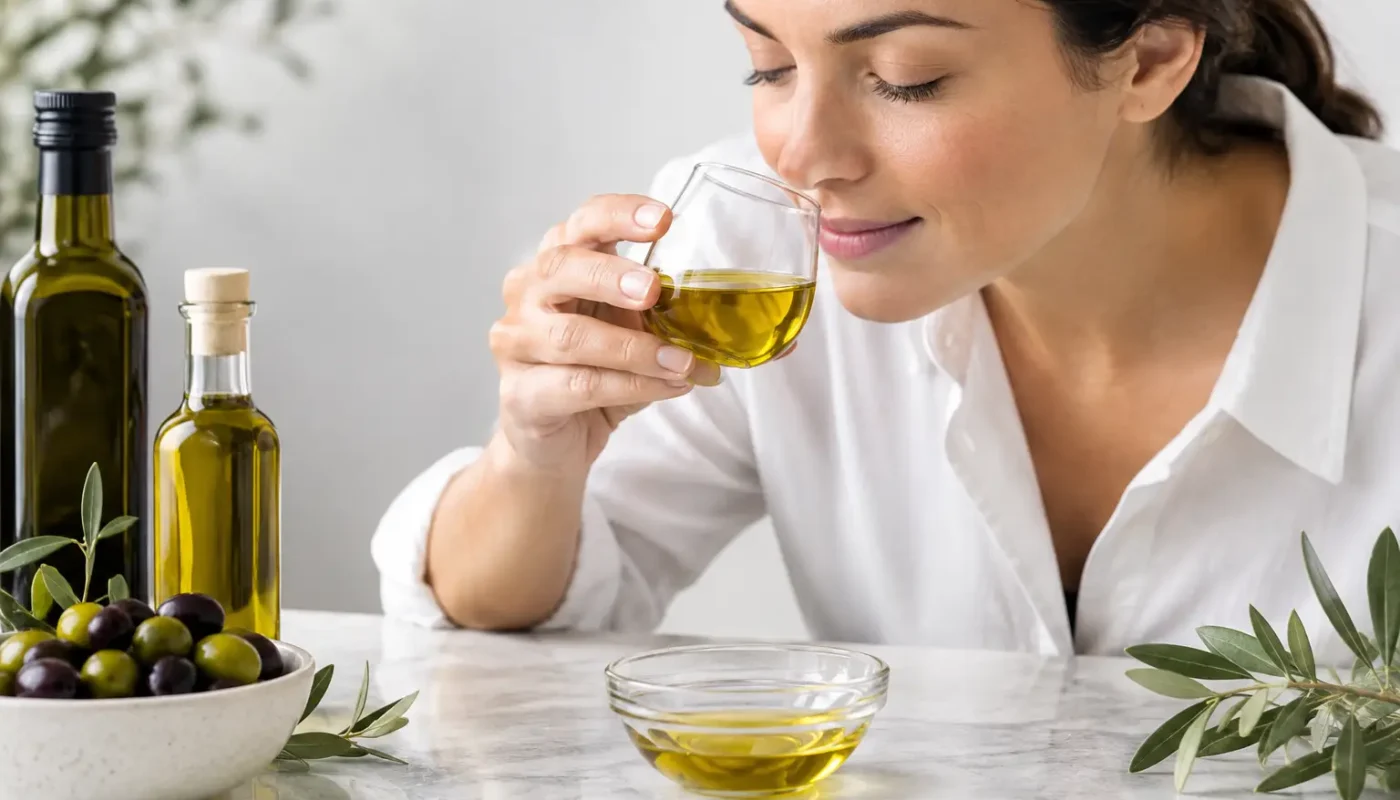
Pour about a tablespoon of oil into your glass. Cover the top with one hand and cradle the glass in the other for a minute or two. Your palm gently warms the oil and gathers its aroma in the cup. This small step makes a remarkable difference.
Do not judge olive oil by color. Deep green can look appealing, but it does not guarantee quality, freshness, or a stronger flavor. Oils range from golden to green for many natural reasons, including olive variety and chlorophyll content.
Smell before you sip
Remove your hand and take a few short, deliberate sniffs. Fresh extra virgin olive oil may remind you of cut grass, green banana, artichoke, tomato leaf, citrus peel, herbs, apple, or almond. The aroma does not need to match those descriptions exactly. What matters is whether it smells fresh, clean, and appealing.
If the first aroma seems quiet, warm the glass a little longer and smell again. Cold oil keeps its aromatic character under wraps. You may also notice that an oil opens up in the glass, revealing more fruit and herb notes after a minute.
Sip, slurp, and breathe
Take a small sip and let the oil spread across your tongue. Then pull in a little air through your teeth – a gentle slurp, not a dramatic one. This aerates the oil and carries its flavors toward the back of your mouth, where you can sense more detail.
Notice the fruitiness first. In olive oil, “fruity” does not necessarily mean sweet. It means the oil has fresh olive character, whether that character is green and vegetal or ripe and mellow. Next, pay attention to bitterness on the tongue. Finally, swallow a tiny amount and notice the peppery sensation in your throat. A cough or two can be perfectly normal with a robust fresh oil.
Between oils, cleanse your palate with water and a bite of plain apple or unsalted bread. Save bread for after the initial tasting, though. Bread is delicious with olive oil, but it can soften or mask subtle flavors when you are trying to evaluate the oil itself.
The Three Positive Traits to Look For
Professional olive oil tasting often centers on three positive characteristics: fruitiness, bitterness, and pungency. Thinking in these terms makes tasting much easier than trying to identify a long list of flavor notes.
Fruitiness is the fresh aroma and flavor of healthy olives. It may be green, like herbs and leaves, or ripe, like almond, apple, or tomato. It should never taste dull.
Bitterness is a clean, intentional sensation across the tongue. It is especially common in early-harvest oils and can be wonderful with bitter greens, beans, roasted squash, or grilled meats.
Pungency is the peppery feeling in the throat. It may arrive immediately or build after swallowing. A delicate oil may have just a soft tickle; a bold oil may make you reach for a glass of water. Both can be beautifully balanced when the flavor is fresh.
Balance matters more than intensity. A gentle oil should still have personality. A bold oil should bring pleasure rather than overwhelm every ingredient on the plate.
How to Recognize Oil That Is Past Its Best
Not every bottle sold as extra virgin olive oil will taste vibrant. Olive oil is perishable, and heat, light, air, and time gradually diminish its flavor. Learning a few common defects protects your pantry and your cooking.
Rancid oil is the most familiar problem. It may smell like stale nuts, old crayons, putty, or peanuts left in a warm cupboard too long. It can taste greasy and lifeless rather than fresh. Rancidity is not the same as pepperiness. Pepperiness feels bright and clean; rancidity feels tired.
Musty or fusty oil may evoke a damp basement, wet leaves, or fermented olives. Winey or vinegary notes can suggest an unintended fermentation. Occasionally, a flavor simply seems muddy, flat, or oddly sweet without any fresh olive aroma. Trust that reaction. Good extra virgin olive oil should invite another taste.
A bottle can be perfectly safe to consume and still be disappointing. If the oil is stale, it will not deliver the lively flavor you expected, and it is unlikely to improve a dish.
Match the Oil to the Food
Once you know what you enjoy, tasting becomes the beginning of better pairings. Delicate oils, often softer and more buttery, are lovely over fish, fresh mozzarella, vanilla ice cream, and light vegetables. Medium oils have enough character for pasta, soups, eggs, roasted chicken, and everyday vinaigrettes.
Robust oils shine where their bitterness and pepper can stand up to food: peppery arugula, lentils, grilled steak, roasted broccoli, tomatoes, pizza, and crusty bread. A robust oil can also make a simple lemon vinaigrette taste far more intentional.
There is room to break the rules. A bold finishing oil over a mild white bean soup creates contrast. A softer oil in a citrus cake lets the fruit lead. Taste the oil with a small bite of the actual food when you can, because salt, acid, heat, and texture all change the experience.
Keep Great Oil Tasting Great
Even a beautiful oil needs good storage. Keep the cap tightly closed and store the bottle in a cool, dark cabinet away from the stove, sunny windows, and dishwasher heat. Dark glass or a tin helps shield oil from light, but packaging cannot compensate for a bottle left beside a hot cooktop for months.
Look for a harvest date when available, and buy an amount you can enjoy while it is fresh. A larger bottle may offer better value for a busy kitchen, while a smaller bottle is often smarter for occasional use or for a special finishing oil. Once opened, use it steadily rather than saving it for an imaginary perfect occasion.
At Weyira Olive Oil & Vinegar, we encourage tasting because a bottle becomes more useful when you know its personality. The bright, grassy oil you love on a salad may not be the same one you reach for in a cake, and that is part of the pleasure of building a pantry with range.
The next time you open a new bottle, pause before pouring. Warm a small sip in your hand, breathe in the aroma, and let the flavor tell you where it belongs. A good oil does more than finish a dish – it gives you a reason to taste more closely.
