
Ultra Premium Olive Oil
Oil Dispensers That Keep Every Pour Fresh
Oct
A beautiful bottle of extra virgin olive oil deserves better than a loose cap, a sticky shelf, or a hurried glug into a hot pan. The best oil dispensers make cooking more precise while helping preserve the fresh, peppery character that makes premium olive oil such a pleasure to use. They also turn an everyday ingredient into something you will reach for often – whether you are finishing a grilled vegetable platter or setting out bread and oil for guests.
The right choice is not simply the prettiest bottle on the counter. Material, capacity, spout design, and how quickly you use your oil all affect whether a dispenser supports freshness or works against it.
Why Oil Dispensers Matter for Olive Oil
Extra virgin olive oil is a fresh fruit juice, and its flavor is sensitive to light, heat, oxygen, and time. Exposure to any of these can soften vibrant aromas and leave an oil tasting flat. A dispenser cannot stop the clock, but it can limit unnecessary exposure and make portioning easier.
That matters when you have chosen a bright, grassy oil for salads, a buttery oil for baking, or a robust, peppery selection for soups and grilled meats. A controlled pour lets those flavors land where they should. You can drizzle a thin ribbon over tomatoes, measure a modest amount for sautéing, or finish a bowl of beans without turning the dish oily.
A dispenser is also a practical invitation to cook with olive oil more generously and thoughtfully. When a quality oil is easy to handle, it becomes part of the rhythm of the kitchen rather than a bottle you save for special occasions.
Choosing Oil Dispensers by Material
There is no single perfect material for every kitchen. The best option depends on where the bottle will live, how much oil you go through, and whether you value visibility or maximum light protection.
Dark glass protects flavor
Dark green or amber glass is a longtime favorite for good reason. It offers meaningful protection from light while still feeling classic enough for the table. If your dispenser sits near a sunny window or under bright kitchen lighting, dark glass is usually the wiser choice.
Choose a size you can empty fairly quickly. For many households, a smaller bottle refilled from the original olive oil container is better than leaving a large volume exposed to repeated opening and pouring for months. Keep the original container sealed, cool, and away from direct light while the smaller dispenser is in use.
Stainless steel is discreet and durable
Stainless steel dispensers block light completely and can be an excellent choice for busy cooks. They are durable, uncomplicated, and especially useful in kitchens where a glass bottle might be knocked over. Their clean, understated look also works well when you keep several oils on hand.
The trade-off is visibility. You cannot see how much is left without lifting or opening the bottle, so it helps to refill on a regular kitchen routine rather than waiting to run dry halfway through a recipe.
Clear glass has a limited role
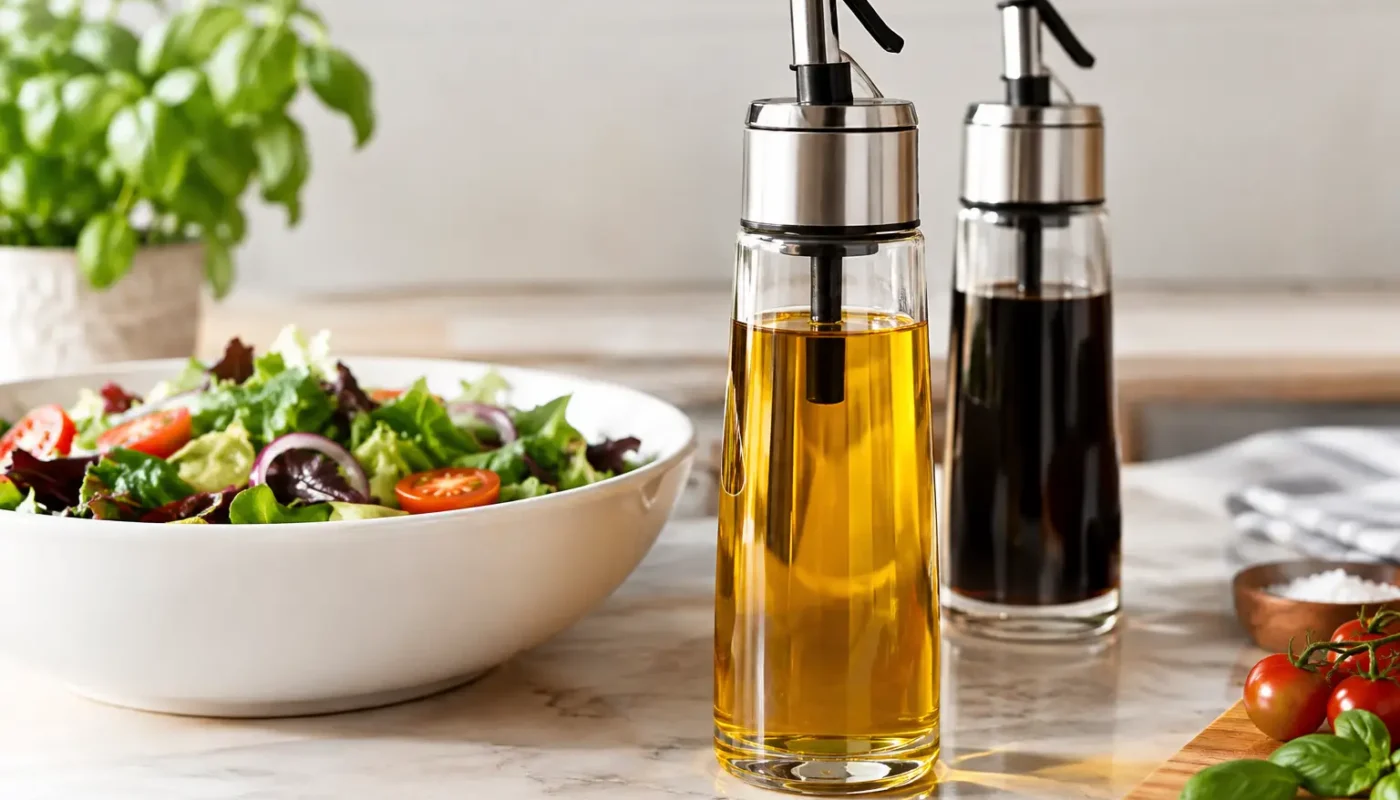
Clear glass can look lovely, particularly for a vinegar cruet on a dining table. For olive oil, however, it is best reserved for short-term serving and kept out of direct light. If you choose clear glass, buy in small quantities and refill often. The amber-gold color of an oil may be appealing, but protecting its aroma and freshness matters more.
The Spout Makes the Difference
A bottle can be handsome and still be frustrating to use. The spout determines whether you get a graceful drizzle or an unpredictable splash down the side of the bottle.
Look for a fitted pour spout that delivers a steady, narrow stream and has a cap or flap to keep dust out between uses. A spout with an air vent generally pours more smoothly, reducing the familiar pause-and-glug effect. For finishing oil, this control is especially satisfying: a little fruity intensity over warm bread, roasted squash, or a creamy soup can change the whole bite.
Avoid spouts that are permanently open or difficult to clean. Olive oil naturally leaves a light film as it dries, and an exposed, neglected spout can become sticky. A removable spout makes occasional cleaning much simpler.
If you like to measure precisely for dressings or baking, a dispenser may not replace a measuring spoon or cup. Its job is ease and control, not laboratory accuracy. Use the dispenser for everyday cooking and finishing, then measure when the recipe truly calls for it.
Size Your Dispenser to Your Cooking Habits
A larger dispenser seems convenient, but bigger is not automatically better. Freshness favors a practical size that you will use in a reasonable amount of time.
For a single cook or a smaller household, a 250 ml to 500 ml bottle is often enough for a favorite extra virgin olive oil. Families who cook frequently may prefer 500 ml to 750 ml. If you entertain often or use olive oil across nearly every meal, you may go larger, provided the bottle stays away from heat and light and is refilled regularly.
Keeping two smaller dispensers can be more useful than one oversized bottle. Fill one with a versatile everyday EVOO for sautéing, roasting, and vinaigrettes. Fill another with a more distinctive oil – perhaps a fused lemon olive oil for fish, greens, and chicken, or a garlic-infused olive oil for pasta and grilled bread. The flavors remain easy to identify, and each bottle earns its place on the counter.
A Dispenser for Vinegar Deserves Its Own Place
Olive oil and balsamic vinegar often appear together, but they should not share a bottle. Separate dispensers keep flavors pure and make it easier to adjust each ingredient to taste. A rich dark balsamic may call for a slower, smaller pour, while a crisp white balsamic can be splashed more freely into a fruit salad, sparkling drink, or vinaigrette.
For entertaining, matching oil and vinegar cruets offer a polished presentation without making the meal feel fussy. Place them beside flaky salt and fresh pepper, and guests can finish their own plates. This small gesture feels generous, especially when the bottles hold oils and vinegars with real character.
How to Keep a Dispenser Clean Without Overcomplicating It
A little care keeps a dispenser pleasant to use and prevents old residue from affecting a fresh refill. Wipe the outside and spout regularly with a soft cloth. If oil collects around the neck, clean it before it turns tacky.
When the bottle is empty, wash it with warm water and mild dish soap, then rinse thoroughly. Let it dry completely before adding fresh oil. Water left inside can interfere with the oil and shorten its best life. For narrow-necked bottles, a bottle brush is worthwhile.
Do not simply keep topping off a dispenser forever. Empty it, wash it, dry it, and then refill. This prevents older traces of oil from lingering beneath a fresh pour. It is a small habit, but premium ingredients reward small habits.
Where to Keep Your Dispenser
The stovetop may be convenient, but it is rarely the ideal home for olive oil. Steam and heat from cooking gradually work against freshness. A nearby cabinet, a shaded counter away from the burners, or a pantry shelf within easy reach is a better compromise.
For the table, bring out the dispenser when it is time to serve, then return it to its cooler storage spot afterward. This is particularly worthwhile for an ultra-premium EVOO with delicate aromas of herbs, green banana, tomato leaf, or fresh-cut grass. Those nuances are what you paid to enjoy.
Make Every Pour Part of the Meal
Oil dispensers are useful tools, but they also encourage a better instinct in the kitchen: taste as you go. Add a drizzle of robust extra virgin olive oil to lentil soup just before serving. Use a fruity medium-intensity oil to bring sweetness to roasted carrots. Pair a bright vinegar with olive oil for a dressing that needs little more than salt, pepper, and a spoonful of mustard.
Choose a dispenser that protects the oil you love, feels good in your hand, and makes you want to pour with intention. Then let that final ribbon of flavor be the detail that makes dinner feel a little more generous.
