
Ultra Premium Olive Oil
How to Revive Crystallized Olive Oil Safely
Oct
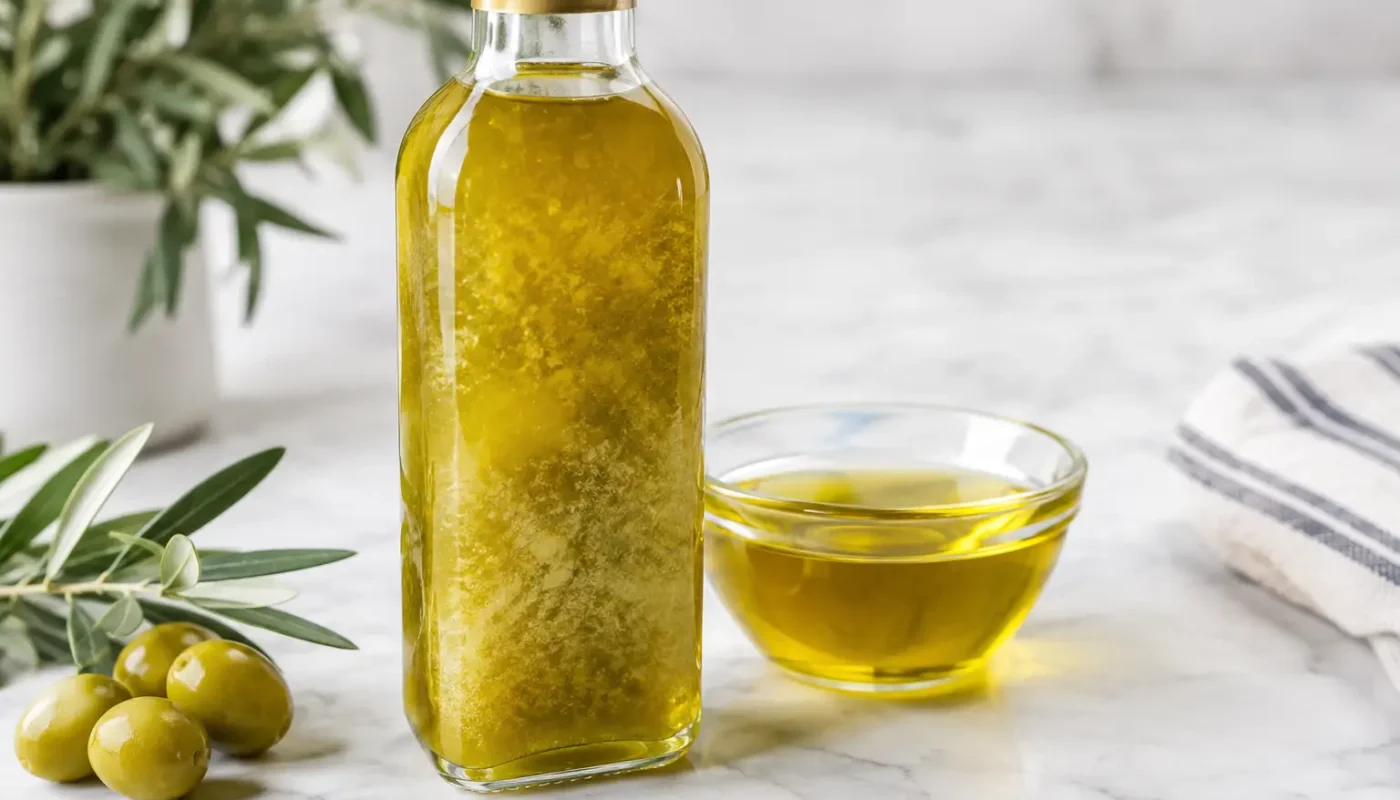
A cloudy bottle of olive oil on a cool countertop can look alarming, especially when pale crystals gather at the bottom or the oil turns thick and opaque. The good news: knowing how to revive crystallized olive oil is simple, and crystallization is usually a natural response to cold, not a sign that your oil has gone bad. With gentle warmth and a little patience, your favorite extra virgin olive oil will return to a clear, pourable state.
Why Olive Oil Crystallizes in the First Place
Olive oil is made up of many natural compounds, including different fatty acids, waxes, and polyphenols. When temperatures dip, some of those compounds solidify at different rates. That is why one bottle may become hazy while another develops soft flakes, buttery-looking clumps, or a nearly solid texture.
This often happens in winter deliveries, cool pantries, garages, or kitchens near a drafty window. Many olive oils begin to cloud somewhere around 50 to 55 degrees Fahrenheit, although the exact point varies by harvest, olive variety, filtration method, and origin. A fresh California EVOO will not necessarily react to cold in the same way as a peppery Italian oil or a delicate French selection.
Crystallization does not reliably prove purity, freshness, or quality. It simply shows that the oil contains components that respond to lower temperatures. Premium olive oil can crystallize, and so can less carefully made oil. The more useful quality cues are harvest freshness, proper storage, a lively aroma, and a flavor that tastes clean, balanced, and pleasantly fruity, bitter, or peppery.
How to Revive Crystallized Olive Oil Gently
The safest approach is gradual warming. Keep the bottle sealed and stand it in a bowl or sink filled with warm water. The water should feel comfortably warm, not scalding – roughly the temperature you would use for washing dishes by hand.
Let the bottle sit for 10 to 20 minutes, then gently swirl it. If crystals remain, replace the water with fresh warm water and repeat. Larger bottles or oil that has become fully solid may need a little more time. There is no need to rush the process. Slow, even warming helps protect the oil’s nuanced aroma and flavor.
Once the oil is clear and fluid again, dry the outside of the bottle thoroughly before returning it to the pantry. If a small amount of haze remains, let the bottle rest at room temperature. It will often clear on its own.
Avoid high heat and direct flame
Do not place olive oil on a stove burner, in a pot of boiling water, or in an oven. Excessive heat can flatten the fresh green notes and delicate fruit character that make a quality EVOO such a pleasure to taste.
A microwave is also not the best choice. It can create hot spots, especially in a glass bottle, and those sudden temperature changes are harsher than necessary. If you are working with a small amount of oil in a microwave-safe bowl for immediate cooking, brief low-power warming may be practical. For a full bottle you plan to enjoy over time, warm water is the more thoughtful method.
Is Crystallized Olive Oil Still Good?
Usually, yes. Cold-induced cloudiness and crystals are cosmetic and textural changes. They do not mean the oil is rancid or unsafe. Once warmed, the oil should look and pour normally again.
What matters is how it smells and tastes after it returns to liquid form. Fresh extra virgin olive oil should smell inviting: perhaps grassy, tomato-leafy, herbaceous, buttery, floral, or ripe with fruit, depending on the variety. On the palate, it may offer a pleasant bitterness and a peppery tickle in the throat. Those sensations are often associated with naturally occurring phenolic compounds.
An oil that smells like crayons, old nuts, putty, stale chips, or musty cardboard may be past its prime. Crystallization did not cause that damage. More often, the culprits are age, heat, light, or too much oxygen exposure after opening.
If your oil has been cold for only a short time, warming it back to room temperature is unlikely to hurt it. Repeated cycles of chilling and reheating are less ideal, not because the oil will suddenly become unusable, but because consistency is better for preserving its most vibrant flavor.
Store Olive Oil for Flavor, Not Just Convenience
The spot beside the stove may be convenient when dinner is underway, but it is one of the tougher places for olive oil. Heat from burners and ovens can gradually diminish freshness. A sunny windowsill is equally unkind, even when the bottle is dark glass.
Choose a cool, dark cupboard away from appliances, direct sunlight, and dramatic temperature swings. For most homes, a stable pantry or interior cabinet is ideal. Aim for a comfortable room-temperature environment rather than a chilly basement shelf or refrigerator.
Keep the cap or pour spout closed when the bottle is not in use. Oxygen is another quiet enemy of fresh oil, and a tightly sealed bottle helps preserve the aromas you paid for. If you buy a generous bottle of a favorite oil, consider pouring some into a smaller dark bottle for everyday use while keeping the rest sealed until needed.
For cooks in colder parts of Maryland, Pennsylvania, and West Virginia, this can be especially useful during winter. A bottle left in an enclosed porch, cold mudroom, or unheated pantry may crystallize quickly. Bringing it into the kitchen and using the warm-water method is all it needs.
A Few Things Not to Do When Oil Turns Cloudy
It can be tempting to shake a cloudy bottle vigorously or try to strain out the crystals. Neither is necessary. The crystals are part of the oil and will melt back into it as the temperature rises. Straining may remove natural components without solving the underlying issue.
There is also no reason to discard olive oil simply because it looks cloudy after a cold delivery. Let it come to room temperature first, then assess its aroma and flavor. The appearance alone cannot tell you whether an oil is fresh, mild, bold, filtered, or unfiltered.
Freezing is another case where restraint pays off. While olive oil can tolerate cold better than many people assume, intentional freezing is not a useful preservation strategy for everyday bottles. It makes pouring difficult and may lead to repeated temperature swings as you thaw and use it. A cool, dark cabinet remains the best home for most premium oils.
Let Fresh Olive Oil Do What It Does Best
Once your oil is clear again, give it a quick taste before you cook. Pour a teaspoon into a small cup, warm it lightly in your hands, and notice the aroma before tasting. A lively EVOO can turn a simple plate of roasted vegetables, grilled fish, warm bread, or tomato salad into something worth lingering over.
That is the real reason to treat olive oil gently. It is not merely a cooking fat. A well-kept bottle carries the personality of its olives, harvest, and growing region all the way to your table. When cold weather clouds that expression, a little warm water brings it back – ready for the next beautiful pour.
