Ultra Premium Olive Oil
Why Is Balsamic Sweet? The Flavor Has a Story
Aug
A spoonful of good balsamic can taste almost surprising: dark fruit, a gentle tang, a hint of wood, and a sweetness that lingers without feeling like dessert syrup. So, why is balsamic sweet when most people expect vinegar to make them pucker? The short answer is grapes. The more satisfying answer is that balsamic’s sweetness comes from concentrated grape must, time, and the way acidity and natural sugars learn to share the same bottle.
That balance is exactly what makes balsamic vinegar such a useful pantry staple. It can brighten roasted vegetables, deepen a pan sauce, wake up fresh berries, and turn a simple dish of olive oil and bread into something worth lingering over.
Why Is Balsamic Sweet? It Starts With Grape Must
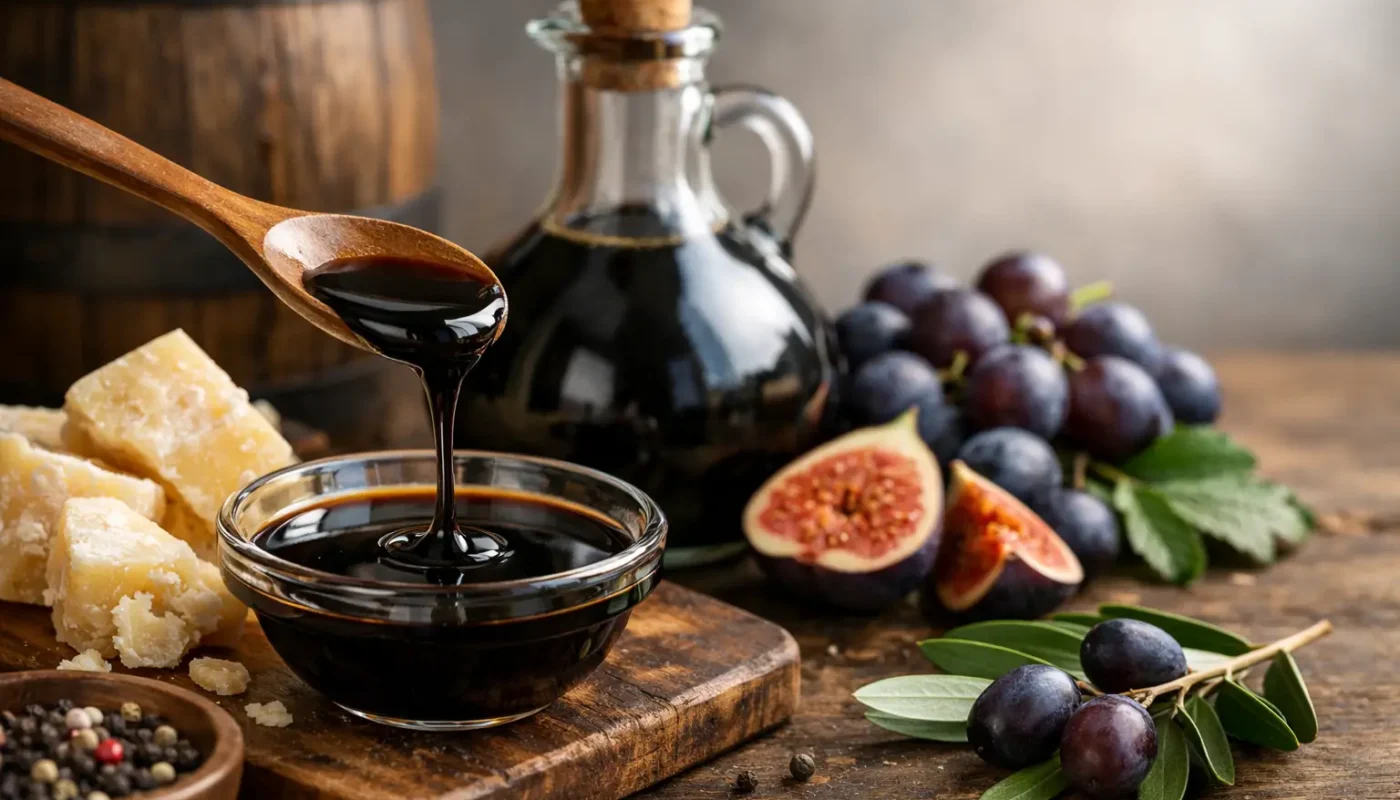
Traditional balsamic begins not with finished wine, but with grape must – freshly crushed grape juice that includes the skins, seeds, and pulp. Producers cook the must gently for hours, reducing its water content and concentrating what was already in the grapes: natural fruit sugars, flavor compounds, and color.
Think of reducing apple cider on the stove. As it cooks, it becomes darker, thicker, and sweeter-tasting because the water evaporates while the fruit character remains. Grape must behaves similarly. This cooked must gives balsamic its recognizable ripe-fruit sweetness before fermentation and aging add their own layers.
Not every balsamic product is made the same way, which is why sweetness can vary dramatically from bottle to bottle. A traditionally made, long-aged balsamic is usually complex rather than simply sugary. You may taste dried cherry, fig, prune, molasses, cocoa, or toasted wood alongside a lively acidic finish. A more accessible balsamic condiment may be brighter, thinner, or sweeter depending on its proportion of cooked grape must, wine vinegar, and any permitted additions.
The important distinction is this: sweetness in a well-crafted balsamic should feel integrated. It should taste like grapes transformed by care and time, not like sugar added to cover a harsh vinegar bite.
Cooking, Fermentation, and Aging Create the Balance
Balsamic’s flavor develops in stages. First, cooking concentrates the must. Next, fermentation converts some of the natural sugars into alcohol. Acetic fermentation then turns that alcohol into acetic acid, the compound responsible for vinegar’s characteristic tang.
If all the grape sugar were converted, balsamic would taste far less sweet. But balsamic production is not a race to make the sharpest vinegar possible. Depending on the style and producer, remaining grape solids and naturally occurring sugars contribute body and sweetness, while acidity gives the vinegar lift and structure.
Aging makes the relationship even more interesting. In traditional production, balsamic rests in a succession of wooden barrels, often made from woods such as oak, cherry, ash, juniper, or chestnut. Small amounts evaporate over time, concentrating the liquid. The wood can contribute subtle aromatic notes, while oxygen exposure and maturation round out rough edges.
This is why a mature balsamic may taste sweeter even when it is not loaded with added sweetener. Its acidity has become more polished, its texture may feel silkier, and its fruit character is more concentrated. Sweetness becomes easier to notice because it is no longer competing with a sharp, raw edge.
Sweetness Is Not the Same as Sugar Content
Our palates read sweetness in context. A balsamic with a full, viscous texture and notes of raisins or ripe figs may seem sweeter than a thinner vinegar, even if the actual difference in sugar is modest. Aroma has a role, too. Fruit-forward scents prime us to perceive sweetness before the vinegar even reaches the tongue.
Acidity changes perception as well. A good balsamic should have enough tang to keep its sweetness from becoming cloying. That sweet-tart tension is why a drizzle can work on foods as different as Parmigiano Reggiano, grilled chicken, peaches, Brussels sprouts, and vanilla gelato.
If you are monitoring sugar intake, taste and read the label rather than assuming every dark, thick balsamic is the same. Products vary by style, country of origin, and formulation. A thicker glaze, for example, is designed to be sweet and syrupy, while a quality balsamic vinegar is usually more versatile and balanced.
What the Label Can Tell You
Balsamic labels can be confusing because the word “balsamic” covers several styles. Knowing the broad categories helps you choose a bottle for the way you cook.
Traditional balsamic vinegar is made from grape must and aged according to strict regional methods. It is typically sold in small bottles, used in drops rather than generous splashes, and priced accordingly. Its sweetness is nuanced, with remarkable depth and a long finish.
Balsamic vinegar of Modena is a more familiar everyday style. It commonly combines grape must and wine vinegar, and quality can range from simple and sharp to beautifully balanced. Look for a flavor that is bright but rounded, with grape character you can recognize.
Balsamic condiments may offer a wide spectrum of sweetness, density, and aging. Some are excellent choices for everyday salads, marinades, and finishing sauces. The best approach is to let your intended use guide the purchase rather than treating one style as universally better.
Balsamic glaze is reduced or thickened for a bold, decorative finish. It can be delicious over pizza, strawberries, caprese, or roasted squash, but it behaves differently from pourable vinegar. Use it when you want concentrated sweetness and texture, not when a recipe needs the bright acidity of balsamic vinegar.
Ingredient lists matter. If you want sweetness primarily from grapes, seek bottles where grape must is central to the flavor profile. If you see sweeteners or thickeners, that does not automatically make the product bad – it simply signals a different style and use.
Why Premium Balsamic Tastes Sweet Without Feeling Heavy
A premium balsamic earns its place through balance. It may be sweet, but it should also be aromatic, acidic, and clean on the finish. A flat sweetness can make food taste one-dimensional. Layered sweetness, by contrast, amplifies savory ingredients and creates contrast where a dish needs it.
Try tasting a small amount on a spoon. First notice the aroma. Then let it rest on your tongue for a moment before swallowing. Is there a clear grape note? Does the acidity arrive quickly enough to refresh your palate? Do you taste more than one thing – fruit, wood, spice, caramelized depth – or only sugar and tang?
This small tasting ritual is useful when choosing pairings. A bright, moderately sweet balsamic is wonderful with vinaigrettes, tomatoes, and grilled vegetables. A denser, older-style balsamic shines as a finishing touch on seared steak, aged cheese, risotto, roasted pears, or a scoop of good ice cream.
Dark and White Balsamic Are Sweet in Different Ways
Dark balsamic gets its deep color and fuller flavor from cooked grape must and aging. Its sweetness often leans toward dried fruit, caramel, and woodsy notes. It is the bottle many cooks reach for when they want richness.
White balsamic is generally made to preserve a lighter color and fresher profile. It can still be pleasantly sweet, but the effect is often crisper and more fruit-forward – think pear, citrus, or light stone fruit rather than fig and molasses. It is especially handy when you want balsamic flavor without darkening a vinaigrette, chicken dish, or delicate vegetable.
Flavored balsamic vinegars add another dimension. A raspberry or pomegranate balsamic may feel sweeter because the fruit flavor reinforces the grape base, while a lemon or herb-infused white balsamic can taste brighter and less sweet even when its sugar level is similar. Pairing is often about perception as much as chemistry.
Put Balsamic’s Sweetness to Work in the Kitchen
The easiest way to appreciate balsamic is to pair it with foods that need contrast. Whisk it with extra virgin olive oil, a pinch of salt, and Dijon for a vinaigrette that brings leafy greens to life. Add a spoonful to a roasting pan with onions or mushrooms, where its natural sweetness supports browning and its acidity keeps the dish lively.
For entertaining, set out a small dish of balsamic beside a fresh, peppery extra virgin olive oil and warm bread. Add a plate of aged cheese, sliced peaches, or strawberries. The pairing makes a simple point very clearly: balsamic sweetness is not an accident. It is a flavor built to play beautifully with salt, fat, smoke, fruit, and heat.
Do not cook every balsamic the same way. A dependable everyday bottle is ideal for marinades, reductions, and sauces. Save a particularly rich, complex balsamic for finishing, when its aroma and delicate balance can be noticed. High heat can mute the subtle notes that made it special in the first place.
Store your bottle in a cool, dark cupboard with the cap tightly closed. Refrigeration is not necessary, and a premium balsamic’s high acidity helps it keep well. Over time, its most delicate aromas may soften, so enjoy it generously rather than saving every drop for an imagined perfect occasion.
The next time a dark balsamic tastes sweet on your spoon, taste beyond the sweetness. You may find cooked grapes, gentle acidity, barrel-aged character, and a little invitation to make dinner more memorable.
