
Ultra Premium Olive Oil
Gourmet Honey for Better Everyday Cooking
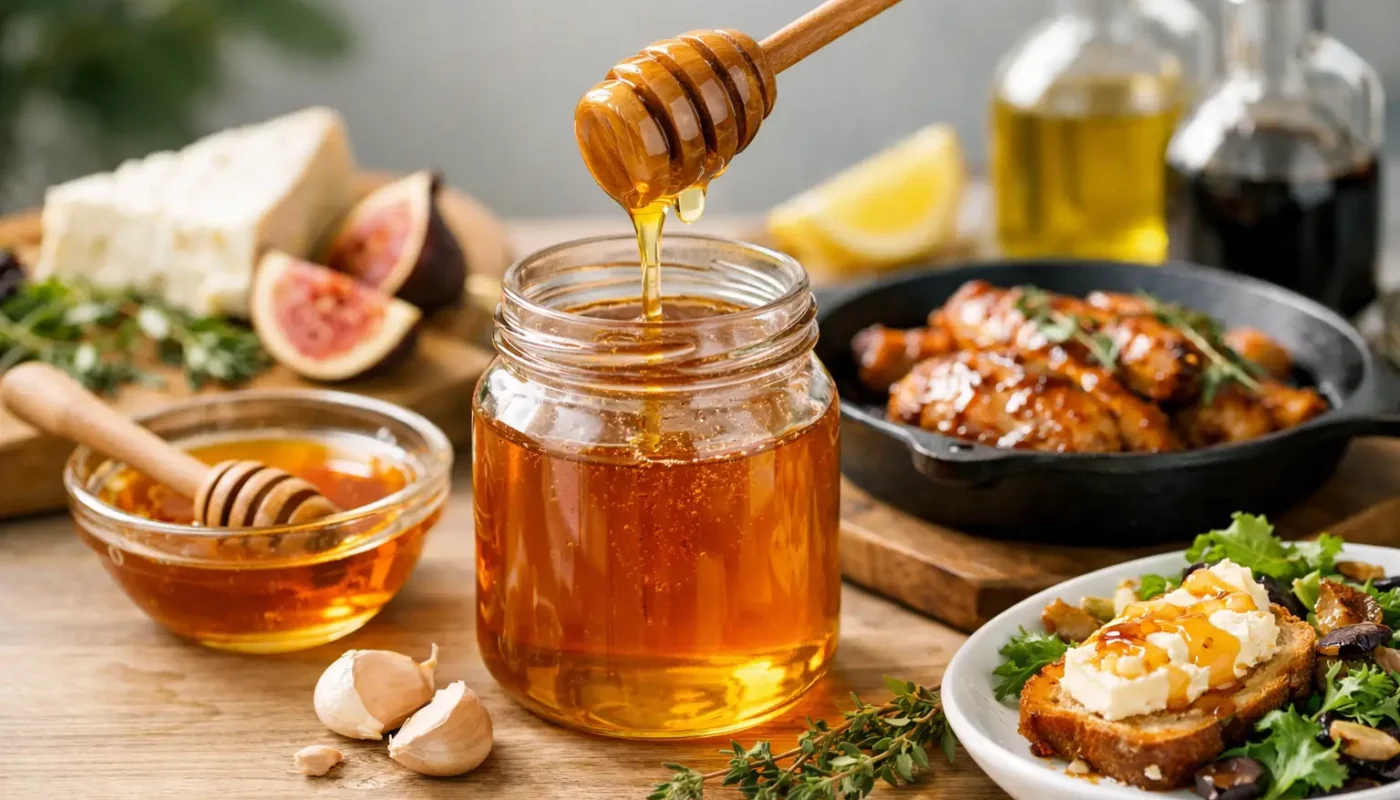
Aug
A spoonful of honey can be sweet, but a spoonful of gourmet honey can be floral, buttery, citrusy, woodsy, or gently caramelized. That difference matters when honey is more than a sweetener. Drizzled over a creamy cheese, whisked into a vinaigrette, or brushed onto roasted vegetables, a well-chosen honey brings dimension that ordinary squeeze-bottle honey often cannot.
For home cooks who care about ingredients, honey deserves the same attention as a fresh extra virgin olive oil or a beautifully aged balsamic. Its source, season, and handling all shape what reaches your table. Once you begin tasting honey by variety, it becomes one of the most rewarding ways to add character to everyday cooking.
What Makes Honey Gourmet?
Gourmet honey is not simply honey in a prettier jar. It is selected for distinctive flavor, careful production, and a sense of place. Like wine grapes or olive varieties, nectar from different blossoms creates dramatically different profiles. Bees may forage primarily on orange blossoms, clover, wildflowers, tupelo, acacia, buckwheat, or lavender, depending on what is in bloom and where the hives are placed.
A light acacia honey may taste clean and delicately vanilla-like. Orange blossom honey often brings a bright floral perfume that feels especially at home with fruit and soft cheese. Wildflower honey can be pleasantly unpredictable, reflecting the local landscape and the season. Darker varieties, such as buckwheat honey, tend to be fuller and more molasses-like, with earthy depth that stands up to hearty foods.
The goal is not to declare one variety best. It is to choose a honey whose personality suits the dish. A mild honey can support a recipe without taking over, while a bold one can become the flavor you build around.
Color Offers a Clue, Not a Rule
Honey color ranges from nearly clear gold to deep mahogany. In broad terms, darker honeys often taste more intense and mineral-rich, while lighter honeys can be mild and floral. But color alone cannot tell the whole story. Floral source, harvest conditions, and natural variation all matter.
The better approach is to taste. Notice the aroma first, then let a small amount melt slowly on your tongue. Is it bright or earthy? Does it finish with citrus, dried fruit, spice, or malt? Those details make pairing far more intuitive.
How to Taste Gourmet Honey Like a Pantry Pro
Set out two or three varieties at room temperature with plain crackers, apple slices, and a few cheeses. Taste the honey on its own before adding other ingredients. A small spoonful is enough to reveal its texture and flavor.
Then compare it with food. Mild chèvre makes floral honey taste even more fragrant. A nutty aged cheese may pull caramel notes from amber honey. Blue cheese loves contrast, so a clean, light honey can soften its salty bite, while a deeper honey can make the pairing more dramatic.
If you are tasting with olive oil and balsamic, keep the balance in mind. Rich, peppery extra virgin olive oil benefits from a honey with enough flavor to stay present. A lush dark balsamic with fig, berry, or chocolate notes pairs beautifully with deeper honey in marinades and dessert sauces. White balsamic vinegars, especially citrus or herb-forward styles, often shine with lighter floral honey.
Pairing Honey with Olive Oil and Vinegar
Honey is a natural bridge between acidity, fat, salt, and spice. It rounds out a sharp vinaigrette, helps a glaze cling to food, and gives roasted dishes a glossy finish. The trick is restraint. Start with less honey than you think you need, then add more only if the dish calls for it.
For an everyday salad dressing, whisk honey with extra virgin olive oil, balsamic vinegar, Dijon mustard, a pinch of salt, and freshly ground pepper. The honey does not need to make the dressing noticeably sweet. Its role is to smooth the vinegar’s edges and bring the ingredients together. A floral honey works wonderfully with greens, pear, goat cheese, and toasted pecans. A darker honey is better suited to kale, roasted squash, walnuts, and sharper cheeses.
Honey also makes a beautiful finishing element for grilled or roasted vegetables. Toss carrots, sweet potatoes, or delicata squash with olive oil and salt before roasting. Add a light drizzle of honey near the end, when the vegetables have begun to caramelize, so it does not scorch. A final splash of balsamic adds tang and keeps the sweetness lively.
For proteins, use honey as part of a glaze rather than the entire glaze. Combine it with olive oil, vinegar, garlic, mustard, or warm spices. It is excellent with salmon, pork tenderloin, chicken thighs, and shrimp. Bolder honeys hold their own against smoked paprika, cumin, rosemary, and black pepper, while delicate honeys are better for lemony fish or tender poultry.
Gourmet Honey on a Cheese Board
A cheese board is one of the easiest places to appreciate a special honey because there is no recipe to hide behind. Place honey in a small bowl or serve a piece of honeycomb with a small knife. Offer one or two cheeses, fruit, nuts, and crackers, then let guests make their own combinations.
For a simple but memorable board, pair floral honey with fresh goat cheese and sliced peaches or apples. Try a medium-bodied wildflower honey with brie, toasted almonds, and dried apricots. Serve a dark, richly flavored honey beside blue cheese, walnuts, and crisp pear slices. A few drops of fruity extra virgin olive oil over mozzarella or ricotta can add another luxurious layer.
Honeycomb is especially striking for entertaining. Its waxy cells hold honey in its most natural presentation, and the comb itself is edible. Some guests enjoy chewing it; others prefer to spread the honey and leave the wax behind. Either way, it signals that the board has been thoughtfully assembled.
Smart Ways to Use It Beyond Breakfast
Honey belongs in far more than tea, toast, and yogurt. Stir a little into softened butter with flaky salt for warm biscuits or cornbread. Spoon it over ricotta with olive oil and cracked black pepper. Add it to a citrus vinaigrette for shaved fennel salad, or use it to balance a spicy sauce for wings.
It can also lend a polished touch to desserts without requiring complicated baking. Drizzle a fragrant honey over vanilla ice cream with toasted pistachios. Serve it with roasted figs and mascarpone. Fold a mild honey into whipped cream, or use a darker variety in an apple crisp where its deeper notes complement cinnamon and oats.
Heat deserves attention. Honey can burn more quickly than granulated sugar, especially under a broiler or on a hot grill. When using it in a glaze, apply it during the final minutes of cooking or dilute it with oil, vinegar, citrus juice, or another liquid. That small adjustment keeps the flavor warm and caramelized rather than bitter.
Storage, Crystallization, and Freshness
Store honey tightly sealed at room temperature, away from direct sun and humidity. There is no need to refrigerate it. Cold temperatures encourage crystallization, making honey firm and grainy sooner.
Crystallization is normal, particularly in raw or minimally filtered honey. It is not spoilage, and it does not mean the honey is poor quality. Simply place the closed jar in warm water and let it soften gradually. Avoid aggressive high heat, which can dull delicate aroma and flavor.
Honey keeps well because of its naturally low moisture content, but its most vivid character is worth enjoying while it is fresh. If you have several varieties, rotate them through your cooking rather than saving every jar for a special occasion.
A remarkable pantry is built through small, flavorful choices. Keep one light, floral honey for fruit, tea, and cheese, and one darker honey for roasting, glazes, and baking. Soon, reaching for honey will feel less like adding sweetness and more like choosing the finishing note that makes a dish worth remembering.
