
Ultra Premium Olive Oil
Does Olive Oil Freeze? What Cold Really Does
Aug
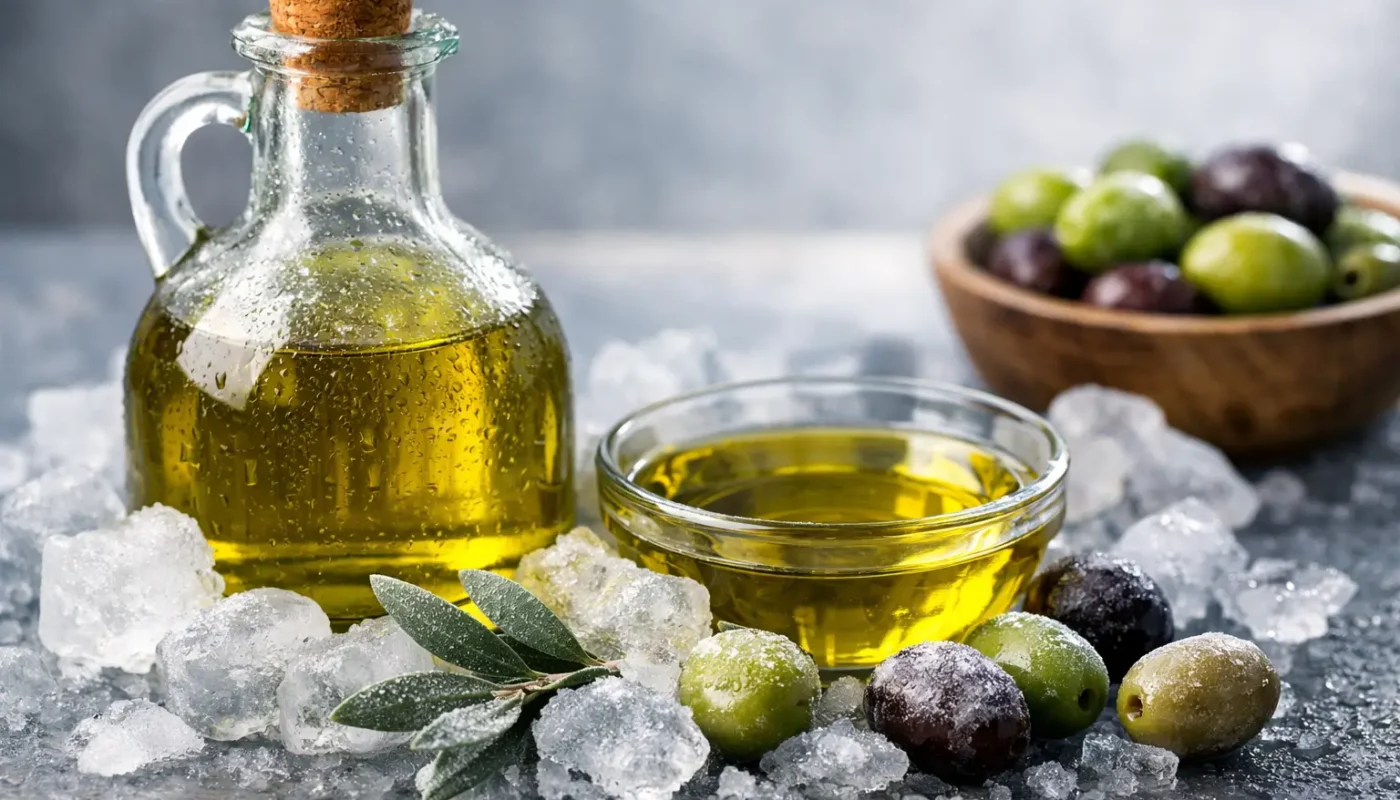
A bottle of beautiful extra virgin olive oil can look surprisingly different after a cold night in the garage, a winter delivery, or a few days in the refrigerator. So, does olive oil freeze? Yes – but not like a tray of water becomes a single clear block of ice. Olive oil is a complex, natural blend of fats and flavor compounds, which means it can turn cloudy, form crystals, thicken, or partially solidify at different temperatures.
That change can be unsettling when you have invested in a fresh, carefully sourced oil. Fortunately, cold-related cloudiness is usually a temporary physical change, not a sign that your oil has gone bad. Once it warms gradually to room temperature, it should return to its familiar golden or green-gold pour.
Does Olive Oil Freeze in a Home Freezer?
Olive oil can freeze or become mostly solid in a home freezer. Depending on its composition, it may begin to look cloudy or develop soft crystals at refrigerator temperatures, often around 35 to 40°F. In a freezer, it will become much thicker and may solidify substantially.
The important detail is that there is no single freezing point for every olive oil. The fatty acids in olive oil do not all solidify at the same temperature. Its natural waxes, minor compounds, and the particular olive varieties used also affect how it behaves in the cold. A fresh California oil may respond differently than a bold Tuscan-style blend or a delicate oil from Australia, Peru, Morocco, or Turkey.
This is why two bottles can look different after spending the same amount of time in the refrigerator. One may become hazy, another may form pale crystals, and a third may remain relatively clear. None of those reactions alone tells you which oil is better.
Cloudy Olive Oil Is Usually Not a Problem
When olive oil gets cold, some of its fatty components begin to crystallize. The oil may look cloudy, buttery, or opaque. If the bottle is especially cold, you might notice solid-looking flecks or a layer of thicker oil near the bottom.
Let the bottle sit upright at room temperature and give it time. There is no need to shake it aggressively, strain it, or discard it. As the oil warms, it should gradually clear and become fluid again.
A refrigerated or frozen bottle may take several hours to return to normal, especially if it is in dark glass or a larger container. Patience protects the flavor better than trying to speed things up with high heat.
The Refrigerator Test Is Not a Quality Test
You may have heard that putting olive oil in the refrigerator can reveal whether it is pure. According to this old kitchen myth, “real” olive oil will solidify while adulterated oil will not. It sounds simple, but it is not reliable.
Olive oils naturally vary by olive cultivar, growing region, harvest timing, filtration, and fatty-acid profile. Some authentic extra virgin olive oils cloud quickly in the cold. Others stay clear much longer. Blended oils can behave differently still, even when they are legitimate and high quality.
Cold behavior cannot confirm purity, freshness, extra virgin grade, or flavor quality. The most meaningful signs of a good oil are its source, harvest information when available, proper packaging, and sensory character. Fresh extra virgin olive oil should smell and taste lively: think cut grass, green tomato, almond, artichoke, herbs, or ripe fruit, depending on the variety. Bitterness and a peppery throat sensation can also be welcome signs of the natural antioxidants found in fresh EVOO.
For a more confident purchase, choose oils from specialists who prioritize sourcing, freshness, and proper handling rather than relying on a refrigerator experiment.
Will Freezing Olive Oil Ruin It?
Freezing does not automatically ruin olive oil. A brief accidental freeze during shipping or storage is rarely a reason to worry. Let it thaw naturally, then enjoy it as you normally would.
That said, freezing is not ideal as a routine storage method for a bottle you open often. Every time the bottle moves between cold and warm conditions, there is potential for condensation around the cap or inside the neck. Moisture and repeated temperature swings are not helpful for a product whose best qualities depend on careful protection from air, heat, and light.
The greater concern is not one cold episode. It is long-term exposure to the elements that speed oxidation. Olive oil is at its most expressive when its grassy, fruity, peppery, or buttery notes are still intact. Heat, direct sunlight, and oxygen gradually flatten those flavors and aromas.
If a bottle arrives cold in winter, bring it indoors, allow it to warm on the counter, and avoid opening it until it has returned to a normal pour. This simple step keeps moisture from being pulled into the bottle by temperature changes.
Never Use High Heat to Thaw It
Avoid microwaving olive oil or setting the bottle directly on a stove, radiator, or hot surface. Fast, intense heat can damage delicate aromatic compounds and make a glass bottle unsafe to handle.
Room temperature is best. If you need the oil sooner, place the closed bottle in a bowl of lukewarm water, not hot water, for a short time. Keep the cap above the waterline, dry the bottle thoroughly afterward, and let the oil finish returning to room temperature on its own.
The Best Way to Store Premium Olive Oil
For everyday use, a cool, dark cabinet away from the stove, dishwasher, and sunny windows is usually the sweet spot. A stable storage temperature around 57 to 70°F is excellent, though most comfortable kitchens can keep olive oil in good condition when the bottle is protected from heat and light.
Dark glass and opaque tins are especially useful because light can degrade olive oil over time. Keep the cap closed tightly after pouring, and consider transferring a small amount into a cruet only if you will refill and clean it regularly. A large decorative bottle sitting in bright light may look lovely, but it is not the best home for a premium oil.
Buy a bottle size that fits your cooking rhythm. An enthusiastic home cook may move through a larger bottle quickly, especially when using EVOO for salad dressings, roasted vegetables, marinades, dipping, and finishing grilled fish or warm beans. For occasional use, a smaller bottle helps ensure you are enjoying the oil while its flavor is still vibrant.
Unopened bottles can be kept in a cool pantry. Once opened, aim to use extra virgin olive oil within a few months for the brightest taste. It may remain usable longer, but fresh oil is where the real pleasure lives.
What About Infused and Fused Olive Oils?
Lemon fused olive oil, garlic-infused oil, basil oil, and other flavored favorites can also become cloudy in the cold. Their olive oil base reacts to lower temperatures in much the same way as unflavored EVOO.
The flavoring may make cloudiness look more dramatic, but the same gentle approach applies: allow the bottle to come back to room temperature before using it. Once clear and fluid, that citrusy, herbaceous, or savory character should be ready for the kitchen again.
These oils are particularly fun to keep within easy reach because a small pour can transform a simple meal. Try a fused citrus oil over grilled shrimp, a rosemary oil on roasted potatoes, or a garlic oil stirred into a warm bowl of pasta. Just give the bottle the same protection you would give a fine extra virgin olive oil: darkness, a snug cap, and a comfortably cool spot.
When Cold Changes May Signal Something Else
Cold cloudiness is normal, but not every visual change should be blamed on temperature. If olive oil smells stale, waxy, crayon-like, fermented, or unpleasantly musty after it has warmed, it may be past its best. A flat flavor with little fruitiness or aroma can also suggest age or poor storage.
Sediment is another separate question. Some unfiltered oils naturally contain fine olive particles, which can settle at the bottom. That can be part of their rustic character, but these oils are often best enjoyed sooner because the remaining solids can shorten their optimal shelf life.
Trust both your senses and the oil’s history. A bottle that briefly froze but smells fresh and tastes bright is generally ready to enjoy. A bottle that has spent months beside a hot range or in direct sun deserves a more critical taste.
The next time your olive oil turns cloudy on a cold day, let it warm gently and then pour with confidence. A little winter haze is often just a reminder that you are working with a real, natural food – one worth storing well and savoring generously.
